Sapindales
The Sapindales order comprises approximately 5,700 species of woody plants, including trees, large shrubs, and woody vines. Primarily found in tropical…
What are the main characteristics that define the Sapindales plant order?
The Sapindales order comprises approximately 5,700 species of woody plants, including trees, large shrubs, and woody vines. Primarily found in tropical regions, the order is characterized by several distinct morphological and reproductive features:12
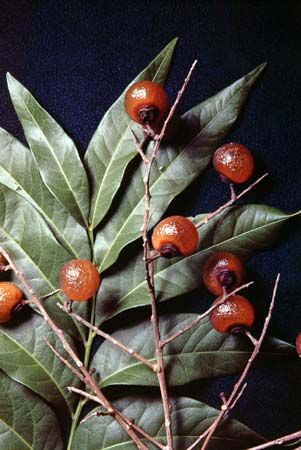
- Leaves: Most species possess pinnately compound leaves arranged alternately along the stem. Stipules are generally absent.2
- Flowers: Typically insect-pollinated, flowers are often small and may be radially or bilaterally symmetrical. They usually feature a nectar-producing disk located between the stamens and the pistil2.3
- Reproductive Trends: There is a strong evolutionary tendency toward cross-pollination, with many species exhibiting dioecism (male and female flowers on separate plants) or polygamous arrangements.2
- Fruit and Seeds: While the basic fruit type is a capsule, it is highly modified across families into forms such as drupes, berries, and schizocarps. Seeds are often dispersed by birds or mammals, sometimes aided by a fleshy aril or wing structures.2
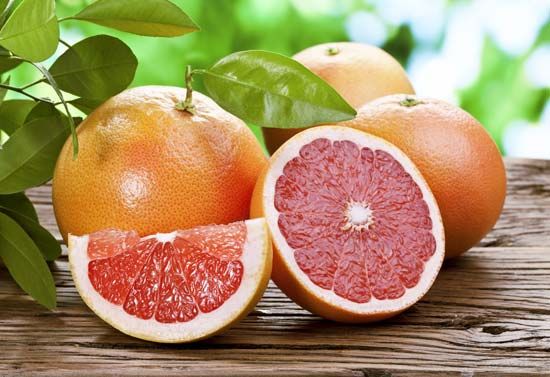
The order is classified within the Rosid II group and includes economically significant plants like the Citrus genus.1
What is the evolutionary history of the Sapindales order?
The evolutionary history and relationships of the Sapindales order are currently understood through a synthesis of DNA sequence data, morphological comparisons, and chemical analysis. Within the Angiosperm Phylogeny Group classification, Sapindales is positioned within the Rosid II group, sharing a close evolutionary affinity with the Malvales, Brassicales, and Huertales orders.32
The order is organized into three primary clusters of related families:
- Rutaceae, Meliaceae, and Simaroubaceae: These families are grouped together due to their shared possession of a nectary disk located between the anthers and carpels, as well as similar secondary chemical compounds.3
- Anacardiaceae, Burseraceae, and Kirkiaceae: These families are linked by the common characteristic of producing small flowers.3
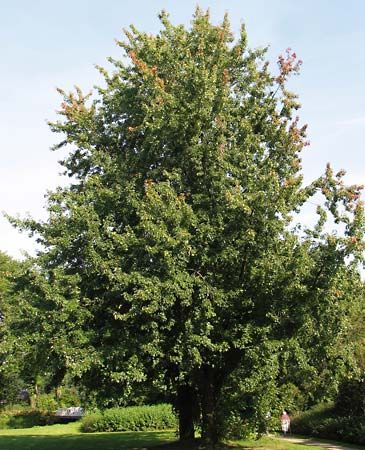
- Sapindaceae: This family represents a distinct group. Notably, families previously recognized as separate—Aceraceae (maples) and Hippocastanaceae (horse chestnuts)—are now identified as temperate offshoots that evolved from within the largely tropical Sapindaceae.3
Additionally, the families Biebersteiniaceae and Nitrariaceae are currently classified as ungrouped members of the order.3
Are there any medicinal or traditional uses for plants in the Sapindales order?
Plants within the Sapindales order have been utilized for various medicinal and traditional purposes across different cultures. These applications often leverage specific chemical properties found in the bark, seeds, or fruits of these species:
- Meliaceae: The neem tree (Azadirachta indica) is highly valued in India and Southeast Asia for its medicinal oils and resins, with its bark often used for its astringent properties and as an insecticide. Additionally, the bark of the South American Guarea rusbyi (cocillana) is traditionally used as an emetic.56
- Rutaceae: Many species in this family are recognized for their medicinal potential. The fruits of Aegle marmelos (bel fruit) and Poncirus trifoliata (Chinese hardy orange) are used medicinally. Furthermore, the bitter bark of several species, such as Angostura febrifuga (angostura) and Galipea officinalis (casparia), is employed for medicinal purposes, while the bark of North American Zanthoxylum species is traditionally chewed to relieve toothaches.7
- Sapindaceae: While better known for fruits and timber, some species have traditional applications. For instance, indigenous peoples in the American tropics have historically used the crushed leaves and branches of Paullinia, Serjania, and related genera to stun fish in streams. Similarly, extracts from the leaves and seeds of the horse chestnut (Aesculus hippocastanum) have been used by certain indigenous groups for the same purpose.8
How do plants in the Sapindales order reproduce and what pollination methods do they use?
Plants in the Sapindales order exhibit diverse reproductive strategies, primarily relying on insects for pollination, though they have evolved various mechanisms to ensure cross-pollination and genetic diversity.2
Pollination Methods
Most species in the order are pollinated by insects, which are attracted to the flowers by showy, colored petals, fragrance, and the abundance of nectar produced by a disk located at the base of the pistil2. To promote cross-pollination and prevent self-fertilization, many species utilize:
- Protandry and Protogyny: The maturation of stamens and stigmas at different times within the same flower.2
- Functional Unisexuality: While many flowers appear structurally bisexual, they are often functionally unisexual because the stamens fail to produce fertile pollen or the stigmas are not receptive.2
- Dioecism and Polygamy: Many species have evolved toward dioecism, where male and female flowers are borne on separate plants. Others are polygamous, bearing both bisexual and unisexual flowers on the same plant to balance the benefits of inbreeding and outcrossing.2
Seed Dispersal
The reproductive cycle concludes with the production of diverse fruit types, including capsules, berries, drupes, and samaras. Seed dispersal is largely facilitated by animals:2
- Birds and Mammals: Many families produce fleshy fruits that are attractive to animals, allowing hard seeds to pass through their alimentary canals unharmed2.
- Arils: In many Sapindaceae and Burseraceae, seeds are surrounded by a colorful, fleshy aril that specifically attracts birds2.
- Wind: In the Meliaceae family, seeds are often winged, enabling them to be dispersed by the wind.2
Sources
- Sapindales — Encyclopædia Britannica
- Sapindales - Characteristic morphological features — Encyclopædia Britannica
- Sapindales - Evolution — Encyclopædia Britannica
- Sapindales — Merriam-Webster
- Meliaceae — Encyclopædia Britannica
- Sapindales - Sapindaceae — Encyclopædia Britannica
- Sapindales - Meliaceae — Encyclopædia Britannica
- Sapindales - Rutaceae — Encyclopædia Britannica
- Sapindales - Anacardiaceae — Encyclopædia Britannica
- Pollination - Wind — Encyclopædia Britannica
Published on · 4 min read