Saprotroph
Saprotrophs—including fungi, certain bacteria, and water molds—are essential to decomposition and nutrient cycling within an ecosystem.
What role do saprotrophs play in ecosystem nutrient cycling?
Saprotrophs—including fungi, certain bacteria, and water molds—are essential to decomposition and nutrient cycling within an ecosystem.1
These organisms utilize a process called absorptive nutrition, where they excrete enzymes to break down detritus into simpler molecules that can be absorbed for nourishment. Their roles include:1
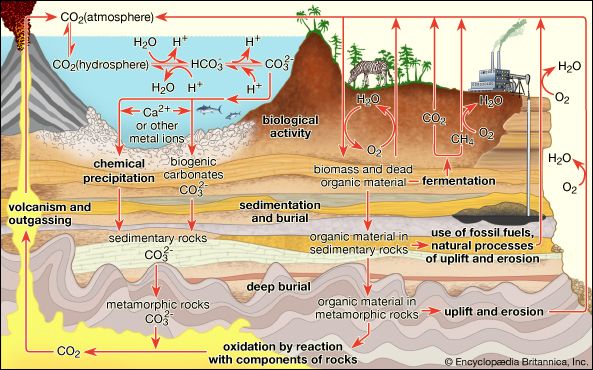
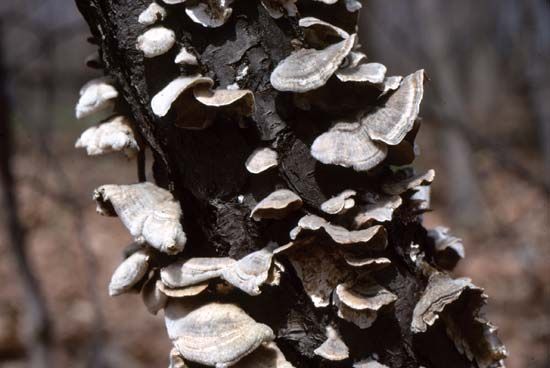
- Carbon Cycling: Fungi are highly efficient at decomposing complex plant materials like cellulose. By converting these into simple carbohydrates, they facilitate the release of carbon dioxide into the carbon cycle and transform organic matter into nutrients usable by other organisms.1
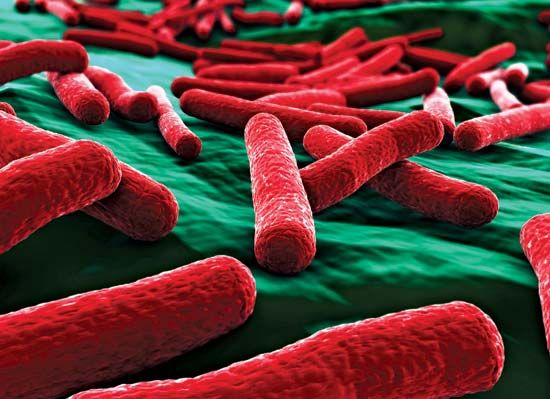
- Tissue Breakdown: Bacteria are particularly effective at decomposing dead animal flesh, converting complex tissues into simpler organic compounds.1
- Aquatic Decomposition: In freshwater environments, water molds serve as critical decomposers of both plant and animal material.1
What is the definition of a saprotroph in biology?
A saprotroph is an organism that obtains its nourishment by feeding on nonliving organic matter, known as detritus, at a microscopic level. The term is derived from the Greek words sapros (“rotten, putrid”) and trophē (“nourishment”).1
Saprotrophs play a vital role in decomposition and nutrient cycling within an ecosystem. They utilize a process called absorptive nutrition, in which they excrete enzymes directly onto the organic substrate. These enzymes break down complex materials into simpler molecules, which the organism then absorbs through its cell walls.12
Common examples of saprotrophs include:
- Fungi: Highly efficient at decomposing complex plant structures like cellulose.1
- Bacteria: Particularly effective at breaking down dead animal tissues.1
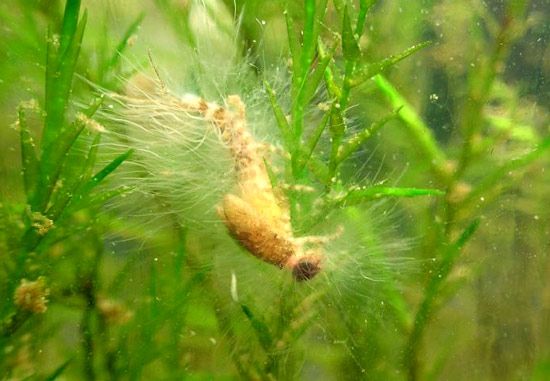
- Water molds: Important decomposers of plant and animal material in aquatic environments.1
How do saprotrophs obtain their nutrients?
Saprotrophs obtain their nutrients through a process known as absorptive nutrition or osmotrophic nutrition. Because they lack the ability to ingest bulk food, they rely on extracellular digestion to break down complex organic matter, or detritus, into smaller, absorbable molecules.23
The process functions as follows:
- Enzyme Secretion: Saprotrophs, such as fungi and certain bacteria, secrete digestive enzymes directly onto the organic surface on which they are growing.134
- Extracellular Digestion: These enzymes catalyze the splitting of large, complex polymers—such as proteins, starches, and cellulose—into simpler, soluble units like amino acids and simple carbohydrates.2345
- Absorption: Once the food material is broken down into a solution, the organism absorbs these small nutrient molecules directly through its cell walls or hyphal surfaces.234
This method allows saprotrophs to effectively recycle nutrients back into the ecosystem by converting decaying matter into substances that can be utilized by other organisms.35
How do saprotrophs contribute to soil formation?
Saprotrophs, including fungi and bacteria, are essential to soil formation and health primarily through their role in decomposition and the creation of humus.61
Their contributions include:
- Formation of Humus: Saprotrophs break down complex organic materials, such as fallen leaves and woody debris, into simpler chemical compounds. This process results in the creation of humus, a stable, dark organic complex that is vital for maintaining soil structure, fertility, and moisture retention.67
- Nutrient Cycling: By digesting dead plant and animal tissues, saprotrophs release stored nutrients back into the soil. They act as catalysts in critical natural cycles, such as the carbon cycle and nitrogen cycle, converting complex proteins and organic matter into inorganic forms—like nitrates and ammonium—that plants can readily absorb for growth.67
- Substrate Modification: Saprotrophs attack the physical structure of organic litter, making it soft and pliable. This process makes the material palatable for larger soil organisms, such as earthworms and springtails, which further fragment the organic matter and mix it into the soil profile, thereby developing the soil’s physical matrix.6
Sources
- saprotroph — Encyclopædia Britannica
- fungus: Top Questions — Encyclopædia Britannica
- digestion - Ingestion — Encyclopædia Britannica
- fungus - Nutrition — Encyclopædia Britannica
- fungus - Saprotrophism — Encyclopædia Britannica
- soil organism — Encyclopædia Britannica
- soil - Biological phenomena — Encyclopædia Britannica
Published on · 3 min read