Nitrogen Cycle
The nitrogen cycle is the biogeochemical process by which nitrogen circulates through nature in various forms. Although the atmosphere is 78 percent nitrogen…
What is the nitrogen cycle and why is it important in biochemistry?
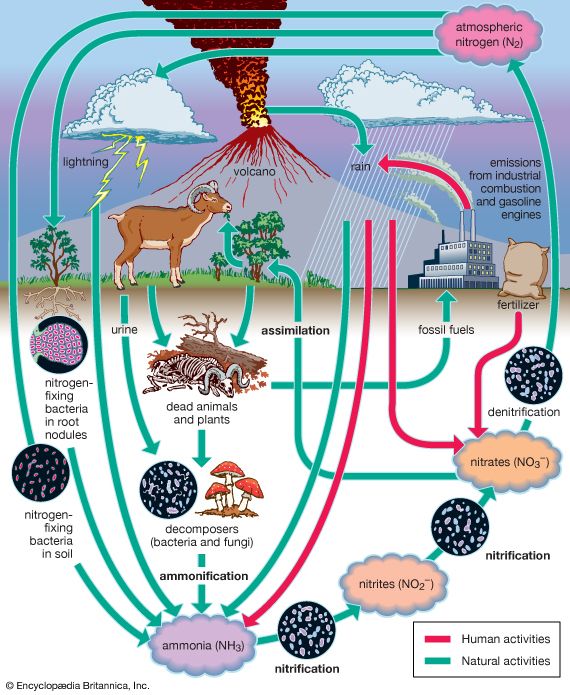
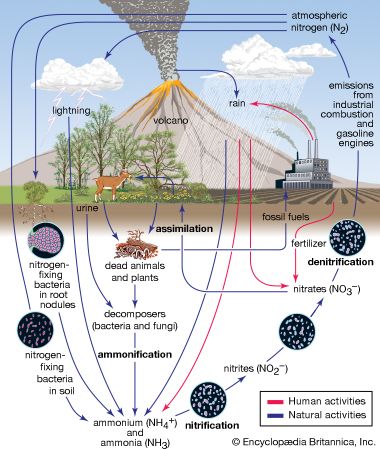
The nitrogen cycle is the biogeochemical process by which nitrogen circulates through nature in various forms. Although the atmosphere is 78 percent nitrogen gas, most organisms cannot use it in this inert state. Through microbial transformations—including nitrogen fixation, assimilation, ammonification, nitrification, and denitrification—nitrogen is converted into reactive compounds like ammonia and nitrates that plants can absorb.12
This cycle is vital to biochemistry because nitrogen is a fundamental building block of life. It is an essential component of:12
- Genetic Material: It is required to synthesize DNA and RNA, which carry genetic information.2
- Proteins: It is a key element in amino acids, the building blocks of proteins.2
- Energy Transfer: It is a core component of adenosine triphosphate (ATP), the primary energy-carrying molecule in cells.2
- Photosynthesis: It is essential to chlorophyll, which allows plants to capture solar energy.2
Because nitrogen is a core element of protoplasm, its continuous recycling between the environment and living organisms is necessary to sustain life on Earth.34
How does human activity impact the nitrogen cycle?
Human activity has profoundly altered the global nitrogen cycle, primarily by increasing the amount of reactive nitrogen in the environment through industrial and agricultural practices.6
Industrial Nitrogen Fixation
The most significant human intervention is the Haber-Bosch process, which synthesizes ammonia from atmospheric nitrogen for use in fertilizers and explosives. This industrial method has increased the amount of usable nitrogen on Earth by 150 percent, facilitating massive growth in crop yields and the human population.6
Environmental Consequences
The widespread use of nitrogen-based fertilizers and the management of intensive animal farms have led to several environmental issues:
- Eutrophication: Excess nitrates from fertilizers and animal waste run off into rivers, lakes, and coastal waters. This nutrient over-enrichment triggers massive algae blooms; when these organisms die and decompose, they deplete dissolved oxygen, creating “dead zones” where aquatic life cannot survive.78
- Greenhouse Gas Emissions: Agriculture and soil processes are major sources of nitrous oxide (N₂O), a potent greenhouse gas that contributes to global warming.91011
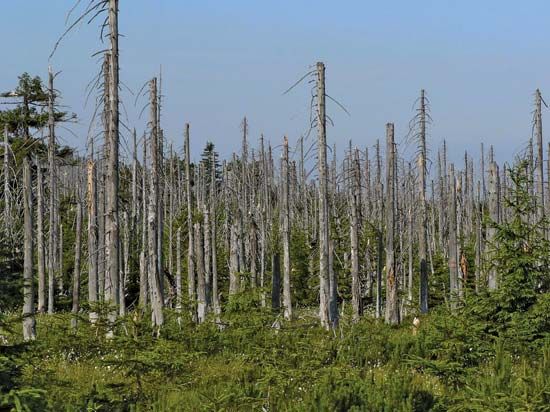
- Acid Deposition: The combustion of fossil fuels by vehicles and power plants releases nitrogen oxides into the atmosphere. These compounds react with water to form nitric acid, contributing to acid rain, which can damage ecosystems and lower the pH of precipitation.128
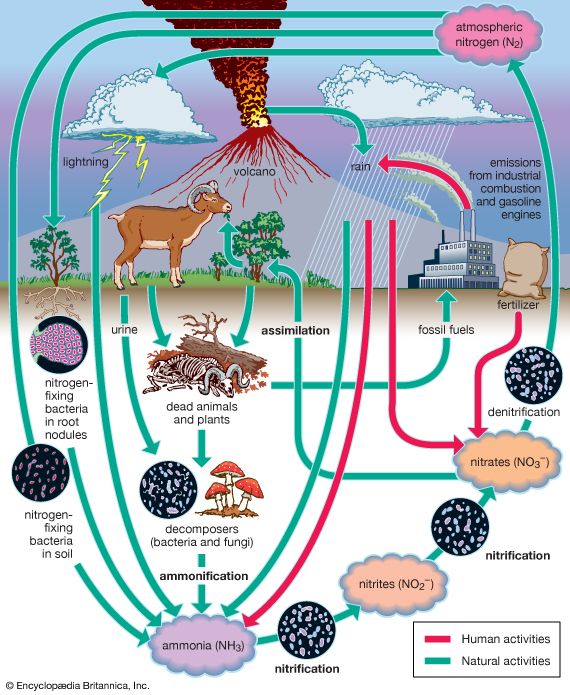
What are the main stages or processes involved in the nitrogen cycle?
The nitrogen cycle is the biogeochemical process by which nitrogen circulates through nature in various forms. Although nitrogen gas makes up about 78–79 percent of the atmosphere, most organisms cannot use it in this inert state. Through a series of microbial transformations, nitrogen is converted into reactive compounds that plants can assimilate to support life.115
The main stages of the cycle include:
- Nitrogen fixation: The process of converting atmospheric nitrogen gas into inorganic compounds like ammonia. This is primarily performed by nitrogen-fixing bacteria and cyanobacteria, though small amounts are also fixed by lightning or industrial methods like the Haber-Bosch process.115
- Assimilation: Plants absorb nitrates and ammonia from the soil to build essential organic tissues, such as proteins and nucleic acids. Animals then obtain this nitrogen by consuming plants or other animals.115
- Ammonification: When organisms die or produce waste, microorganisms decompose the organic nitrogen back into ammonia and ammonium.115
- Nitrification: Aerobic bacteria transform soil ammonia into nitrites and then into nitrates, which are readily usable by plants.115
- Denitrification: Denitrifying bacteria break down nitrates in anaerobic conditions, releasing nitrogen gas back into the atmosphere and completing the cycle.115
What is nitrogen fixation and how does it occur in nature?
Nitrogen fixation is the essential biological and chemical process of converting inert atmospheric nitrogen gas into inorganic compounds, such as ammonia, that living organisms can utilize. While nitrogen makes up about 78 percent of the atmosphere, it is largely inaccessible to most life forms until it undergoes these transformations.416
In nature, this process occurs primarily through the following mechanisms:
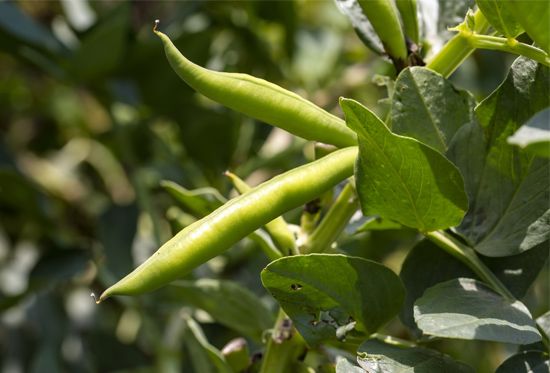
- Microbial Fixation: More than 90 percent of nitrogen fixation is performed by nitrogen-fixing bacteria and cyanobacteria. These include free-living species like Azotobacter and mutualistic bacteria like Rhizobium, which form symbiotic relationships with legumes by creating root nodules where they convert nitrogen into ammonia for the host plant. This reaction is catalyzed by the enzyme nitrogenase.416117
- Abiotic Fixation: A smaller portion of nitrogen is fixed through natural phenomena such as lightning and ultraviolet radiation, which provide the energy necessary to break the strong bonds of nitrogen gas.16
Sources
- Nitrogen cycle — Encyclopædia Britannica
- Why is nitrogen essential to life? — Encyclopædia Britannica
- soil - Biological phenomena — Encyclopædia Britannica
- Nitrogen-fixing bacteria — Encyclopædia Britannica
- ecosystem — Encyclopædia Britannica
- Anthropocene Epoch - The scale of human activity — Encyclopædia Britannica
- eutrophication Has Greek Roots — Merriam-Webster
- soil - Carbon and nitrogen cycles — Encyclopædia Britannica
- chemical industry - Nitric acid — Encyclopædia Britannica
- Intensive animal farming - Environmental impacts — Encyclopædia Britannica
- Atmosphere - Nitrogen budget — Encyclopædia Britannica
- Acid rain - Chemistry of acid deposition — Encyclopædia Britannica
- Global warming - Nitrous oxides and fluorinated gases — Encyclopædia Britannica
- soil - Soils and global warming — Encyclopædia Britannica
- Biosphere - The nitrogen cycle — Encyclopædia Britannica
- Bacteria: Top Questions — Encyclopædia Britannica
- nitrogenase — Merriam-Webster
Published on · 4 min read