Sculpin
Sculpins are bottom-dwelling, inactive fish belonging to the family Cottidae, primarily found in the northern regions of the world. Their habitats vary…
In which habitats are sculpins typically found?
Sculpins are bottom-dwelling, inactive fish belonging to the family Cottidae, primarily found in the northern regions of the world. Their habitats vary significantly depending on the species:1
- Marine Environments: Most sculpins are found in shallow sea waters, though some species inhabit deeper waters. Littoral (shore) sculpins typically reside in densely weeded pools or crevices in rocks, where they exhibit thigmotactic behavior, pressing their bodies against surfaces to resist wave action.12
- Freshwater Environments: Sculpins are the only group of scorpaeniform fishes widely represented in fresh water. They are distributed across the Northern Hemisphere, with high diversity in North America and Asia. For example, the miller’s-thumb is a common freshwater species found in European lakes and rivers.21
- Specialized Habitats: In Lake Baikal, sculpins have adapted to exploit a wide range of living spaces, including various depths and bottom types, with some species migrating to coastal waters in the spring and others remaining in deep water year-round.2
How do sculpins use their fins for movement and camouflage?
Sculpins utilize their physical features and behaviors to survive in their environments through specialized camouflage and movement strategies.
Camouflage
Sculpins are highly effective at blending into their surroundings, particularly when living on rocky or rough bottoms. Their camouflage is achieved through:
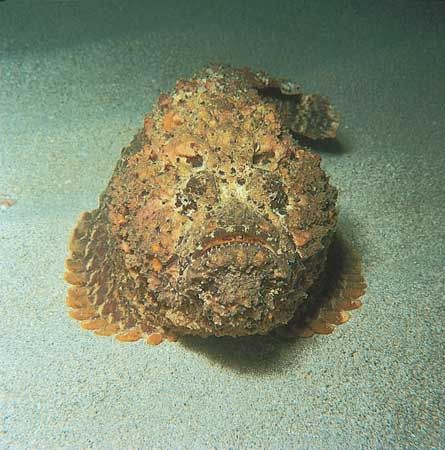
- Cryptic Coloration and Shape: Many species possess body patterns and colors that match their background, rendering them virtually invisible to predators and prey.32
- Physical Adornments: Their bodies are often decorated with fleshy lappets, tabs, or small spines that break up their outline, allowing them to mimic the appearance of rocks or marine organisms.31
Movement
Although sculpins are generally considered inactive, bottom-dwelling fish, they use their fins to facilitate movement and hunting:
- Large Pectoral Fins: Sculpins possess large, fanlike pectoral fins. While they are not typically fast swimmers, they use these fins as auxiliary power units to perform swift, sudden pounces when capturing prey.12
- Thigmotactic Behavior: In littoral (shore) environments, sculpins exhibit thigmotaxis, meaning they press their bodies against surfaces like rocks or crevices to maintain their position and resist the force of water currents.12
What types of food do sculpins typically eat?
Sculpins are generally inactive, bottom-dwelling predators that feed on a variety of smaller, more active organisms. Their diet typically includes:
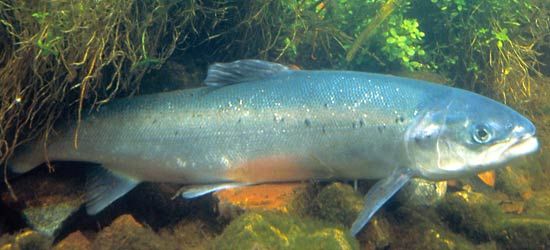
- Smaller Fishes: They are known to consume various small fish, including young salmon and trout.21
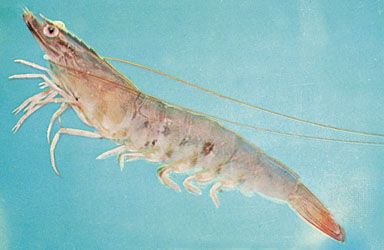
- Crustaceans: Their diet often consists of shrimp and other crustaceans. For instance, benthic species in Lake Baikal feed primarily on benthic copepod crustaceans.21
- Insects: Some inshore species, such as Batrachocottus nikolskii, have a diet consisting mainly of chironomid and caddisfly larvae.1
Sculpins typically capture their prey by using their large, fanlike pectoral fins as auxiliary power units to perform a swift, sudden pounce.1
What are the defining characteristics of sculpin fish?
Sculpins are members of the family Cottidae (order Scorpaeniformes), a diverse group of approximately 300 species primarily found in the cold and temperate regions of the Northern Hemisphere.21
Defining characteristics of these fish include:
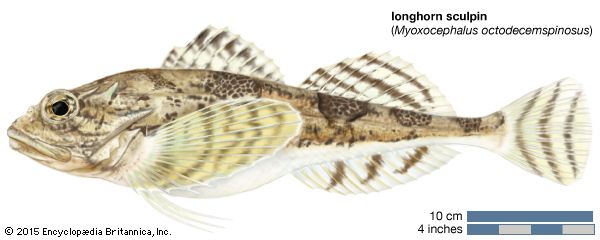
- Physical Structure: They are typically small, elongated, and tapered fish characterized by wide, heavy heads and large mouths.21
- Fins and Skin: A hallmark feature is their large, fanlike pectoral fins, which they use as auxiliary power units for sudden, swift movements. Their skin is either naked or covered with small spines, and their gill covers typically feature one or more spines.26
- Habitat and Behavior: Sculpins are primarily bottom-dwelling, inactive fish found in both salt and fresh water. They are strongly thigmotactic, meaning they prefer to press their bodies against surfaces like rocks or crevices.26
- Camouflage: To survive on rocky or rough bottoms, they are highly camouflaged, often matching the color and texture of their environment to remain hidden from predators and prey.6
Sources
- scorpaeniform - Ecology — Encyclopædia Britannica
- sculpin — Encyclopædia Britannica
- scorpaeniform - Camouflage and coloration — Encyclopædia Britannica
- scorpaeniform - General features — Encyclopædia Britannica
- lungfish - General features — Encyclopædia Britannica
- Cottidae — Merriam-Webster
- Cottus — Merriam-Webster
Published on · 3 min read