Shrimp
Shrimp, crabs, and lobsters all belong to the order Decapoda, a group of crustaceans characterized by having five pairs of thoracic legs. While they share…
How do shrimp differ from other crustaceans like crabs and lobsters?
Shrimp, crabs, and lobsters all belong to the order Decapoda, a group of crustaceans characterized by having five pairs of thoracic legs. While they share this basic classification, they differ significantly in body structure and locomotion.12
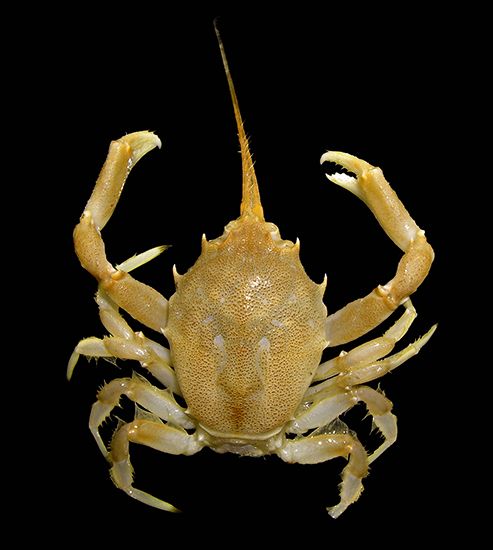
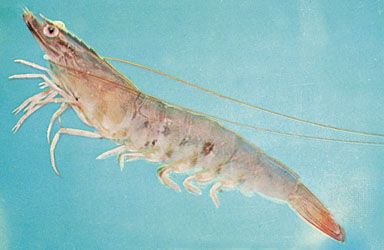
Shrimp are classified as macrurous, meaning they possess elongated bodies with long, flexible abdomens and well-developed, fanlike tails. This anatomy allows them to swim effectively, often moving backward by rapidly flexing their abdomen and tail. In contrast, crabs are brachyurous; they have flattened, laterally expanded bodies, often with short, stout legs and reduced tail fans, which are better suited for crawling than swimming.12
Lobsters, while also decapods, generally possess a more robust, cylindrical body structure compared to the semitransparent, slender form of most shrimp. While shrimp are typically smaller—ranging from a few millimeters to about 20 cm—some crab species can reach massive sizes, such as spider crabs with spans of nearly four meters.12
What are the main types of shrimp found in different aquatic environments?
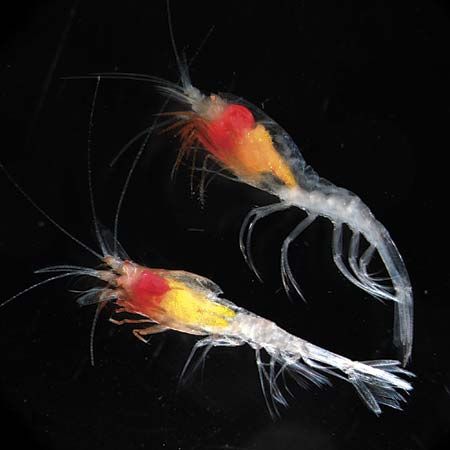
Shrimp are found in diverse aquatic environments, ranging from deep and shallow oceans to freshwater lakes and streams. Their distribution is categorized by their specific habitats and ecological roles:1
Marine and Coastal Shrimp
Many commercially important species inhabit coastal waters, where they often utilize estuaries as nursery grounds.15
- Coastal Species: The common European shrimp (Crangon vulgaris) and Peneus setiferus are found in coastal waters, with the latter migrating from shallow bays to deeper waters as they mature. Other notable coastal varieties include the brown-grooved shrimp (P. aztecus) and pink-grooved shrimp (P. duorarum).1
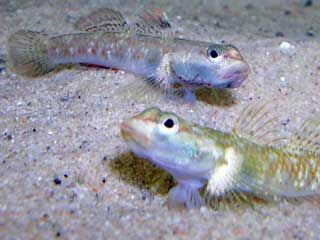
- Tropical and Specialized Species: The coral shrimp (Stenopus hispidus) is a tropical species that cleans coral fish, while the pistol shrimp (Alpheus) is known for stunning prey with its large pincers and often shares burrows with goby fish.1
Freshwater Shrimp
Freshwater prawns (family Atyidae) are primarily found in warm regions, with some species inhabiting brackish water.1
- Regional Varieties: Ataephyra desmarestii lives in European, North African, and Near Eastern freshwaters, while the genus Macrobrachium is found in most tropical countries. Unique U.S. species include California’s Syncaris and the cave-dwelling Palaemonias ganteri.1
What roles do shrimp play in aquatic ecosystems and food chains?
Shrimp play diverse and essential roles within aquatic ecosystems, functioning primarily as both consumers and prey. Their ecological impact is defined by their feeding habits and their interactions with other marine and freshwater organisms:
- Trophic Roles: Shrimp are generally omnivorous, feeding on small plants, animals, and carrion, which helps regulate the populations of smaller organisms and aids in the decomposition of organic matter within their habitats.1
- Symbiotic Relationships: Some species engage in specialized ecological interactions. For example, the coral shrimp (Stenopus hispidus) acts as a cleaner, removing parasites and debris from the scales of coral fish. Others, like the pistol shrimp (Alpheus), form mutualistic relationships with goby fish, sharing burrows where the fish provides warnings of danger in exchange for shelter.1
- Food Web Dynamics: As a significant biomass in many environments, shrimp serve as a vital food source for a wide variety of predators, including larger fish and other aquatic animals.14
- Environmental Impact: While many species are beneficial, some, such as tadpole shrimps (Triops), can significantly alter their environment by stirring up silt in rice paddies, which may inadvertently damage crops.4
How are shrimp important in human cuisine and the fishing industry?
Shrimp are among the most commercially significant crustaceans worldwide, serving as a vital food source and a cornerstone of global fishing industries.47
Importance in the Fishing Industry
Shrimp are a primary target for commercial fisheries across the globe, particularly in coastal regions. In many nations, they represent the most important commercial species; for instance, India accounts for one of the largest catches globally. Because of their high market value, many species—such as the brown-grooved shrimp (P. aztecus) and pink-grooved shrimp (P. duorarum)—are heavily exploited, sometimes reaching or exceeding the limits of sustainable yields. To manage these resources, many coastal nations have established exclusive economic zones to regulate fishing rights and protect their national income.4897
Role in Cuisine and Aquaculture
As a highly prized food product, shrimp are frequently consumed fresh, leading to a rapid expansion in aquaculture to supplement natural supplies aquaculture to supplement natural supplies. Modern farming techniques involve hatching eggs from adult females in controlled environments, such as indoor tanks or seawater ponds, before distributing them to farms. This industry is essential for meeting the growing global demand for high-priced seafood.961
Sources
- shrimp — Encyclopædia Britannica
- decapod — Encyclopædia Britannica
- crustacean - General features — Encyclopædia Britannica
- crustacean - Importance to humans — Encyclopædia Britannica
- estuary - Primary productivity — Encyclopædia Britannica
- aquaculture - Crustaceans — Encyclopædia Britannica
- Indian Ocean - Fisheries — Encyclopædia Britannica
- Pacific Ocean - Fisheries — Encyclopædia Britannica
- aquaculture — Encyclopædia Britannica
Published on · 4 min read