Seahorse
Seahorses (genus Hippocampus) possess several unique physical characteristics that distinguish them from other fishes:
What are the unique physical characteristics of seahorses that distinguish them from other fish?
Seahorses (genus Hippocampus) possess several unique physical characteristics that distinguish them from other fishes:
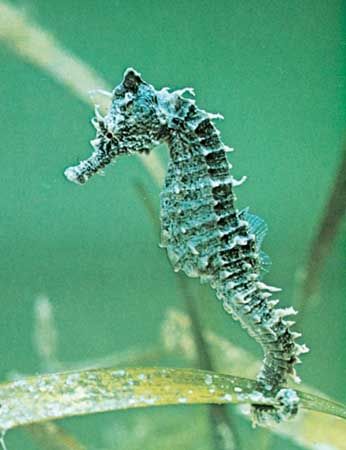
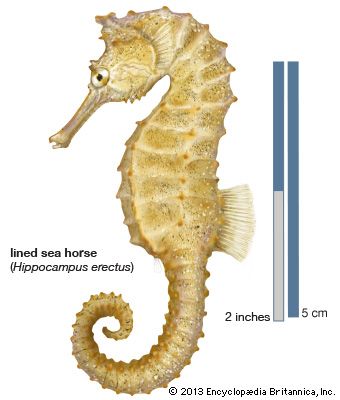
- Distinctive Anatomy: They are easily recognized by their horselike heads, long tubular snouts, and small, toothless mouths. Their bodies are encased in consecutive rings of bony plates rather than typical scales.1
- Prehensile Tail: Unlike the tails of most fish, which are primarily used for locomotion, the seahorse’s tail is prehensile, allowing it to cling to plants and corals in its environment.12
- Upright Posture: Seahorses swim in a vertical position, propelling themselves with a soft-rayed dorsal fin and maneuvering with pectoral fins located near the head.1
- Independent Eyes: They possess the ability to move their eyes independently of one another.1
- Reproductive Strategy: Perhaps their most notable trait is the male’s brood pouch. During reproduction, the female deposits eggs into this pouch, where the male fertilizes and carries them until they hatch, even regulating the fluid chemistry to nurture the developing young.13
How did seahorses evolve their unique body shape, and what advantages does it provide?
Seahorses evolved their unique upright body shape and specialized features approximately 25 million years ago, likely in response to the expansion of sea grass beds in the western Pacific. This environmental shift provided new opportunities for survival, prompting ancestors of the seahorse to adapt to these habitats.1
This body shape offers several distinct advantages:
- Ambush Predation: The upright posture and sedentary nature allow seahorses to remain still, using their excellent camouflage to blend into plants and corals. This makes them highly effective ambush predators, enabling them to capture unsuspecting prey by rapidly sucking them into their tubular mouths.1
- Habitat Utilization: The prehensile tail is a critical adaptation that allows them to cling securely to sea grasses and corals, providing stability in coastal waters.1
- Predator Avoidance: By maximizing the hiding opportunities within sea grass beds, seahorses can effectively evade predators such as crabs and other fishes.1
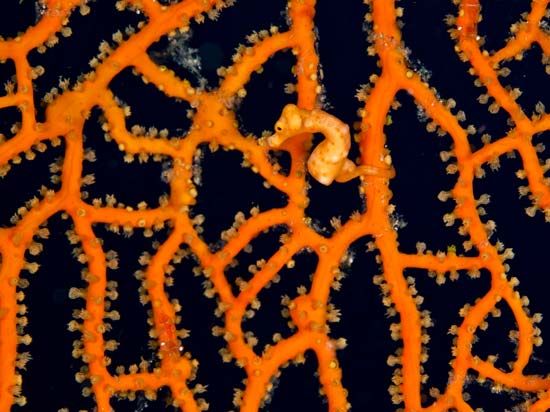
How do seahorses camouflage themselves, and why is this important for their survival?
Seahorses utilize camouflage as a primary survival strategy, relying on both their physical form and their ability to alter their appearance to blend into their surroundings. Because they are relatively immobile and swim more slowly than most other fishes, this concealment is essential for their existence in coastal habitats like coral reefs and sea grass beds.4
Their camouflage methods include:
- Coloration Changes: Seahorses are capable of changing their color to match the environment in which they are resting. This process is often facilitated by chromatophores—specialized cells that allow for rapid color adjustments.15
- Physical Adaptations: Their bodies are covered in bony plates, and some species possess long skin filaments that help them mimic the texture and appearance of surrounding grasses or corals.41
- Behavioral Positioning: By maintaining a vertical posture among plants or corals, they effectively hide from predators such as crabs and other fish.41
This camouflage is vital for survival because it allows seahorses to act as successful ambush predators, remaining unseen until they can rapidly suck unsuspecting prey into their mouths, while simultaneously providing necessary protection from potential threats.4
What role do seahorses play in their marine ecosystems?
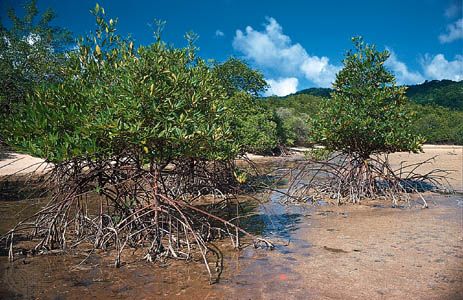
Seahorses serve as specialized ambush predators within their marine ecosystems, playing a role in regulating the populations of small organisms that swim near their habitats. By inhabiting diverse environments such as coral reefs, mangroves, sea grass beds, and estuaries, they occupy a unique niche that relies on their sedentary nature and camouflage to capture prey by suction.1
Beyond their role as predators, seahorses are integral components of the food web in shallow coastal waters. While they use their camouflage to avoid being eaten by predators like crabs and other fishes, they also exist as part of the broader biodiversity of these sensitive coastal zones. Unfortunately, their ecological stability is currently threatened by human activities, including overfishing, bycatch, and the destruction of their essential coastal habitats, which puts several species at risk of extinction.1
Sources
- seahorse — Encyclopædia Britannica
- Why do so few baby seahorses survive? — Encyclopædia Britannica
- Tail — Encyclopædia Britannica
- coloration - Background matching — Encyclopædia Britannica
- coloration - Physiological control — Encyclopædia Britannica
- gasterosteiform - Ecology and behaviour — Encyclopædia Britannica
Published on · 3 min read