Sensitive Plant
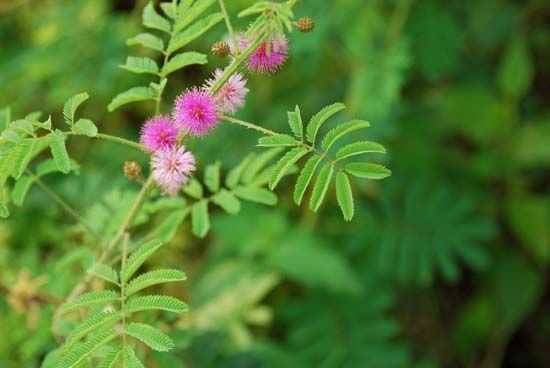
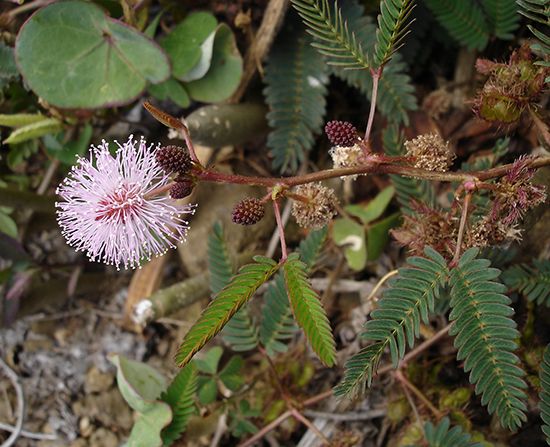
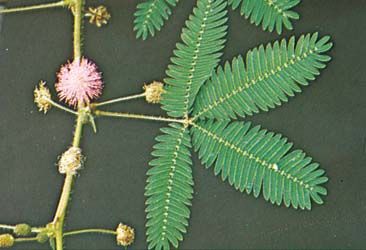
The scientific name of the sensitive plant is Mimosa pudica. It belongs to the pea family, known as Fabaceae.
What is the scientific name of the sensitive plant and what family does it belong to?
The scientific name of the sensitive plant is Mimosa pudica. It belongs to the pea family, known as Fabaceae.12
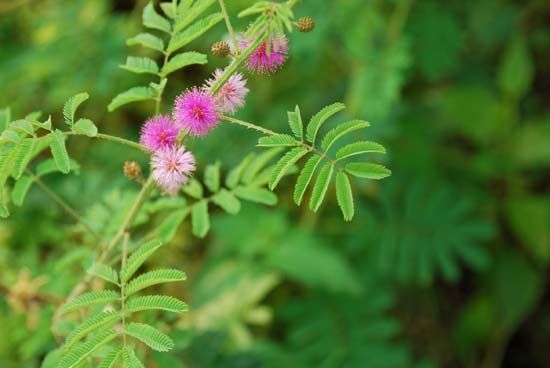
This plant is well-known for its unique ability to rapidly fold its leaves and droop when touched, a defensive adaptation believed to startle potential herbivores. This movement, along with its reaction to darkness, is facilitated by the rapid release of water from specialized cells at the base of its leaf stalks.1
Are there other plants with similar touch-responsive mechanisms, and how do they compare to the sensitive plant?
While Mimosa pudica is the most famous example of a touch-responsive plant, other species exhibit similar behaviors, though they often differ in intensity and mechanism.
Notable Examples
- Wild Sensitive Plant (Chamaecrista nictitans): Native to the eastern United States and the West Indies, this plant also displays sensitivity to touch, though its reaction is generally less pronounced than that of Mimosa pudica.3
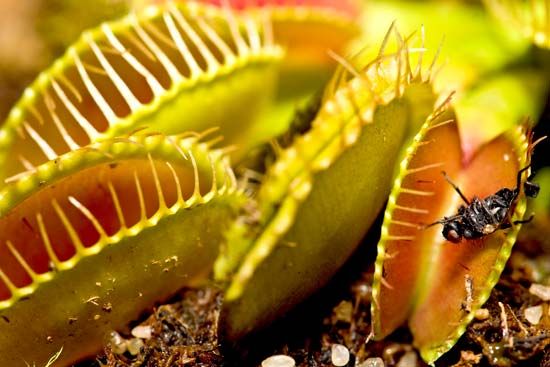
- Venus Flytrap (Dionaea muscipula): While not a “sensitive plant” in the traditional sense of folding leaves for defense, it possesses highly specialized sensory abilities. Its traps can snap shut in approximately half a second when triggered by prey, a much faster and more aggressive mechanical response than the defensive drooping of the sensitive plant.1
Comparison of Mechanisms
The rapid movement in Mimosa pudica is driven by the sudden release of water from specialized cells at the base of its leaf stalks, a process that allows the plant to fold its leaves to startle herbivores. While other plants, such as Arabidopsis, can perceive mechanical stimuli and transmit electrical signals to trigger chemical defenses, these responses are typically internal and lack the dramatic, visible movement seen in the sensitive plant.31
How do environmental factors like temperature and humidity affect the sensitive plant’s touch response?
The sensitive plant (Mimosa pudica) relies on turgor pressure—the fluid pressure within its cells—to maintain its structure and facilitate its rapid leaf movements. While the provided information confirms that the plant’s movement is driven by the sudden release of water from specialized cells at the base of its leaf stalks, the available Britannica records do not explicitly detail how specific fluctuations in environmental temperature or humidity quantitatively alter this touch-responsive mechanism.16
We do know that the plant is native to tropical regions and naturally exhibits nyctinastic movement, where leaves droop in response to darkness and reopen with daylight. Because the mechanism relies on internal water pressure, it is biologically plausible that extreme environmental conditions affecting water availability or transpiration rates could influence the plant’s physiological state, but specific data on these environmental variables is not contained in the current knowledge base.16
Sorry, the Britannica knowledge base does not contain specific information regarding the direct impact of temperature and humidity on the sensitivity of Mimosa pudica.
How has the sensitive plant been used in scientific research?
The sensitive plant (Mimosa pudica) is primarily utilized in scientific research as a model for studying plant sensory capabilities and rapid movement mechanisms. Because it exhibits a visible, dramatic response to physical stimuli, it serves as a key subject for understanding how plants perceive and react to their environment without the presence of nerves or a brain.3
Research involving the sensitive plant often focuses on:
- Mechanical Signaling: Scientists study the plant’s rapid leaf closure, which is triggered by the sudden release of water from specialized cells at the base of its leaf stalks, to better understand how plants process and respond to mechanical touch.17
- Defense Adaptations: The plant is used to investigate evolutionary strategies, specifically the hypothesis that its rapid movement serves as a defense mechanism to startle browsing herbivores.13
- Comparative Physiology: It is frequently compared to other species, such as the Venus flytrap or Arabidopsis, to contrast visible, rapid movements with internal, chemical-based responses to physical damage.3
Sources
- sensitive plant — Encyclopædia Britannica
- Fabaceae — Encyclopædia Britannica
- mimosa — Encyclopædia Britannica
- sensitive plant — Merriam-Webster
- Do Plants Feel Pain? — Encyclopædia Britannica
- Turgor — Encyclopædia Britannica
- Fabales - Mimoseae — Encyclopædia Britannica
Published on · 3 min read