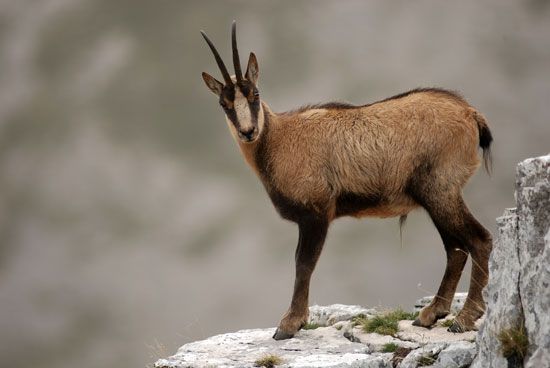
Serow
Serows are goatlike mammals that have evolved specialized traits to thrive in rugged, high-altitude environments. Their primary adaptations include:
How do serows adapt to their mountainous habitats?
Serows are goatlike mammals that have evolved specialized traits to thrive in rugged, high-altitude environments. Their primary adaptations include:
- Climbing Ability: Serows are exceptionally well-adapted to climbing, allowing them to navigate steep, mountainous terrain effectively.1
- Strategic Resting: To remain safe in their environment, they utilize unique resting sites, such as large tree trunks that overhang cliffs.1
- Physical Resilience: Their physical build and agility enable them to inhabit a wide range of elevations, from sea level up to more than 4,000 meters (13,000 feet) in the Himalayas.1
- Protective Pelage: Depending on the species and climate, serows possess specialized coats—ranging from long, soft hair to woollier pelage—which provide insulation and protection in their respective habitats.1
Despite these adaptations, several species face significant threats from poaching and habitat loss, highlighting the importance of conservation efforts for these vulnerable animals.1
What is a serow and which taxonomic family does it belong to?
A serow (genus Capricornis) is any of five species of goatlike mammals native to regions ranging from Japan and Taiwan to western India, China, Southeast Asia, and the Himalayas.1
Taxonomically, the serow belongs to the family Bovidae and the order Artiodactyla. Within the family Bovidae, it is placed in the subfamily Caprinae. There is some scientific debate regarding its specific tribe: it is often classified within the tribe Rupicaprini (known as goat antelopes), though some taxonomists assign it to its own distinct tribe, Naemorhedini.123
Where are serows typically found in the wild?
Serows are found across a broad geographic range in Asia, inhabiting diverse environments from Japan and Taiwan to western India, eastern China, Southeast Asia, and the Himalayan region.1
Their specific distribution depends on the species:
- Mainland Serow: Found throughout the mainland regions of Southeast Asia and the Himalayas, ranging from sea level on the Malay Peninsula to elevations exceeding 4,000 meters.1
- Burmese Red Serow: Inhabits parts of China, Myanmar, and India.1
- Formosan Serow: Endemic to the island of Taiwan, where it occurs widely across the eastern region.1
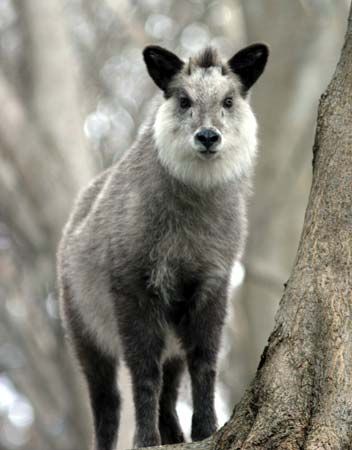
- Japanese Serow: Endemic to the Japanese islands of Honshu, Shikoku, and Kyushu.1
These animals are generally forest-dwelling and are well-adapted to rugged, mountainous terrain.1
What are the physical characteristics that distinguish serows from other similar animals?
Serows are goatlike mammals characterized by a unique blend of features that distinguish them from other goat antelopes and related bovids. Their physical traits include:
- Horns: Both sexes possess stout, sharp horns that curve slightly backward. These are distinct from the stiletto-like horns found on some other members of the tribe Rupicaprini.12
- Scent Glands: A key identifying feature of the serow is the presence of large preorbital glands. While other goat antelopes also have scent glands, the serow uses these specifically to leave territorial olfactory signs and scent-mark vegetation as a dominance display.2
- Size and Build: Depending on the species, serows range from approximately 25 kg to 45 kg (55–99 pounds). They are generally forest-dwelling and are highly adapted for climbing, often using large tree trunks overhanging cliffs as resting sites.1
- Pelage: Their coats vary significantly by species. For example, the mainland serow has a grizzled black mane and can feature rusty red fur on its flanks, while the Formosan serow has softer, woollier hair, and the Japanese serow is covered in long, soft hair that forms a neck ruff.1
Sources
- serow — Encyclopædia Britannica
- goat antelope — Encyclopædia Britannica
- Capricornis — Merriam-Webster
Published on · 3 min read