Goat Antelope
Goat antelopes (tribe Rupicaprini) are ruminants that exhibit dietary flexibility to survive in their often harsh, mountainous habitats. Their diets…
How do goat antelopes’ diets vary across different species and habitats?
Goat antelopes (tribe Rupicaprini) are ruminants that exhibit dietary flexibility to survive in their often harsh, mountainous habitats. Their diets generally consist of a variety of plants, including grasses, herbs, foliage, twigs, and lichens, with specific preferences shifting based on seasonal availability and environmental conditions.12
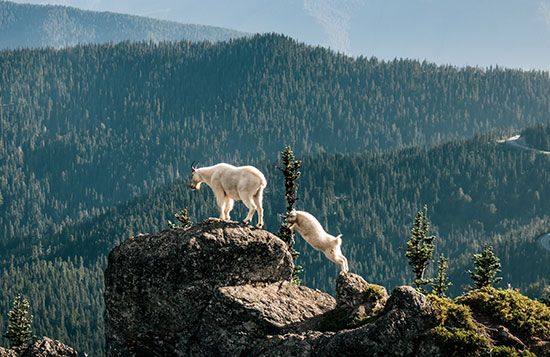
- Mountain Goat: To compensate for their specialized cliff-dwelling lifestyle, they consume a wide range of vegetation, including alpine firs and other conifers. In winter, they may excavate these plants from beneath deep snow. During summer, they supplement their nutrient intake by visiting mineral licks, which provide essential elements like sulfur used to synthesize amino acids necessary for hair growth.1
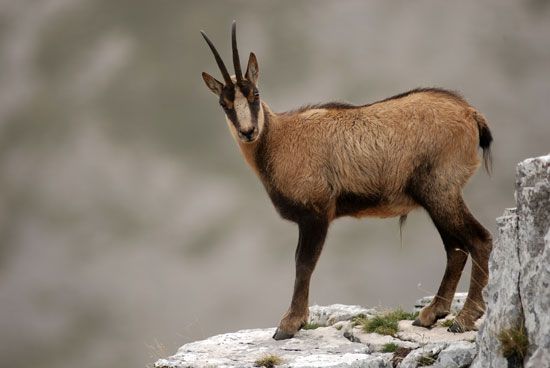
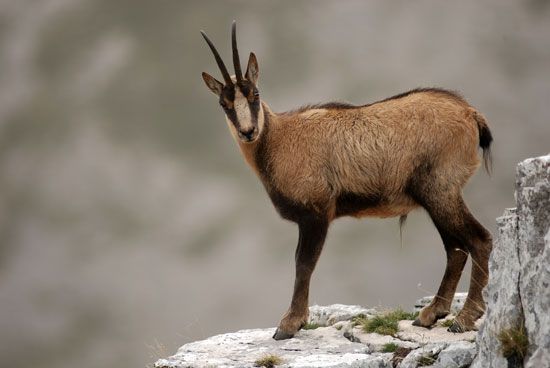
- Chamois: Their diet is seasonal; they feed on herbs and flowers in the summer when they may ascend to the snowline, and shift to young shoots, lichens, and grasses dug from the snow during winter.2
- Goral and Serow: These species are generally forest-dwelling or inhabit mountain woods and forest edges. While specific dietary studies are limited due to their elusive nature, they are known to be adapted to these forested environments, with some serow even utilizing overhanging tree trunks on cliffs.34
What is the evolutionary history of goat antelopes?
The evolutionary history of goat antelopes (tribe Rupicaprini) is complex, and while they were once suggested to be the direct ancestors of modern sheep and goats, this view is not supported by genetic and paleontological data. Instead, they are considered a loosely knit group within the subfamily Caprinae that shares certain anatomical and behavioral traits.1
The group likely originated in Central and East Asia approximately 5–7 million years ago. The tribe Rupicaprini began to diverge at least 4–5 million years ago, leading to distinct geographical distributions:1
- Expansion: Some lineages, including the chamois and extinct forms, reached Europe 1.5–2.5 million years ago, likely utilizing mountain chains and river banks as corridors.1
- Migration: The mountain goat (Oreamnos americanus) migrated to North America via the land bridge that once connected Siberia and Alaska.1
- Persistence: The goral and serow remained in Asia.1
Since these migrations, genetic and epigenetic factors have significantly differentiated the genera, despite their common tribal origin.1
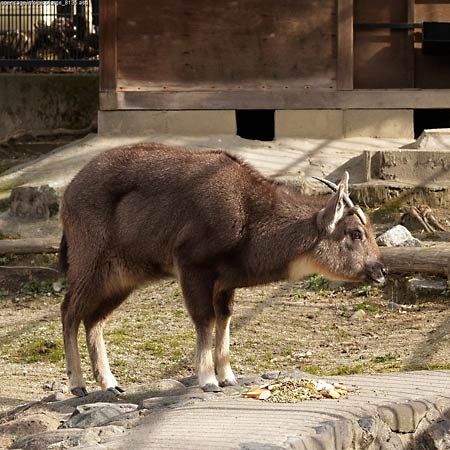
What are the defining characteristics of goat antelopes?
Goat antelopes (tribe Rupicaprini) are a group of mammals within the subfamily Caprinae that possess physical characteristics intermediate between goats and antelopes. Their defining characteristics include:
- Physical Build: They are well-adapted for life in precipitous, rocky terrain and are capable of withstanding cold climates. Males and females are similar in size, and both sexes feature dark brown, short, backward-curving, stiletto-like horns used for defense and intraspecific combat.1
- Scent Glands: The group is characterized by the presence of scent glands, though their location and use vary by species. For example, serow and chamois possess large glands used for territorial marking and dominance displays, while the goral has smaller preorbital glands.1
- Reproduction: They typically have mating periods in autumn and early winter, with a gestation period of five to six months, usually resulting in the birth of a single kid.1
- Taxonomy: They are considered a loosely knit group rather than a single evolutionary lineage. The tribe is often divided into the Naemorhedini (serow and goral) and the true Rupicaprini (chamois and mountain goat).1
What role do goat antelopes play in the mythology and folklore of cultures where they are found?
Sorry, the Britannica knowledge base does not contain specific information regarding the role of goat antelopes in the mythology and folklore of the cultures where they are found.
While the provided search results discuss the biological characteristics and evolutionary history of goat antelopes, as well as the broader cultural significance of mountain worship and the ritualistic use of goats and sheep in certain regions, they do not explicitly detail the mythological status of the tribe Rupicaprini itself.
Sources
- goat antelope — Encyclopædia Britannica
- mountain goat — Encyclopædia Britannica
- chamois — Encyclopædia Britannica
- goral — Encyclopædia Britannica
- serow — Encyclopædia Britannica
- artiodactyl - Areas of distribution — Encyclopædia Britannica
- artiodactyl - Food habits — Encyclopædia Britannica
- artiodactyl - Annotated classification — Encyclopædia Britannica
- antelope — Encyclopædia Britannica
- mountain goat — Merriam-Webster
- Nature worship - Mountains — Encyclopædia Britannica
Published on · 3 min read