Shelduck
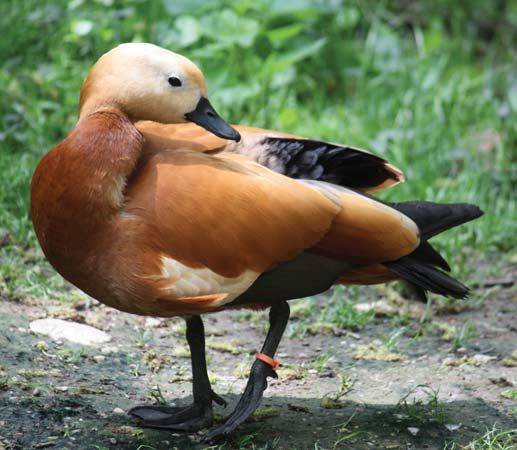
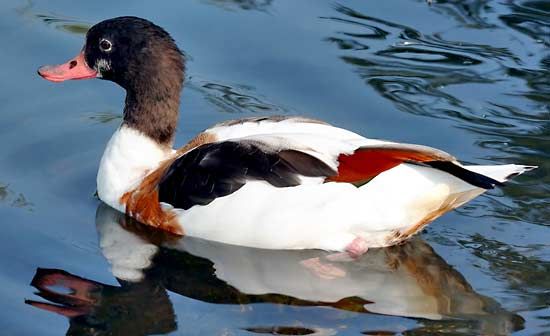
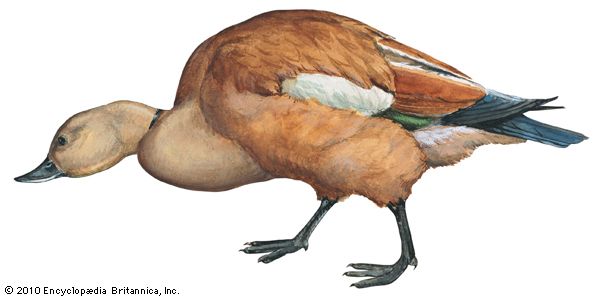
Shelducks are members of the duck tribe Tadornini and are found in the Old World. They are characterized by a gooselike build, long legs, and an upright…
Where are shelducks typically found in the wild, and what habitats do they prefer?
Shelducks are members of the duck tribe Tadornini and are found in the Old World. They are characterized by a gooselike build, long legs, and an upright stance.12
Regarding their habitat and nesting preferences, shelducks are known for being hole nesters. Rather than constructing their own nests, they typically occupy available crevices or holes, such as abandoned rabbit burrows. While many waterfowl species nest in marsh vegetation or on dry land, the use of preexisting holes is a distinct behavior for shelducks. As highly aggressive birds, they also defend a territory around their nest site.31
Are shelducks migratory birds, and if so, what are their migration patterns?
Yes, shelducks are migratory birds, as are many other members of the duck, goose, and swan families.1
Their migratory behavior is complex and influenced by both innate and learned factors. Like other migratory waterfowl, shelducks may travel to wintering grounds in western Europe or tropical Africa, where they congregate in lake and river regions.1
A notable aspect of their migration is the “molt migration.” Some ducks leave their breeding grounds specifically to molt—a process where they replace old feathers—in areas where they are secure from predators while they are temporarily unable to fly. After this period, they continue to their final winter quarters.1
The urge to migrate is partly innate, with young birds often setting off in the correct direction without guidance from older birds. However, this behavior is also highly modifiable; for instance, if food is available and the climate is not too severe, some populations may remain in their home range rather than migrating.5
How do shelducks differ from other types of ducks in terms of behavior and lifestyle?
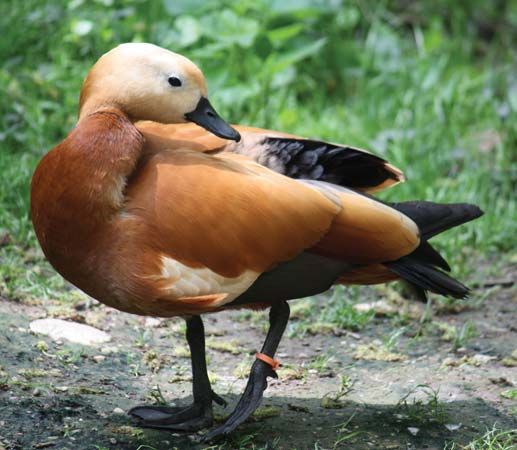
Shelducks, which belong to the tribe Tadornini, exhibit several distinct behavioral and lifestyle characteristics that set them apart from other ducks within the family Anatidae.14
Key Behavioral Differences
- Aggression and Territoriality: Unlike many other duck species that maintain a flexible “home range,” shelducks are notably aggressive and vigorously defend a specific territory around their nest site.86
- Nesting Habits: While many waterfowl nest in marsh vegetation or on open ground, shelducks are specialized hole nesters. They do not construct their own nests but instead occupy preexisting crevices or holes, such as abandoned rabbit burrows.89
- Maturation and Pairing: Most true ducks mature within their first year and pair only for a single season. In contrast, shelducks are among the exceptions that do not follow this pattern, often exhibiting different life-history strategies compared to the typical dabbling or diving ducks.9
- Physical Build: Shelducks possess a unique, gooselike build characterized by long legs and an upright stance, which differs from the typical waddling gait of true ducks.19
How do shelducks reproduce, and what is unique about their nesting habits?
Shelducks reproduce through a process typical of many waterfowl, though they possess distinct behavioral traits. Copulation generally occurs in isolation on the water, a practice that helps avoid disturbance during this critical period.1
Unique Nesting Habits
What sets shelducks apart from many other ducks is their specialized approach to nesting:
- Hole Nesting: Unlike species that build nests in marsh vegetation or on open ground, shelducks are hole nesters. They do not construct their own nests; instead, they occupy preexisting crevices or holes, such as abandoned rabbit burrows.41
- Territoriality: Shelducks are highly aggressive and vigorously defend a specific territory around their nest site, whereas many other duck species maintain a more flexible “home range” that they do not defend as aggressively.1
- Solitary Hens: In species like the common shelduck, the hen is typically solitary at the nest while laying her smooth eggs.4
As with most waterfowl, the female is responsible for incubation, which lasts between 22 and 39 days. She typically lines the nest with down plucked from her own breast to keep the eggs warm and protected.1
Sources
- Shelduck — Encyclopædia Britannica
- shelduck — Merriam-Webster
- Sheldgoose — Encyclopædia Britannica
- Anseriform - Reproductive behaviour — Encyclopædia Britannica
- Migration - In Europe — Encyclopædia Britannica
- Anseriform - Behaviour — Encyclopædia Britannica
- Migration - Physiological stimulus of migration — Encyclopædia Britannica
- Duck — Encyclopædia Britannica
- Anatidae — Encyclopædia Britannica
Published on · 3 min read