Goose
Geese are large, heavy-bodied waterfowl that occupy an intermediate size and build between ducks and swans within the family Anatidae. While they share many…
How are geese different from other waterfowl like ducks and swans?
Geese are large, heavy-bodied waterfowl that occupy an intermediate size and build between ducks and swans within the family Anatidae. While they share many characteristics with their relatives, they possess several distinct traits:1
- Physical Build: Geese have necks that are shorter than their bodies, whereas swans typically have longer necks. Their legs are positioned farther forward than those of ducks or swans, which makes geese better adapted for walking on land.123
- Feeding Habits: Geese are primarily grazers that feed on grasses and sedges. They have evolved strong, deep bills with sharp, hard lamellae (plates) adapted for grasping or digging for roots and tubers.143
- Social and Behavioral Traits: Unlike many ducks, which often exhibit sexual dimorphism in plumage, male and female geese are similar in appearance. Geese are known for their long-term pair bonds and extended family life. They are also highly gregarious and communicate through loud honking or gabbling cries.124
What are some common species of geese and where can they be found?
Geese are primarily found throughout the Northern Hemisphere, where they inhabit various freshwater environments, including lakes, ponds, marshes, and grasslands. While many species are migratory, some populations have become year-round residents in specific regions.17
Common species of geese include:
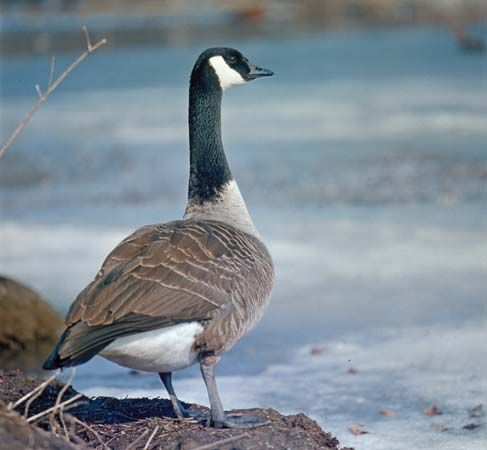
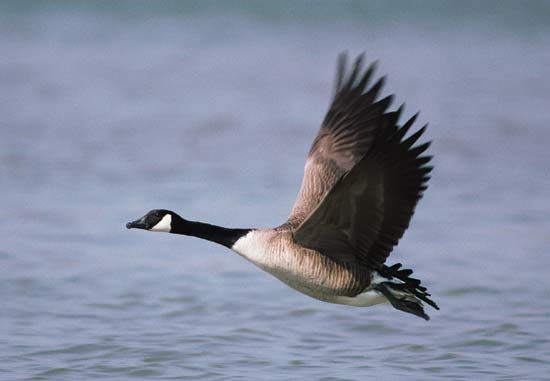
- Canada goose: Native to North America, these birds breed across Canada and Alaska. They winter in the southern United States and Mexico, though nonmigratory populations now exist throughout much of the United States and have been introduced to parts of Europe.7
- Snow goose: These geese breed in the Arctic. The lesser snow goose typically migrates to California and Japan, while the greater snow goose winters along the east coast of the United States, from Chesapeake Bay to North Carolina.8
- Greylag: As the most common Eurasian gray goose, it nests in temperate regions and winters across a range extending from Britain to North Africa, India, and China.9
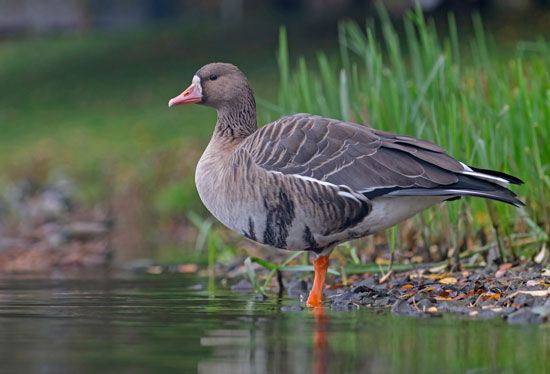
- Other notable species: These include the white-fronted geese, the barnacle goose, the brant, and the nene.1
How long do geese typically live, and what are their main predators?
In the wild, geese typically live for 10 to 15 years, though they can survive for more than 30 years in captivity. Some individuals have even been reported to exceed 40 years of age.110
Geese face various threats throughout their lives, particularly during their vulnerable stages. Wild populations experience high mortality rates, with up to 70 percent of birds lost during their first year of life. To protect their nests and young, geese often build them on the ground, where they are susceptible to various predators. Parents attempt to mitigate these risks by guarding the nest and, in some cases, feigning injury to distract predators that approach their eggs or goslings.1017
Specific predators vary by region and species. For example, the Egyptian goose is known to be preyed upon by lions, crocodiles, and hyenas. Additionally, adult geese face annual mortality rates ranging from 10 to 50 percent, which are influenced by natural factors as well as hunting.1110
Why do geese fly in V-formations during migration?
Geese and other migratory birds, such as ducks, pelicans, and cranes, fly in V-formations primarily to conserve energy during long-distance travel. By flying in this specific arrangement, the birds take advantage of air currents, or vortices, created by the wing tips of the birds in front of them.131
In addition to the aerodynamic benefits, this formation allows members of the flock to share the workload. In some species, such as the northern bald ibis, individuals take turns leading the formation before dropping back to fly in the wake of others, which helps the group maintain cohesion and efficiency throughout their journey.13
Sources
- Goose — Encyclopædia Britannica
- Anseriform - Annotated classification — Encyclopædia Britannica
- Anseriform - Anatomy — Encyclopædia Britannica
- Anseriform - Behaviour — Encyclopædia Britannica
- Waterfowl — Encyclopædia Britannica
- Poultry farming - Ducks and geese — Encyclopædia Britannica
- Canada goose — Encyclopædia Britannica
- Snow goose — Encyclopædia Britannica
- Greylag — Encyclopædia Britannica
- Anseriform - Life history — Encyclopædia Britannica
- Egyptian goose — Encyclopædia Britannica
- Anseriform - Reproductive behaviour — Encyclopædia Britannica
- Migration - Modes of migration — Encyclopædia Britannica
Published on · 3 min read