Shenandoah Valley
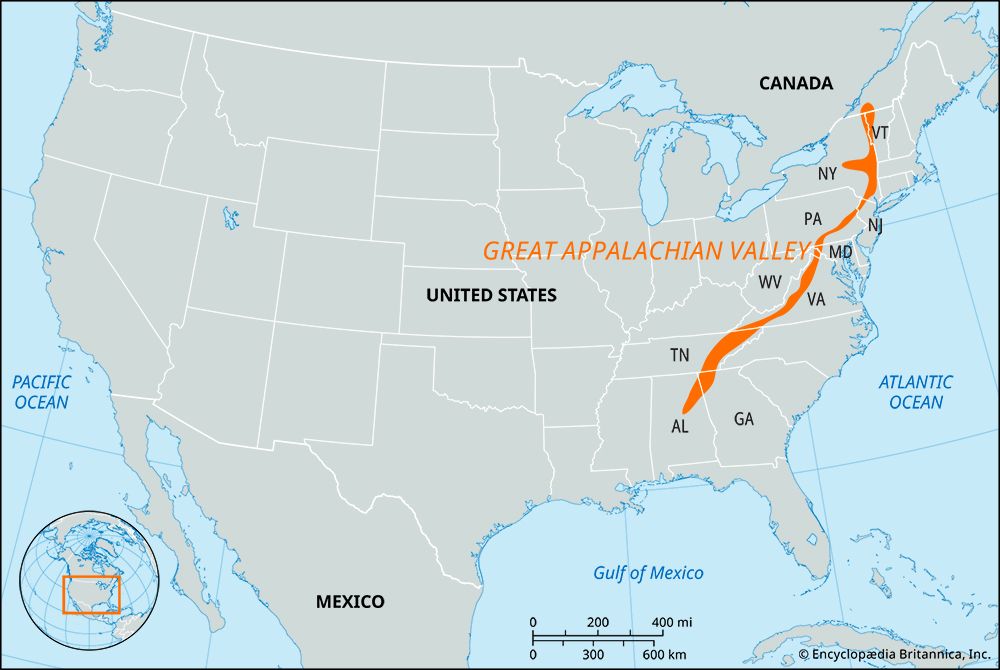
The Shenandoah Valley is a prominent region located primarily in Virginia, U.S., and is a part of the Great Appalachian Valley.
What is the geographical location and extent of the Shenandoah Valley?
The Shenandoah Valley is a prominent region located primarily in Virginia, U.S., and is a part of the Great Appalachian Valley.1
Geographical Extent
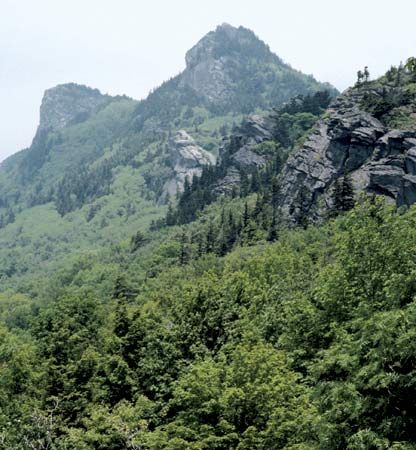
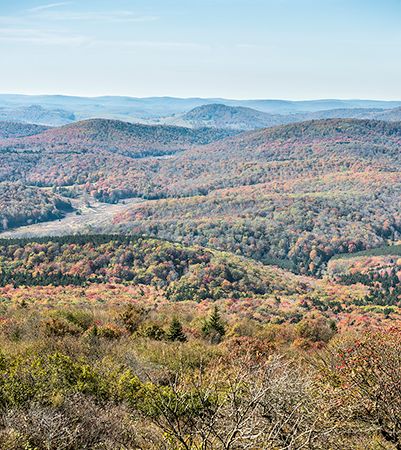
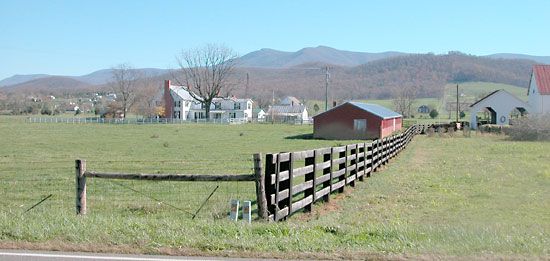
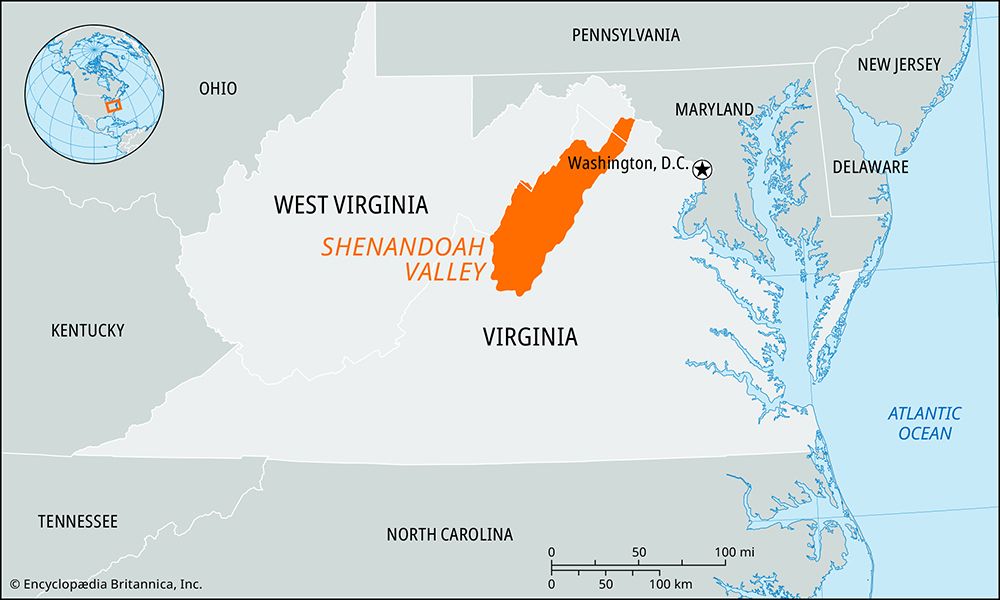
The valley stretches approximately 150 miles (240 km) in length and reaches about 25 miles (40 km) in width. It extends southwestward from the vicinity of Harpers Ferry, West Virginia, along the Potomac River. Geographically, it is situated between the Blue Ridge to the east and the Allegheny Mountains to the west.1
While definitions vary, the valley is often considered to extend southward to the James River, encompassing nine counties: Berkeley and Jefferson in West Virginia, and Frederick, Clarke, Shenandoah, Warren, Rockingham, Page, and Augusta in Virginia. Some interpretations also include Rockbridge County. The region is drained by the Shenandoah River, which flows northeast between the mountain ranges.12
What are the major rivers and waterways in the Shenandoah Valley?
The primary waterway draining the Shenandoah Valley is the Shenandoah River, which flows northeast between the Blue Ridge and the Allegheny Mountains. The river is divided into two main branches—the North Fork and the South Fork—which are separated by the Massanutten Mountain range.12
These waters eventually empty into the Potomac River at Harpers Ferry, West Virginia. The Potomac serves as a major regional drainage system, ultimately carrying water toward the Chesapeake Bay. Additionally, the southern portion of the valley is often considered to extend to the James River, which serves as another significant drainage system in the broader region of Virginia.134
How did the Shenandoah Valley play a role in American history, particularly during the Civil War?
During the American Civil War, the Shenandoah Valley served as a vital strategic corridor. Its geography allowed Confederate forces to move north toward Washington, D.C., while forcing Union armies to move away from the Confederate capital of Richmond. Because the valley provided a protected route to threaten the Union capital, it often forced the North to divert troops from other theaters to ensure the city’s security.5
The region was the site of the Shenandoah Valley campaigns, which featured brilliant maneuvers by Confederate generals like Stonewall Jackson. Jackson’s 1862 campaign famously pinned down larger Union forces, potentially saving Richmond from early capture.5
Late in the war, Union General Ulysses S. Grant dispatched Philip H. Sheridan to seize the valley, aiming to neutralize the Confederate threat and destroy the region’s rich agricultural resources. Following a series of decisive Union victories in 1864, the Federals gained control of the valley, contributing to the eventual collapse of the Confederacy in 1865.5
What are some of the most popular tourist attractions in the Shenandoah Valley?
The Shenandoah Valley offers a variety of popular tourist attractions, ranging from scenic natural landscapes to significant historical sites. Key destinations include:
- Shenandoah National Park: A major preserve known for its spectacular panoramic views, diverse wildlife, and extensive forests. Visitors often travel along Skyline Drive, which runs the length of the park, or hike sections of the Appalachian National Scenic Trail.16
- Limestone Caverns: The region is famous for its subterranean wonders, including the Luray Caverns, which feature striking stalactites and the unique “stalacpipe organ.” Other notable caves include Endless Caverns and Shenandoah Caverns.178
- Historical and Cultural Sites: The Museum of the Shenandoah Valley in Winchester highlights the region’s art and history. Additionally, the New Market Battlefield Park commemorates the historic 1864 battle involving cadets from the Virginia Military Institute.18
- Natural Landmarks: The Natural Bridge near Lexington remains a prominent attraction for visitors exploring the valley’s geological features.1
Sources
- Shenandoah Valley — Encyclopædia Britannica
- Shenandoah — Merriam-Webster
- Potomac River — Encyclopædia Britannica
- Virginia - Drainage and soils — Encyclopædia Britannica
- Shenandoah Valley campaigns — Encyclopædia Britannica
- Luray Caverns — Encyclopædia Britannica
- Shenandoah National Park — Encyclopædia Britannica
- New Market — Encyclopædia Britannica
Published on · 3 min read