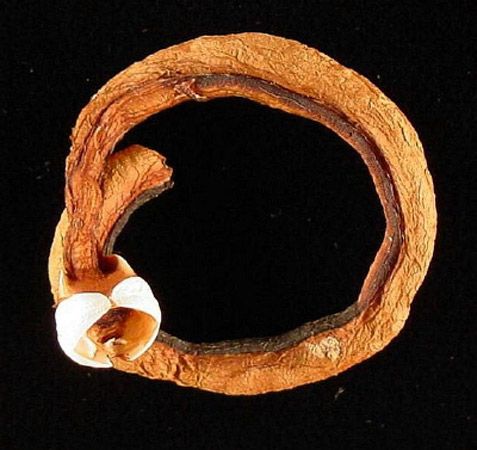
Shipworm
Shipworms, which are marine bivalve mollusks, possess specialized adaptations that allow them to bore into submerged wooden structures:
What adaptations do shipworms have that allow them to bore into wood?
Shipworms, which are marine bivalve mollusks, possess specialized adaptations that allow them to bore into submerged wooden structures:
- Modified Shell: Only the anterior end of the shipworm is covered by a white shell. This shell features file-like ridges that act as a rasp, cutting into wood at a rate of approximately 8 to 12 motions per minute.1
- Burrowing Mechanism: The animal uses this rasping shell to excavate tunnels within the wood. As it bores, it secretes lime to line the interior of its burrow, providing structural protection.1
- Body Structure: While the shell is used for boring, the remainder of the shipworm’s body is a long, tubelike structure that can reach up to 180 cm (6 feet) in length. This portion remains within the burrow, extending toward the opening to ingest oxygen and food particles from the water while discharging waste.1
- Dietary Adaptation: In addition to filtering nutrients from the water, most species ingest a portion of the wood they excavate as a food source.1
How do shipworms contribute to the deterioration of wooden structures in marine environments?
Shipworms, members of the family Teredinidae, are highly destructive to submerged wooden structures, including ship hulls and wharf piles. Their contribution to deterioration occurs through several key processes:12
- Mechanical Excavation: Shipworms use their specialized, file-like shells to rasp away wood fibers at a rate of 8 to 12 motions per minute, creating extensive tunnel networks within the structure.1
- Structural Compromise: As they burrow, these mollusks can grow up to 180 cm (6 feet) in length, significantly weakening the integrity of the wood from the inside out.1
- Protective Lining: To maintain their tunnels, they secrete lime to line the interior of the burrows, which further alters the composition of the wood.1
- Nutritional Consumption: Most species ingest the wood they excavate as a food source, accelerating the degradation of the material.1
The genus Teredo is considered particularly economically significant due to the extensive damage its species cause to maritime infrastructure worldwide.1
Are there different species of shipworms, and if so, how many are known?
Yes, there are multiple species of shipworms. There are approximately 65 known species of these marine bivalve mollusks belonging to the family Teredinidae.1
These species are categorized into several genera, including:
- Teredo: This genus is the most economically significant, containing about 15 species, such as the common shipworm (T. navalis) and T. norvegica.1
- Bankia1
- Xylotrya1
- Xylophaga1
While they share the common trait of boring into submerged wood, they vary in size and distribution. For example, T. norvegica typically grows to about 30 cm (1 foot) in length, whereas the common shipworm (T. navalis) ranges from 20 to 45 cm (8 to 18 inches) and is known for being particularly destructive along the Baltic Sea coast.1
Are there any ecological benefits or roles that shipworms play in marine ecosystems?
While shipworms are primarily recognized for their destructive impact on human-made wooden structures, they play a functional role in marine ecosystems as biological agents of wood degradation.
By boring into submerged wood, shipworms act as decomposers that facilitate the breakdown of organic material in the sea. This process allows for the colonization of wood by a variety of other marine species over time, contributing to the natural recycling of carbon and nutrients within the marine environment. In this ecological context, they function similarly to other wood-boring bivalves, such as piddocks, by accelerating the decomposition of woody debris that enters the ocean.1
Although the provided information focuses heavily on their role as pests, their activity is a natural part of the biological succession that occurs when wood is introduced to marine habitats.1
Sources
- shipworm — Encyclopædia Britannica
- shipworm — Merriam-Webster
- Teredinidae — Merriam-Webster
- bivalve - Associations — Encyclopædia Britannica
Published on · 3 min read