How Many Hearts Does an Octopus Have?
An octopus has three hearts, which help it efficiently deliver oxygen and nutrients throughout its body.
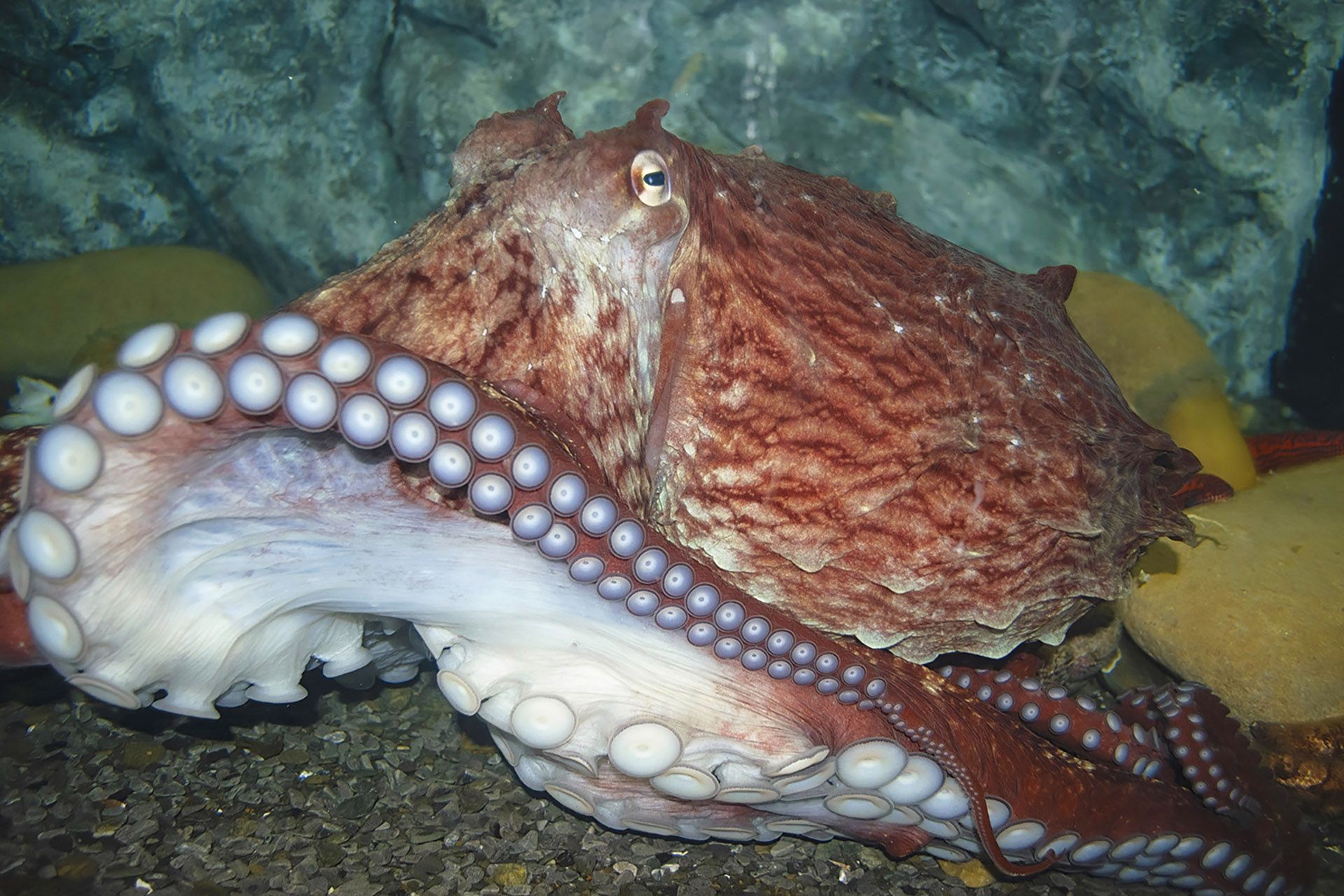
How many hearts does an octopus have?
An octopus has three hearts, which help it efficiently deliver oxygen and nutrients throughout its body.1
These three hearts serve distinct functions:
- Two branchial hearts: These are located at the base of each gill and are responsible for pumping blood through the gills to be oxygenated.12
- One systemic heart: This main heart pumps the oxygenated blood to the rest of the octopus’s body.12
This specialized circulatory system is a key feature of the Coleoidea group, which includes octopuses, squids, and cuttlefishes.2
Why is octopus blood blue instead of red?
Octopus blood is blue because it relies on a copper-based respiratory pigment called hemocyanin to transport oxygen throughout the body.42
While many animals, including humans, use iron-based hemoglobin to carry oxygen—which gives blood its characteristic red color—octopuses and many other mollusks and crustaceans utilize hemocyanin. Hemocyanin is colorless when deoxygenated but turns a distinct blue color when it binds with oxygen. This pigment is dissolved directly in the blood plasma rather than being enclosed in blood cells, and it serves as an efficient oxygen carrier for these active marine animals.452
What are the main differences between octopuses and squids?
While octopuses and squids are both members of the class Cephalopoda, they exhibit significant differences in their anatomy, habitat, and behavior.
Anatomical Differences
- Appendages: The most visible difference is in their limbs. Octopuses have eight arms equipped with suckers. Squids have 10 appendages: eight arms and two longer, specialized tentacles that are typically used for capturing prey.78
- Body Shape: Squids generally have elongated, tubular bodies with a feathery-shaped internal shell (often called a pen) made of horny material. In contrast, octopuses have saccular, soft bodies and lack an internal shell.78
Habitat and Lifestyle
- Environment: Octopuses are primarily bottom-dwelling animals, often found on the ocean floor, where they may use dens or crevices for shelter. Squids are more varied; while some are coastal, many are oceanic, ranging from the surface to deep-sea environments.798
- Movement: Squids are often swift swimmers, sometimes found in schools, and are well-adapted for an active, open-water existence. Octopuses are typically more sedentary or solitary, though they are known for high levels of intelligence and complex behaviors, such as using tools.298
Defense Mechanisms
Both animals use ink for defense, but their strategies differ. An octopus may use ink to paralyze an attacker’s senses, while a squid often ejects a spindle-shaped mass of ink—acting as a decoy—before becoming nearly transparent and jetting away to escape.2
How do octopuses use their ink sacs for protection?
Octopuses utilize their ink sacs as a sophisticated defense mechanism when they feel threatened by a predator. The process involves the following key actions:12
- Visual Concealment: When endangered, an octopus forcibly ejects a dark, melanin-based fluid through a funnel organ near its anus. This creates a dark cloud that acts as a visual screen, effectively concealing the octopus and allowing it to escape.1213
- Sensory Disruption: Beyond simple camouflage, the ink produced by some species contains compounds that can temporarily paralyze the sensory organs of an attacker, such as a moray eel, by dulling its senses of sight and smell.128
- Coordinated Ejection: The ink is mixed with mucus produced by a funnel gland before being expelled. The ejection is a highly coordinated effort involving the contraction of muscles surrounding the ink sac, demonstrating the octopus’s advanced nervous system and control.1213
Sources
- How many hearts does an octopus have? — Encyclopædia Britannica
- cephalopod - Form and function — Encyclopædia Britannica
- Circulatory system - General features of circulation — Encyclopædia Britannica
- Circulatory system - Blood — Encyclopædia Britannica
- Blue-ringed octopus — Encyclopædia Britannica
- coloration - Hemocyanins — Encyclopædia Britannica
- squid — Encyclopædia Britannica
- cephalopod - Behaviour — Encyclopædia Britannica
- cephalopod - Ecology — Encyclopædia Britannica
- Circulatory system - Hearts — Encyclopædia Britannica
- Circulatory system - Chordata — Encyclopædia Britannica
- Do octopuses have ink? — Encyclopædia Britannica
- octopus — Encyclopædia Britannica
Published on · 3 min read