Worm Shell
A worm shell is any marine snail belonging to the family Vermetidae (subclass Prosobranchia, class Gastropoda). These mollusks are characterized by an…
What is worm shell?
A worm shell is any marine snail belonging to the family Vermetidae (subclass Prosobranchia, class Gastropoda). These mollusks are characterized by an irregularly coiled, narrow tube that resembles a worm.123
Most species live cemented to rock or coral substrates, frequently inhabiting coral reefs where they can form dense zones, sometimes reaching concentrations of over 60,000 individuals per square meter. Unlike many other snails, they are suspension feeders. They obtain food by secreting a mucous net from a gland in the foot, which spreads into the water current to trap particulate matter. After a few minutes, the snail retracts the net into its mouth to ingest the trapped food before spreading a new one.1
How do worm snails use their mucous nets to catch food?
Worm snails (family Vermetidae) are suspension feeders that utilize a specialized method to capture food from the water column. They secrete a mucous net from a gland located in the foot, which is then spread out into the surrounding water current.
As the water flows through the net, suspended particulate matter becomes trapped and sticks to the mucus. After a few minutes, the snail retracts the net into its mouth to ingest the trapped food particles. Once the net is consumed, the snail repeats the process by spreading a new one to continue feeding.1
Why do worm snails choose to live cemented to rocks or coral?
Worm snails (family Vermetidae) live cemented to rocks or coral substrates primarily as an adaptation to their sedentary, suspension-feeding lifestyle. By anchoring themselves to these stable surfaces, they can remain in fixed positions that are often located in areas with favorable water currents, which are essential for their feeding method.1
Because these snails feed by secreting a mucous net to trap particulate matter from the water, being cemented to a substrate allows them to effectively position their nets within the current to maximize food capture. This sedentary behavior is a specialized adaptation found in several mollusk groups, enabling them to exploit food resources in the water column without the need for active locomotion. In many tropical reef habitats, this strategy is highly successful, allowing worm snails to form dense colonies that can exceed 60,000 individuals per square meter.17
What are some other unique feeding methods used by marine mollusks?
Marine mollusks exhibit a remarkable diversity of feeding strategies beyond the use of mucous nets. These adaptations allow them to thrive in environments ranging from the intertidal zone to the deep sea.6
Specialized Feeding Adaptations
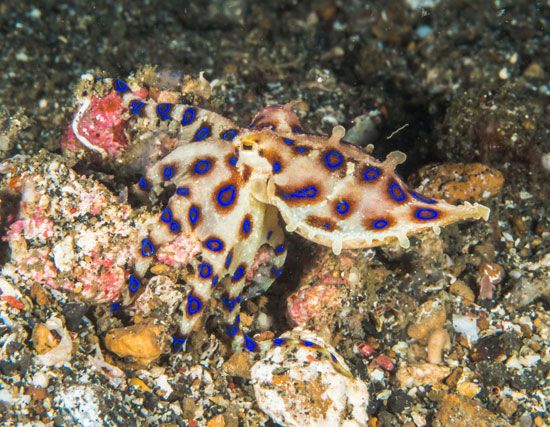
- Predatory Hunting: Many cephalopods, such as squids and octopuses, are active carnivores that use prehensile arms equipped with suckers, hooks, or teeth to capture prey like crustaceans and fish.12
- Scraping and Grazing: Chitons utilize a strong, rasping tongue called a radula to scrape algae directly from hard rock surfaces in the intertidal zone.6
- Tentacle Capture: Scaphopods (tusk shells) use filamentous head tentacles known as captacula to snare protozoa, small crustaceans, and other tiny mollusks from the sand.6
- Symbiotic Relationships: Some species, such as giant clams and certain sea slugs, harbor symbiotic zooxanthellae (algal cells) within their tissues, gaining nutrition from the algae’s metabolic products.136
- Suction and Siphoning: Deepwater bivalves like Propeamussium suck prey into their mantle cavity via an inrush of water, while septibranchs use a modified gill (septum) to create pressure changes that draw prey into a siphon.13
- Wood Boring: Shipworms possess the unique ability to digest wood as they burrow, supplementing their diet while also filtering food from the water.13
These varied methods highlight the evolutionary ingenuity of mollusks in securing nutrients across diverse marine habitats.6
Sources
- worm shell — Encyclopædia Britannica
- worm shell — Merriam-Webster
- mollusk - Annotated classification — Encyclopædia Britannica
- vermetid — Merriam-Webster
- gastropod - Food and feeding — Encyclopædia Britannica
- bivalve - Food and feeding — Encyclopædia Britannica
- gastropod - Ecology and habitats — Encyclopædia Britannica
- annelid - Development — Encyclopædia Britannica
- Animal development - The larval stage — Encyclopædia Britannica
- mollusk - Locomotion — Encyclopædia Britannica
- gastropod - Reproduction and life cycles — Encyclopædia Britannica
- Filter feeding — Encyclopædia Britannica
- mollusk - Habitats, feeding habits, and associations — Encyclopædia Britannica
- cephalopod - Form and function — Encyclopædia Britannica
- nudibranch — Encyclopædia Britannica
Published on · 3 min read