Shoebill
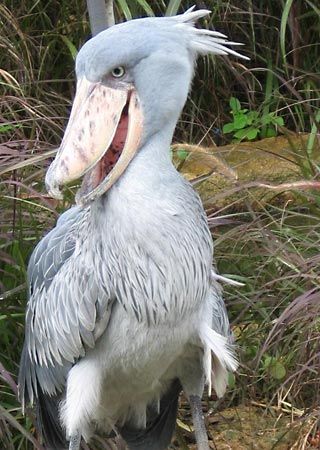
The shoebill (Balaeniceps rex) is a unique African wading bird that constitutes its own family, Balaenicipitidae. Its precise taxonomic placement remains a…
What is the taxonomic classification of the shoebill, and how is it related to other bird species?
The shoebill (Balaeniceps rex) is a unique African wading bird that constitutes its own family, Balaenicipitidae. Its precise taxonomic placement remains a subject of scientific debate, as the bird exhibits characteristics that link it to several different groups.1
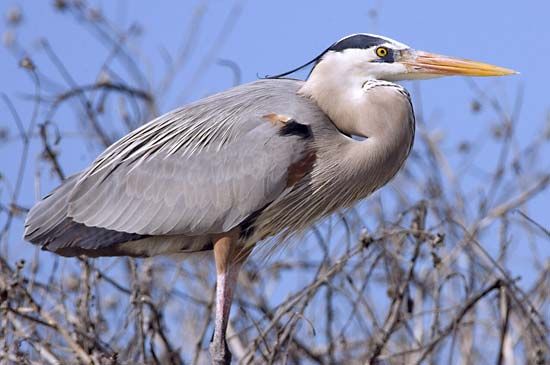
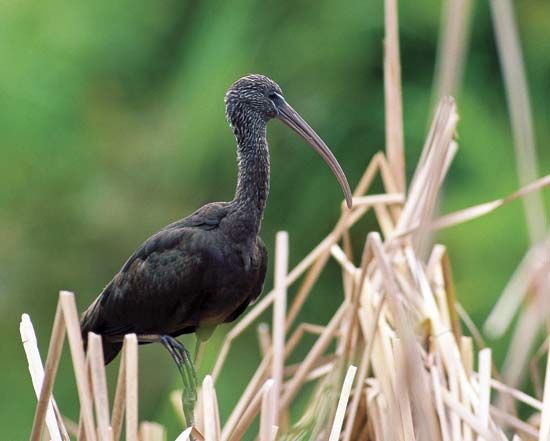
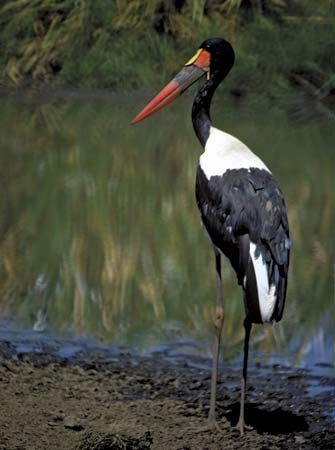
Historically, the shoebill has been grouped with herons, storks, and ibises within the order Ciconiiformes based on behavioral and morphological traits. However, modern genetic and morphological analyses suggest a closer evolutionary relationship with pelicans and the hammerhead.12
Due to these conflicting findings, the species is sometimes classified within the order Pelecaniformes or placed in its own distinct order, Balaenicipitiformes. Because the composition of these orders is currently in flux, the shoebill’s exact position within the avian tree of life continues to be refined by researchers.13
How do shoebills communicate with each other and with other species?
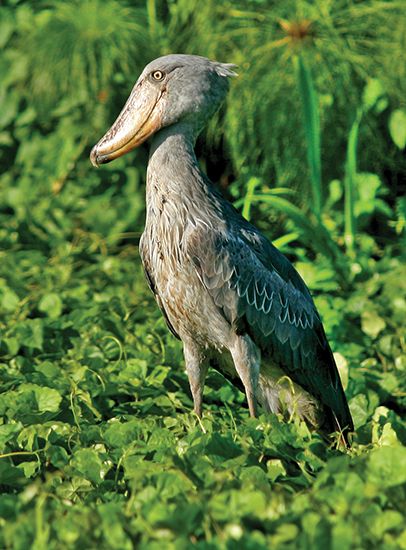
The shoebill (Balaeniceps rex) is generally a silent and solitary bird, often observed alone or in pairs rather than in large flocks. Because of its quiet nature, it is not known for complex vocalizations, and it has even been described as having a morose disposition.14
The primary method of communication for the shoebill is a mechanical display: it claps the mandibles of its large, clog-shaped bill together. This action produces a loud, hollow sound, which serves as a display. While other related species, such as herons, utilize elaborate strutting, dancing rituals, and various postures to maintain pair bonds or defend territory, the specific social signaling of the shoebill is less intensively studied than that of its relatives.14
The shoebill is primarily nocturnal and relies on its environment for concealment, which aligns with its tendency to avoid the gregarious, flock-based communication behaviors seen in many other ciconiiform species4.
What is known about the shoebill’s breeding habits and life cycle?
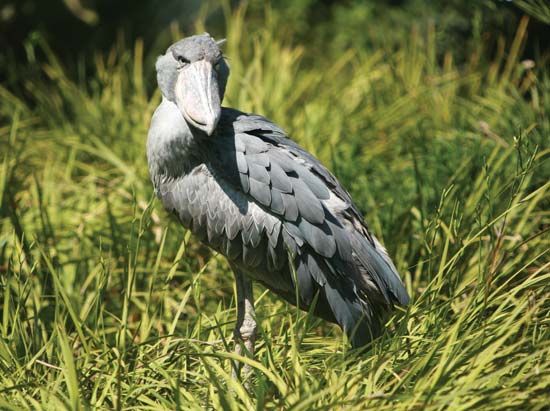
The shoebill (Balaeniceps rex) exhibits distinct breeding habits that set it apart from many of its relatives. Unlike many ciconiiforms that nest in large, gregarious colonies, the shoebill is not markedly social and typically nests in isolation.1
Nesting and Reproduction
Rather than constructing elaborate arboreal structures, the shoebill nests on the ground, often on floating vegetation or solid mounds. The nest itself is simple, consisting of a patch of long grass that the bird flattens to create a site for its eggs.51
- Clutch Size: Shoebills typically lay one to three white eggs, though one or two is more common.51
- Incubation: The eggs hatch in approximately 30 days.5
- Parental Care: Like most members of its broader taxonomic group, parental care is shared between the sexes, with both parents participating in nest building, incubation, and feeding the chicks. The young remain in the nest and are dependent on their parents for food until they are full-grown.1
How did the shoebill get its name, and are there any other common names for this bird?
The shoebill (Balaeniceps rex) derives its common name from its distinct, clog-shaped bill, which is a specialized adaptation for catching and holding large, slippery prey like lungfish.1
Beyond its primary name, the bird is also referred to by several other common names:
- Whalehead or whale-headed stork: These names highlight the bird’s massive, distinctive head and bill structure.6
- Shoebill stork: This name is frequently used to categorize the bird within the broader group of ciconiiforms, which includes storks and herons.7
Sources
- Shoebill — Encyclopædia Britannica
- shoebill — Merriam-Webster
- Pelecaniform — Encyclopædia Britannica
- Ciconiiform - Behaviour — Encyclopædia Britannica
- Ciconiiform - Reproduction and nesting — Encyclopædia Britannica
- whalehead — Merriam-Webster
- Funky Feathers: 10 Bizarre Birds — Encyclopædia Britannica
Published on · 3 min read