Pelecaniform
The classification of pelecaniforms is currently a subject of taxonomic debate, with two primary frameworks in use.
Which bird species are classified as pelecaniforms?
The classification of pelecaniforms is currently a subject of taxonomic debate, with two primary frameworks in use.
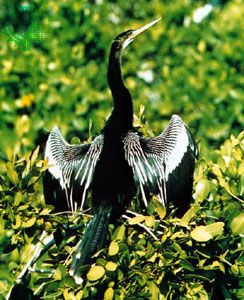
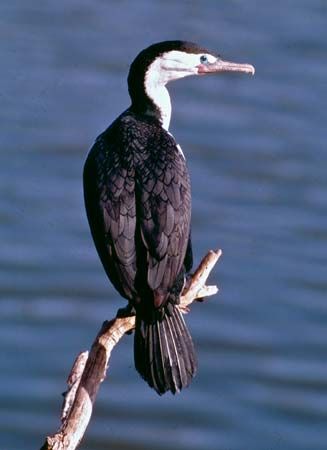
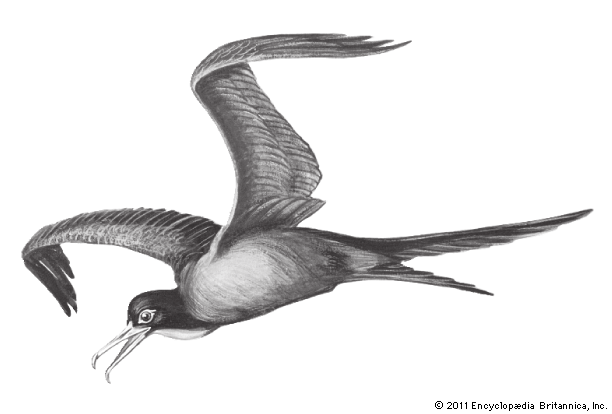
Traditionally, the order Pelecaniformes includes six families of aquatic birds characterized by webbing between all four toes:
- Anhingidae (anhingas or snakebirds)
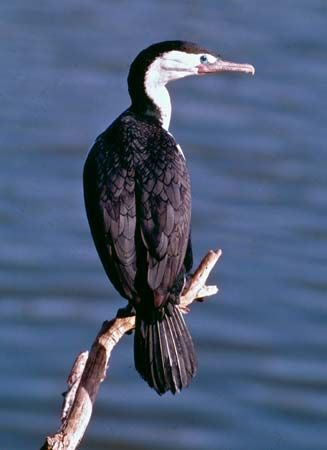
- Phalacrocoracidae (cormorants)
- Phaethontidae (tropic birds)
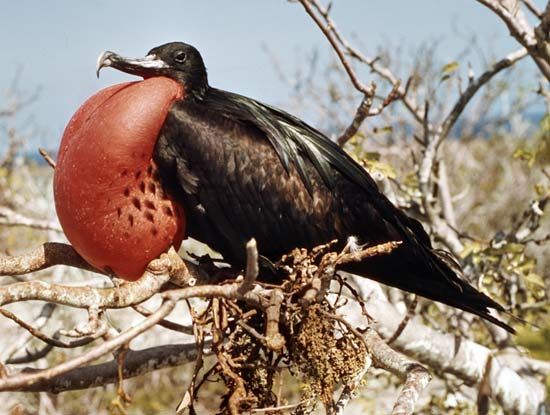
- Fregatidae (frigate birds)
- Sulidae (gannets and boobies)
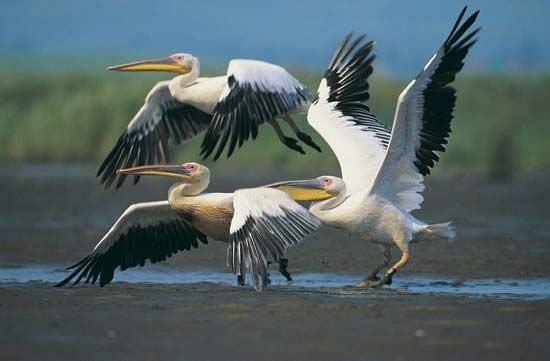
- Pelecanidae (pelicans)
However, a widely accepted alternative classification restricts the order Pelecaniformes to pelicans, herons, egrets, ibises, spoonbills, the hammerhead, and the shoebill. In this system, the other traditional families are reclassified: anhingas, cormorants, frigate birds, gannets, and boobies are moved to the order Suliformes, while tropic birds are placed in the order Phaethontiformes.1
How do pelecaniform birds hunt and feed?
Because the classification of Pelecaniformes is subject to taxonomic revision, feeding behaviors vary significantly depending on which species are included in the order.
Pelicans (Family Pelecanidae)
Pelicans primarily hunt by using their distensible throat pouches as dip-nets to scoop up fish while swimming. Many species cooperate to herd fish into shallow water by forming lines or circles, splashing to panic the prey. The brown pelican is a notable exception, as it often hunts by plunging from the air into the water.45
Herons, Egrets, and Related Species
In the revised classification, Pelecaniformes includes herons, egrets, ibises, spoonbills, the hammerhead, and the shoebill. These birds employ diverse strategies:
- Herons: Often stand motionless, waiting for prey to approach before striking with a rapid neck extension. Some use “canopy feeding,” where they shade the water with their wings to attract fish or improve visibility.67
- Ibises and Spoonbills: Ibises use their long bills to probe mud or ground for food, while spoonbills sweep their partially open bills side-to-side in shallow water to capture small organisms.6
What role do pelecaniform birds play in their ecosystems?
Pelecaniform birds play several distinct roles within their ecosystems, primarily as specialized predators and as contributors to nutrient cycling.
Ecological Roles
- Predatory Impact: As active hunters, these birds help regulate populations of fish and other aquatic organisms. Their diverse hunting strategies—ranging from the aerial piracy of frigate birds to the underwater pursuit by cormorants and anhingas—allow them to occupy various niches in both marine and freshwater environments.85
- Nutrient Cycling: The excrement of these birds, known as guano, serves as a vital source of fertilizer. In large colonies, such as those historically found along the coast of Peru, the accumulation of guano provides a significant influx of nutrients into the local environment.3
Human Interaction and Conservation
- Resource Competition: Some species, particularly cormorants, are often viewed as competitors by humans, as they feed on fish stocks that are also targeted by commercial and recreational fisheries.3
- Environmental Indicators: Because these birds are often at the top of the food chain, they are susceptible to the accumulation of environmental toxins. For example, the use of insecticides like DDT in the mid-20th century caused reproductive failure in brown pelicans due to eggshell thinning, highlighting their role as sensitive indicators of ecosystem health.39
We could dive deeper into how specific conservation efforts have helped these populations recover, or explore the unique physiological adaptations that allow them to thrive in these diverse roles.
How do pelecaniform birds reproduce and care for their young?
Pelecaniform birds typically breed in colonies, a behavior often driven by the scarcity of safe, predator-free nesting sites. While some species nest in trees or bushes, many others build nests on the ground, on cliff ledges, or in rock crevices. These nests are generally constructed from materials like twigs, grass, algae, or feathers, and often accumulate guano over the breeding season.1112
Incubation and Hatching
Both parents participate roughly equally in the incubation of eggs and the feeding of young. Clutch sizes vary by species and environment: birds in productive, high-latitude areas tend to lay more eggs than those in nutrient-poor tropical waters. Incubation periods generally range from four to eight weeks, depending on the species. In many ground-nesting species that lay multiple eggs, the older chick may push the younger one out of the nest, with the second egg often serving as an insurance policy against infertility or loss.12
Care of the Young
Young pelecaniforms are helpless and naked at hatching, requiring continuous brooding until their down develops. They are fed regurgitated food, which they obtain by inserting their heads into the parent’s gullet. While some species stop feeding their young once they fledge, others—such as frigate birds—may continue to provide food for months after the young can fly, as the offspring require significant time to master hunting skills.125
Sources
- Pelecaniform — Encyclopædia Britannica
- Pelecaniform - Evolution and paleontology — Encyclopædia Britannica
- Pelecaniform - General features — Encyclopædia Britannica
- Pelecaniform - Feeding ecology — Encyclopædia Britannica
- Pelican — Encyclopædia Britannica
- Ciconiiform - Feeding habits — Encyclopædia Britannica
- Heron — Encyclopædia Britannica
- Pelecaniform - Importance to humans — Encyclopædia Britannica
- Pelecaniform - Survival and mortality — Encyclopædia Britannica
- Pelecaniform - Distinguishing characteristics — Encyclopædia Britannica
- Pelecaniform - Nests, eggs, and young — Encyclopædia Britannica
- Pelecaniform - Reproduction — Encyclopædia Britannica
Published on · 4 min read