Ibis
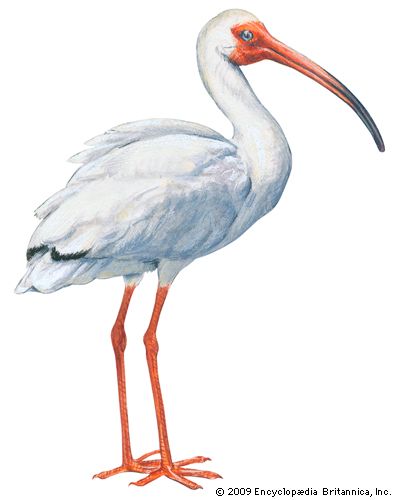
Ibises are medium-sized wading birds belonging to the family Threskiornithidae. They typically range in length from 55 to 75 cm (22 to 30 inches).
What are the distinctive physical characteristics of ibises?
Ibises are medium-sized wading birds belonging to the family Threskiornithidae. They typically range in length from 55 to 75 cm (22 to 30 inches).
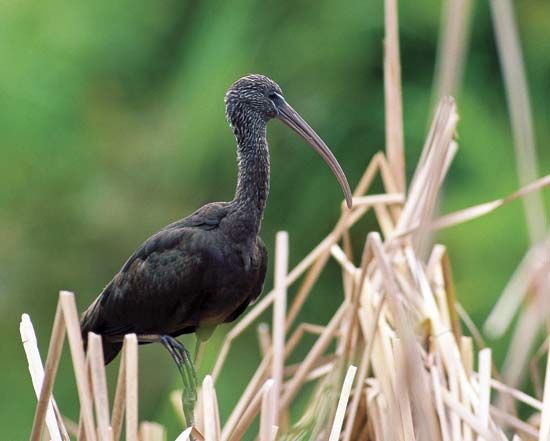
Their most distinctive physical characteristic is a long, slender, and markedly down-curved bill, which they use to probe for small fishes and soft mollusks in shallow water. While their appearance varies by species—ranging from the dark reddish brown and glossy purplish plumage of the glossy ibis to the white feathers and black wing markings of the sacred ibis—many species feature bare skin on the head or face, such as the red-faced Japanese ibis or the black-headed sacred ibis. When in flight, ibises are characterized by their habit of keeping both their neck and legs extended.12
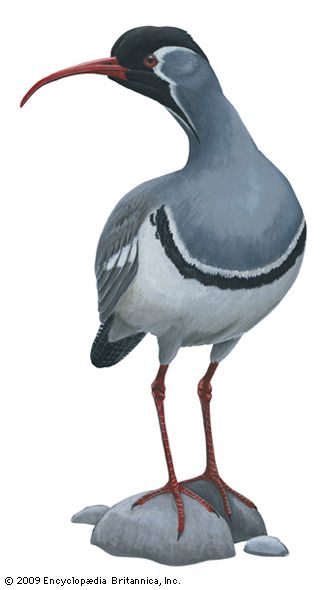
It is important to note that the ibisbill is a distinct species and not a true ibis, despite its name and similarly curved bill.3
How many species of ibises are there, and which are the most well-known?
There are approximately 26 species of ibises, which are medium-sized wading birds belonging to the subfamily Threskiornithinae.3
Several species are particularly well-known for their distinct appearances or cultural significance:
- Sacred ibis: Historically revered by the ancient Egyptians, this bird is white with black wing markings and a bare black head and neck.3
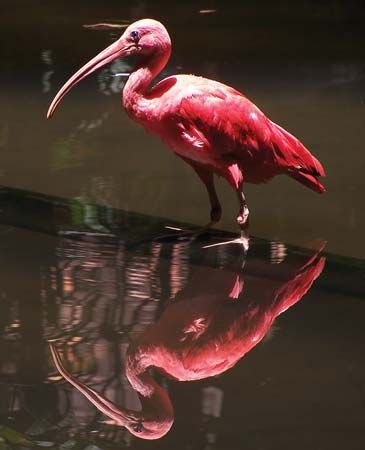
- Scarlet ibis: Notable for its vibrant red plumage, it is found in northern South America.3
- Glossy ibis: A smaller form characterized by its dark reddish-brown and glossy purplish feathers.3
- Japanese ibis: Also known as the crested ibis, this white bird with a red face was nearly driven to extinction in the late 20th century.3
- Hermit ibis: An endangered species recognized by its reddish bill and bare skin on its head.3
- White ibis: A species that ranges across Central and North America.3
Note that while wood storks are sometimes referred to as wood ibises, they are classified as storks rather than true ibises.3
What are the key differences between ibises and other wading birds like herons or storks?
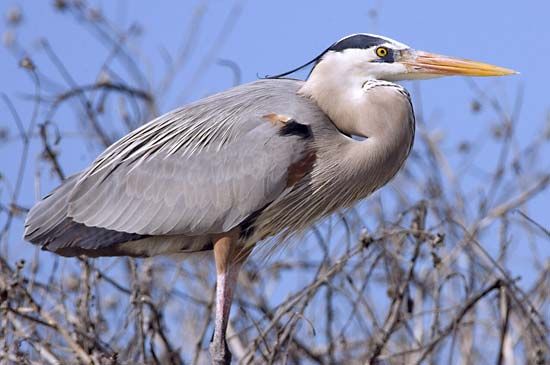
While ibises, herons, and storks are all long-legged wading birds often grouped within the order Ciconiiformes, they exhibit distinct structural differences, particularly in their bill shapes and feet.56
Key Differences
- Bill Shape: This is the most diagnostic feature for identification.
- Ibises: Possess long, slender, and markedly down-curved bills.54
- Herons: Typically have long, straight, and sharp, spearlike bills used for grasping prey.54
- Storks: Generally feature long, massive, and strong bills that are usually straight, though some species (like wood storks) have decurved bills, and others may have upturned or specialized shapes.54
- Feet and Toes:
- Ibises: Have long legs with front toes slightly webbed at the base and a small, elevated hind toe.5
- Herons: Feature a partial web between the outer and middle toes, and their hind toes are at the same level as the front toes.5
- Storks: Have long legs with a partial web between the middle and outer toes, and their hind toe is smaller and raised.5
While these families share a general body plan of long necks and legs, the ibis family is considered a more homogeneous group compared to the more diverse heron family.6
How are ibises distributed geographically, and what habitats do they prefer?
Ibises are widely distributed across all warm regions of the world, though they are notably absent from South Pacific islands and New Zealand. While they are found globally in tropical and temperate zones, their specific ranges vary by species; for example, the scarlet ibis is native to northern South America, while the white ibis is found throughout Central and North America.310
Regarding their habitat, ibises are primarily wading birds that prefer environments near water, such as shallow lagoons, lakes, bays, and marshes. They utilize these aquatic settings to forage for small fish and soft mollusks using their specialized, down-curved bills. While most species are highly aquatic, there are exceptions; for instance, the straw-necked ibis of Australia is less dependent on water and feeds primarily on grasshoppers.310
Some species, such as the hermit ibis, have seen their historical ranges significantly reduced and are now restricted to specific regions like Morocco and Turkey.3
Sources
- ibisbill — Encyclopædia Britannica
- Threskiornithidae — Merriam-Webster
- Ibis — Encyclopædia Britannica
- Ciconiiform - Bill shape — Encyclopædia Britannica
- Ciconiiform - Annotated classification — Encyclopædia Britannica
- Stork — Encyclopædia Britannica
- Ciconiiform - Size range and diversity of structure — Encyclopædia Britannica
- Pelecaniform — Encyclopædia Britannica
- Pelican — Encyclopædia Britannica
- Migration - Modes of migration — Encyclopædia Britannica
- Ciconiiform - Distribution, habitat, and abundance — Encyclopædia Britannica
Published on · 3 min read