Heron
Herons are long-legged wading birds that primarily hunt by wading quietly in shallow waters, such as pools, marshes, and swamps. Their hunting techniques are…
How do herons hunt and what is their typical diet?
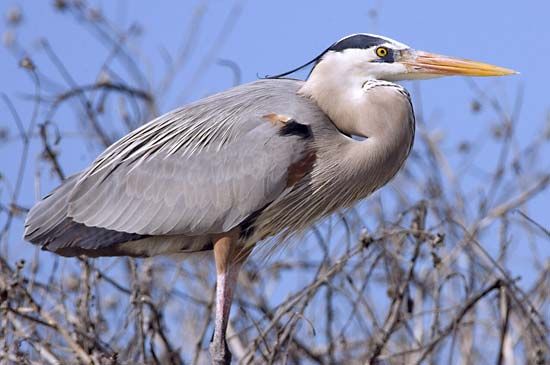
Herons are long-legged wading birds that primarily hunt by wading quietly in shallow waters, such as pools, marshes, and swamps. Their hunting techniques are diverse and adapted to their specific environments:1
- Ambush: Many herons stand solitary and motionless, waiting for prey to come within reach before suddenly striking with their long, spear-like bills.23
- Canopy Feeding: Some species hold their wings forward to form a shade over the water, which may attract fish seeking refuge or improve the bird’s vision by reducing surface reflections.3
- Active Pursuit: Certain herons actively hunt by wading rapidly or stirring up the bottom of the water with their feet to flush out prey.3
- Baiting: The green heron is notably known to drop bait on the water’s surface to attract fish.1
Herons are generally carnivorous, feeding on a diet that includes fish, frogs, salamanders, insects, crustaceans, mollusks, worms, rodents, turtles, and occasionally other birds.123
What are some of the different species of herons and how do they differ?
Herons belong to the family Ardeidae and are generally categorized into three distinct groups based on their physical characteristics and behavioral patterns.1
Typical Herons
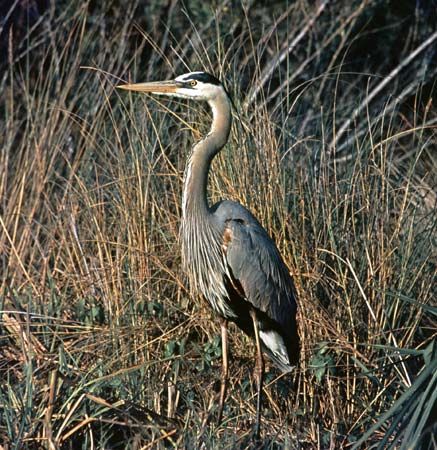
These species are diurnal, meaning they are active and feed during the day. They are often characterized by their large size, long legs, and long necks, which they typically hold in an S-shape while standing.1
- Genus Ardea: This group includes the great blue heron, a large, crested bird widespread in North America, and the gray (or common) heron of the Old World. The goliath heron, the largest of all, also belongs to this genus.1
- Genus Egretta: This group includes various egrets and smaller herons like the little blue heron and the tricoloured heron.1
- Specialized Behaviors: Some typical herons, such as the green heron, are known for unique hunting strategies like dropping bait into the water to attract prey.1
Night Herons
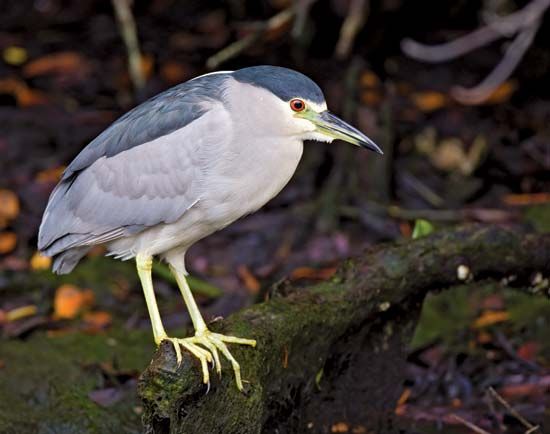
Unlike typical herons, these species are more active during twilight hours and at night. They are physically distinguished by their thicker bills and shorter legs. Examples include the black-crowned night heron and the yellow-crowned night heron. The boat-billed heron is also associated with this group, though some authorities classify it in its own family.1
Tiger Herons
Considered the most primitive of the herons, these are shy, solitary birds. They are best known for their cryptic, often barred plumage, which helps them blend into their surroundings while they stand motionless among reeds. Species include the lined tiger heron and the Mexican (or bare-throated) tiger heron.12
What adaptations do herons have for wading and fishing?
Herons possess several specialized physical adaptations that facilitate their lifestyle as wading birds and efficient hunters.
Adaptations for Wading
- Legs and Toes: Herons have long, thin legs that allow them to wade through shallow waters like marshes and swamps. Their toes are long and flexible, providing stability on soft ground, with a functional hind toe that aids in perching.156
- Body Carriage: While many species maintain an upright posture, they are well-known for resting with their necks curled into an S-shape, which can be straightened instantly to strike at prey.16
Adaptations for Fishing
- Bill Structure: Herons typically have long, straight, and sharp-pointed bills. While these appear spearlike, they are primarily used for grasping rather than impaling prey. In some species, such as the boat-billed heron, the bill is flattened into a broad scoop for specialized feeding.17
- Plumage Maintenance: Herons possess “powder downs,” which are specialized feathers that disintegrate into a fine powder. This powder is used during preening to absorb and remove fish oil, scum, and slime from their plumage. Additionally, the claw on their middle toe is serrated, or pectinate, which serves as a grooming tool to keep their feathers clean.16
Where are herons typically found and what habitats do they prefer?
Herons are widely distributed across the globe, though they are most common in tropical regions. They are primarily associated with aquatic environments, where they prefer to forage in the shallow waters of marshes, swamps, and pools.1
These birds are highly dependent on these habitats for both feeding and nesting. When foraging, they wade quietly through shallow areas to catch prey such as fish, frogs, and other aquatic animals. For nesting, they construct rough platforms made of sticks in trees or bushes located near the water’s edge. These nesting sites, often referred to as heronries or rookeries, are typically established in colonies to provide protection and support for their young.12
Because they rely on open water for foraging, migratory populations in colder climates, such as those in Canada and the northern United States, will travel south during the winter to find ice-free areas. Their ability to thrive is often linked to the presence of healthy wetland ecosystems, which can be expanded by the activities of other species, such as beavers.2
Sources
- Heron — Encyclopædia Britannica
- Great blue heron — Encyclopædia Britannica
- Ciconiiform - Feeding habits — Encyclopædia Britannica
- Ciconiiform - Plumage and coloration — Encyclopædia Britannica
- Ciconiiform - Bill shape — Encyclopædia Britannica
- Charadriiform - Adaptations for feeding — Encyclopædia Britannica
- heteropteran - Legs — Encyclopædia Britannica
- Ciconiiform - General characteristics — Encyclopædia Britannica
- Bird - Walking and hopping — Encyclopædia Britannica
Published on · 4 min read