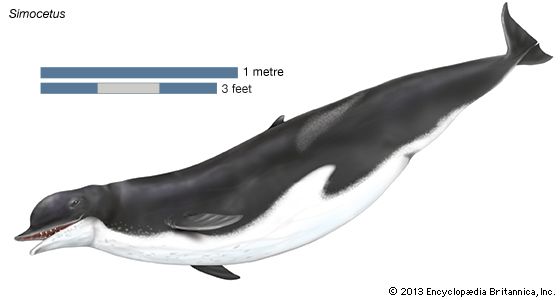
Simocetus
Simocetus was not a true dolphin, though it possessed dolphinlike characteristics. Living during the late Oligocene, it is classified as a member of the…
How is Simocetus related to modern whales and dolphins?
Simocetus was not a true dolphin, though it possessed dolphinlike characteristics. Living during the late Oligocene, it is classified as a member of the early radiation of toothed whales (odontocetes). Scientists consider it to be a distant relative that may be equally related to both modern dolphins and sperm whales.1
While Simocetus was similar in size to a modern bottlenose dolphin, it differed significantly in anatomy and behavior:
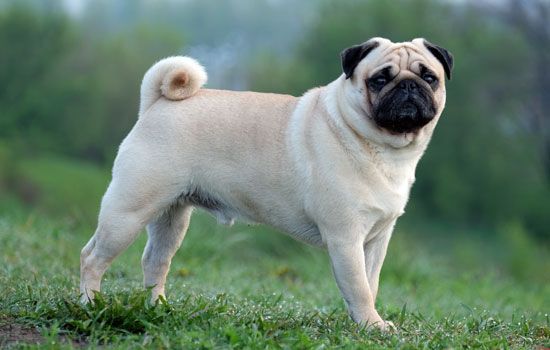
- Facial Structure: Its face was compressed and curved, resembling the short-faced features of breeds like bulldogs or pugs.1
- Feeding Adaptations: Unlike modern dolphins that use sharp teeth to trap prey, Simocetus had widely spaced teeth that likely functioned as a sieve, suggesting it may have used suction to feed on the seafloor or capture cephalopods.1
- Echolocation: Evidence from its skull indicates that Simocetus possessed a melon and the necessary muscle attachments for echolocation, proving this ability evolved early in the history of toothed whales.1
Where were Simocetus fossils discovered and what can they tell us about its habitat?
The fossil remains of Simocetus were discovered in the Alsea Formation, a geologic marine sequence composed of fine muds and sands located on the Pacific coast of Oregon, near the mouth of the Yaquina River.1
These fossils provide significant insight into the animal’s habitat and ecological lifestyle during the late Oligocene:
- Benthic Feeding: The unique structure of its jaw and teeth—which were widely spaced and lacked front teeth—suggests that Simocetus likely utilized suction to capture prey from the seafloor.1
- Dietary Specialization: Its anatomy indicates it may have fed on cephalopods, such as squid and octopuses, that lacked shells.1
- Environmental Adaptation: The presence of a melon and specialized skull structures for echolocation confirms that Simocetus was already adapted to navigating and hunting in its marine environment using sound, demonstrating that toothed whales had achieved a broad range of ecological lifestyles by the late Oligocene.1
What other early whale species were contemporaries of Simocetus?
Simocetus lived during the late Oligocene Epoch (approximately 28 million to 23 million years ago), a pivotal time when the ancestors of modern toothed whales (odontocetes) were rapidly diversifying from more ancient archaeocetes.134
While the fossil record for this specific period is still being refined, other notable early cetaceans from the broader Paleogene and Oligocene timeframe include:
- Echovenator sandersi: Emerging approximately 27 million years ago, this species is recognized as one of the earliest toothed whales to display the bony structures associated with echolocation.4
- Llanocetus denticrenatus: An early whale species often cited in the study of cetacean evolution, representing the transition toward modern forms.2
- Basilosaurus: Although it lived earlier (primarily during the Eocene) and belonged to the now-extinct archaeocete group, it is a critical reference point for understanding the early evolution of whale body forms.4
- Pakicetus: Known from the early Eocene, this is one of the earliest fossil cetaceans discovered, providing evidence of the group’s terrestrial origins.4
How large was Simocetus compared to modern dolphins and whales?
The fossil remains of Simocetus include a skull measuring approximately 45 cm (17.7 inches) in length. This dimension makes the animal comparable in size to the living bottlenose dolphin (Tursiops).1
While its skull size is similar to that of modern dolphins, Simocetus differed significantly in its physical appearance and specialized anatomy. Unlike the elongated snouts of modern dolphins, Simocetus possessed an unusually small, compressed, and curved face, along with short, downturned jaws. Furthermore, its dentition was distinct; it lacked front teeth and featured widely spaced, cusped teeth in the back of the mouth, which likely functioned as a sieve for suction feeding rather than the sharp, trap-like teeth used by modern dolphins to capture fast-moving prey.1
Because Simocetus is known primarily from its skull and a few postcranial fragments, its overall body length remains less certain than that of modern, well-documented cetaceans.1
Sources
- Simocetus — Encyclopædia Britannica
- cetacean - Paleontology — Encyclopædia Britannica
- Tertiary Period - Large marine animals — Encyclopædia Britannica
- toothed whale — Encyclopædia Britannica
- Oligocene Epoch — Encyclopædia Britannica
- list of dolphins, whales, and porpoises — Encyclopædia Britannica
- cetacean - Feeding adaptations — Encyclopædia Britannica
Published on · 3 min read