Sisal
The scientific name of the sisal plant is Agave sisalana. It belongs to the plant family Asparagaceae.
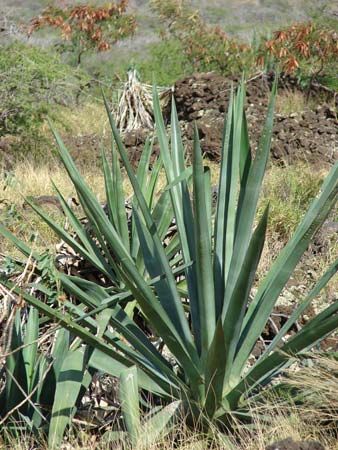
What is the scientific name of the sisal plant and which plant family does it belong to?
The scientific name of the sisal plant is Agave sisalana. It belongs to the plant family Asparagaceae.1
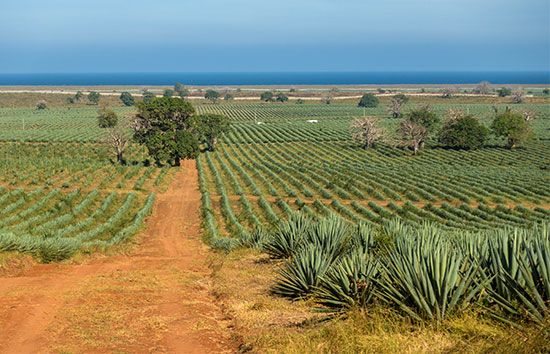
How long does it take for a sisal plant to mature and be ready for harvesting?
A sisal plant typically matures and is ready for its first harvest approximately three to five years after being planted in the field, with the exact timing depending on the local climate.1
Before reaching the field, young plants are generally kept in nurseries for 12 to 18 months. Once established, the plant remains productive for seven to eight years, during which it produces about 300 leaves in total. The harvesting process involves cutting the outer leaves close to the stalk once they reach their full length, with an initial harvest typically yielding about 70 leaves and subsequent annual production averaging around 25 leaves.1
How is sisal cultivated and harvested?
Sisal (Agave sisalana) is cultivated in warm, moist climates with well-drained, moderately rich soil. The process begins by propagating young plants from bulbils or rhizomes, which are kept in nurseries for 12 to 18 months before being transplanted into fields at the start of the rainy season.1
Harvesting typically begins three to five years after planting, depending on the local climate. During a productive lifespan of seven to eight years, a plant yields approximately 300 leaves. The harvesting process involves cutting the outer leaves close to the stalk once they reach their full length. An initial harvest generally yields about 70 leaves, with subsequent annual production averaging around 25 leaves per plant.1
Once harvested, the sisal fibre is extracted through machine decortication, where leaves are crushed between rollers to scrape away the pulp. The remaining fibre is then washed and dried.1
What are the main uses of sisal fiber in industry and everyday life?
Sisal fiber is a versatile, coarse, and durable material valued for its strength and resistance to deterioration in salt water. Its primary industrial and everyday applications include:1
- Cordage: Sisal is most widely employed for rope and twine used in marine, agricultural, shipping, and general industrial sectors.13
- Home Furnishings: The fiber is commonly manufactured into matting, rugs, and carpets.13
- Textiles and Accessories: It is used in the production of brushes and millinery (hats).1
- Specialty Paper: While often a secondary product for the paper industry, sisal fiber can be used to produce specialty papers, including currency.43
- Other Uses: It is also utilized in the manufacturing of filters and mattresses.3
Because sisal is a natural, biodegradable material, it is considered a more ecologically sustainable alternative to synthetic cordage made from fossil fuels, such as nylon or polyester.3
Sources
- Sisal — Encyclopædia Britannica
- Asparagales - Organization and taxonomy — Encyclopædia Britannica
- paper pulp — Encyclopædia Britannica
- sisal rug — Merriam-Webster
- Leaf fiber — Encyclopædia Britannica
Published on · 2 min read