Sloth
Sloths are tree-dwelling mammals native to the tropical forests of Central and South America, characterized by their slow movement and specialized anatomy…
What are the defining characteristics of sloths?
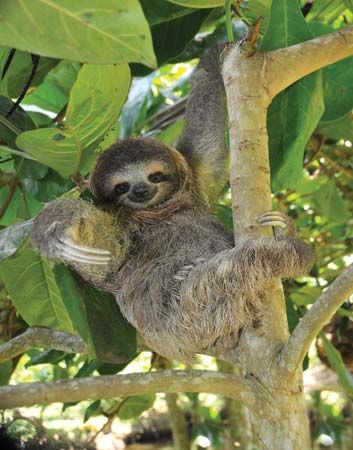
Sloths are tree-dwelling mammals native to the tropical forests of Central and South America, characterized by their slow movement and specialized anatomy for hanging from branches.1
Key characteristics include:
- Physical Adaptations: Their limbs are designed for suspension rather than support, making them nearly helpless on the ground. They possess long legs, rounded heads, and large hooklike claws.1
- Physiology: Sloths are heterothermic, meaning they have limited control over their body temperature, which typically ranges between 25 and 35 °C (77 and 95 °F). They have multichambered stomachs that process leafy diets very slowly.1
- Behavior: Generally solitary and nocturnal, they rely on concealing coloration for protectionconcealing coloration](https://www.britannica.com/science/concealing-coloration) for protection. Their fur often hosts algae, which provides camouflage.12
- Classification: They belong to the suborder Folivora and are divided into two families: the two-toed Megalonychidae and the three-toed Bradypodidae.
How many species of sloths exist, and where are they found?
There are six living species of sloths, all of which are native to the lowland tropical forests of Central and South America. They are categorized into two distinct families:4
Three-Toed Sloths (Family Bradypodidae)
There are four species of three-toed sloths, all belonging to the genus Bradypus:2
- Brown-throated three-toed sloth (B. variegatus): Found in Central and South America, ranging from Honduras to northern Argentina.2
- Pale-throated three-toed sloth (B. tridactylus): Located in northern South America.2
- Maned sloth (B. torquatus): Restricted to the Atlantic forest of southeastern Brazil.2
- Pygmy three-toed sloth (B. pygmaeus): Found only on the Isla Escudo de Veraguas, a small island off the coast of Panama.2
Two-Toed Sloths (Family Megalonychidae)
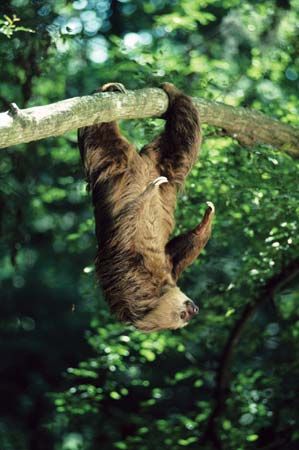
There are two species of two-toed sloths, both belonging to the genus Choloepus:1
- Linnaeus’s two-toed sloth (C. didactylus): Inhabits northern South America, east of the Andes and south to the central Amazon basin.1
- Hoffmann’s two-toed sloth (C. hoffmanni): Found across Central and South America, ranging from Nicaragua to Peru and western Brazil.1
What are the main differences between two-toed and three-toed sloths?
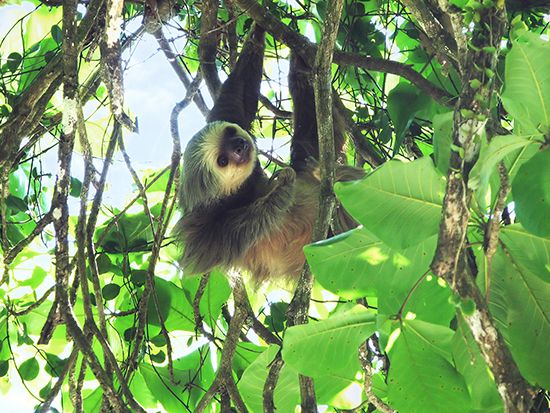
Two-toed and three-toed sloths are distinct tree-dwelling mammals now classified into separate families, Megalonychidae and Bradypodidae, respectively. While they share similar habitats and slow-moving lifestyles, they exhibit several key differences:4
Anatomical and Physical Differences
- Neck Vertebrae: Three-toed sloths possess eight or nine neck vertebrae, allowing them to rotate their heads through a 270° arc. In contrast, two-toed sloths have only six or seven.21
- Size and Weight: Two-toed sloths are generally larger, reaching lengths of 60–70 cm and weights up to 8 kg, whereas three-toed sloths average 58 cm in length and weigh about 4 kg.21
- Hair Structure: While both host algae in their fur, the outer hairs of three-toed sloths have transverse cracks, while those of two-toed sloths feature longitudinal grooves.21
- Limbs: Three-toed sloths have forelimbs 50 percent longer than their hind limbs, with three claws on all four feet. Two-toed sloths have two-clawed forelimbs that are only somewhat longer than their three-clawed hind limbs.21
Behavioral and Reproductive Differences
- Gestation: Three-toed sloths have a gestation period of less than six months, while two-toed sloths have a significantly longer gestation of nearly 12 months.21
- Posture: Three-toed sloths often sit in the forks of trees, whereas two-toed sloths spend almost all their time hanging horizontally.4
- Defense: If threatened, three-toed sloths may strike out with foreclaws, while two-toed sloths are known to hiss, snort, and bite savagely.21
How do sloths’ slow metabolism and behavior impact their role in the ecosystem?
Sloths have evolved a slow-moving, arboreal lifestyle as a direct adaptation to their low-calorie, nutrient-poor diet of leaves. By maintaining a metabolic rate that is only 40–45 percent of what is expected for mammals of their size, they conserve essential energy. This physiological strategy, combined with their heterothermic nature, allows them to thrive in the forest canopy while minimizing detection by visual predators like jaguars.56
Their behavior also plays a critical role in their ecosystem:
- Nutrient Cycling: Three-toed sloths descend to the forest floor weekly to defecate. By burying their waste at the base of their “modal” tree, they return significant nutrients directly to the tree that sustains them, rather than scattering them widely.7
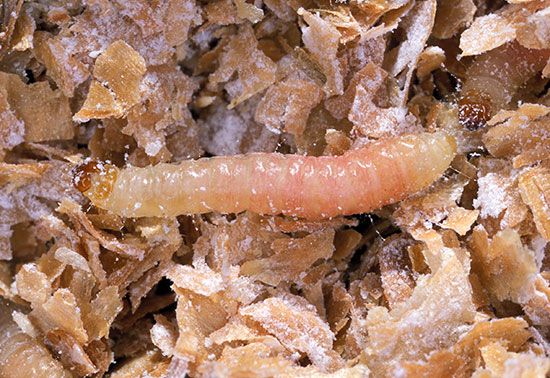
- Micro-habitats: The sloth’s fur acts as a mobile ecosystem. It hosts blue-green algae, which provides the sloth with camouflage, and supports various invertebrates, including pyralid moths, beetles, and mites. These insects rely on the sloth’s dung to lay their eggs, potentially aiding in further nutrient recycling.7
Sources
- sloth — Encyclopædia Britannica
- sloth - Two-toed sloths — Encyclopædia Britannica
- sloth - Classification and paleontology — Encyclopædia Britannica
- sloth - Three-toed sloths — Encyclopædia Britannica
- sloth: Top Questions — Encyclopædia Britannica
- Why Are Sloths So Slow? — Encyclopædia Britannica
- A moving habitat — Encyclopædia Britannica
Published on · 4 min read