Xenarthran
The superorder Xenarthra comprises an ancient lineage of mammals categorized into two primary living orders:
Which animal groups are classified as xenarthrans?
The superorder Xenarthra comprises an ancient lineage of mammals categorized into two primary living orders:
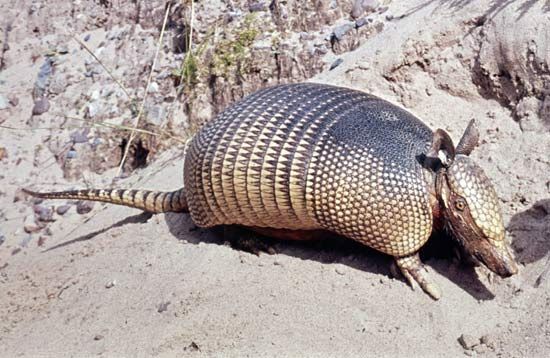
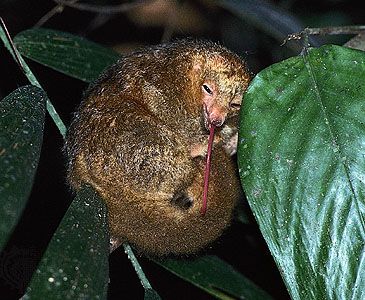
- Order Cingulata: This order includes the armadillos, which are characterized by their girdle-like shells. The family Dasypodidae is the only surviving group within this order.1
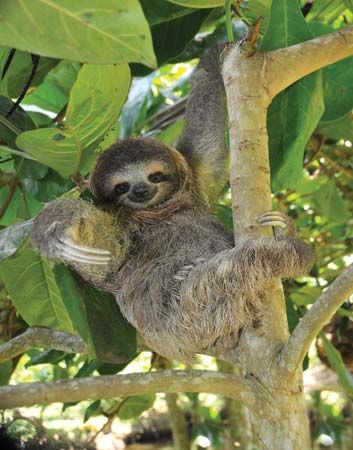
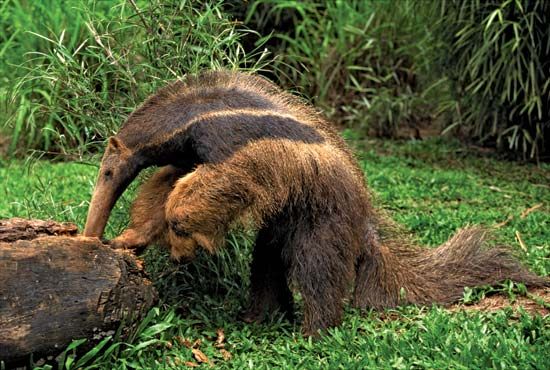
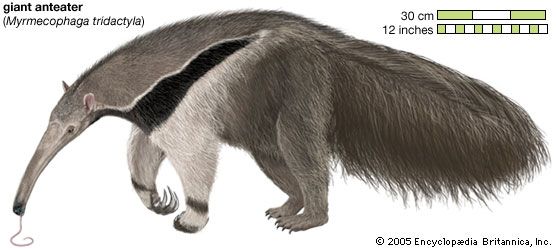
- Order Pilosa: This order consists of sloths and anteaters. It is further divided into two suborders:
All members of these groups share a unique anatomical feature in their lower backbone known as “xenarthrous” vertebrae, which provide extra joints to strengthen the hips and lower back. This adaptation supports activities such as digging, which is essential for the foraging habits of armadillos and anteaters.1
How have xenarthrans evolved over time?
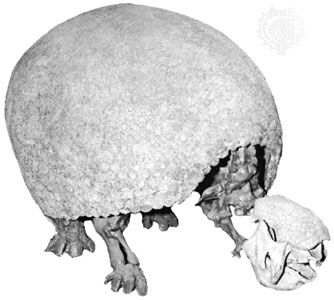
Xenarthrans are an ancient lineage of mammals that originated in South America during the Paleocene Epoch (65.5 million to 55.8 million years ago). Over time, they underwent a highly successful evolutionary radiation, developing unique anatomical adaptations—most notably the “xenarthrous” vertebrae in the lower back, which provided extra joints to strengthen the hips and spine for specialized behaviors like digging.21
Their evolutionary history is marked by significant diversification and geographic expansion:
- Diversification: While only 29 species across five families survive today, the fossil record reveals a much broader historical diversity. Extinct groups include the glyptodonts and various forms of ground sloths, such as the massive Megatherium, which reached the size of a modern elephant.21
- Geographic Spread: Originally restricted to South America, xenarthrans expanded their range during the Pleistocene Epoch (2.6 million to 11,700 years ago). When a land bridge formed between the American continents, groups like ground sloths and glyptodonts migrated into North America, with some ground sloths reaching as far as present-day Alaska.21
What is the geographical distribution of xenarthrans?
The geographical distribution of modern xenarthrans is primarily restricted to Latin America. The only notable exception is the nine-banded armadillo (Dasypus novemcinctus), whose range extends northward into the southern United States.1
Historically, the distribution of this group was significantly broader. Xenarthrans originated in South America during the Paleocene Epoch. By the Pleistocene Epoch, they had expanded their range extensively throughout the Western Hemisphere. During this period, various species—including ground sloths, glyptodonts, and giant armadillos—roamed across North America, with some ground sloths reaching as far north as present-day Alaska. Additionally, ground sloths successfully colonized the islands of the Greater Antilles.1
What are the main characteristics that define xenarthrans?
Xenarthrans are a distinct lineage of mammals comprising armadillos, sloths, and anteaters. They are defined by several unique biological and physiological characteristics:
- Xenarthrous Vertebrae: The namesake feature of the group is found in the lower backbone. Their lumbar vertebrae possess extra joints, or “xenarthrous” articulations, which strengthen the hips and spine. This adaptation provides the structural support necessary for specialized behaviors, particularly digging.1
- Metabolic Rate: Xenarthrans exhibit notably low metabolic rates compared to other mammals of similar size. Consequently, they consume less food and maintain body temperatures that are slightly cooler than those of most other mammals.1
- Dietary Specialization: The group displays a wide range of feeding habits. Anteaters are strictly insectivorous, sloths are strictly folivorous (leaf-eating), and armadillos are generalists that consume both plant matter and small animals.1
- Dental Characteristics: Historically, these animals were grouped with other mammals as “edentates” due to the reduction or total absence of teeth in some species, a trait often associated with their specialized diets.14
Sources
- xenarthran — Encyclopædia Britannica
- Megatherium — Encyclopædia Britannica
- dinosaur - Ornithopoda — Encyclopædia Britannica
- mammal - Teeth — Encyclopædia Britannica
- lizard - Dentition — Encyclopædia Britannica
Published on · 3 min read