Spiderwort
Spiderwort refers to the genus Tradescantia, which consists of approximately 75 species of herbaceous plants native to the Americas. These plants are widely…
What is spiderwort and what are its defining characteristics?
Spiderwort refers to the genus Tradescantia, which consists of approximately 75 species of herbaceous plants native to the Americas. These plants are widely recognized for their ease of propagation, as they root readily from cuttings, making them popular choices for indoor gardening and ground cover in warmer climates.1
Defining Characteristics
- Growth Habit: They are perennial herbs characterized by weak, often erect or trailing stems and either thin or tuberous roots.1
- Foliage: The leaves typically lack petioles and are arranged in a spiral pattern around the stems.1
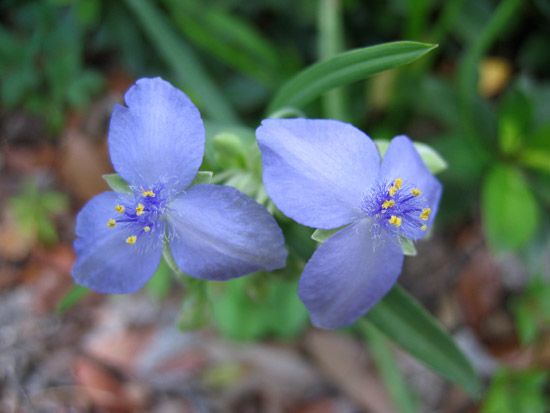
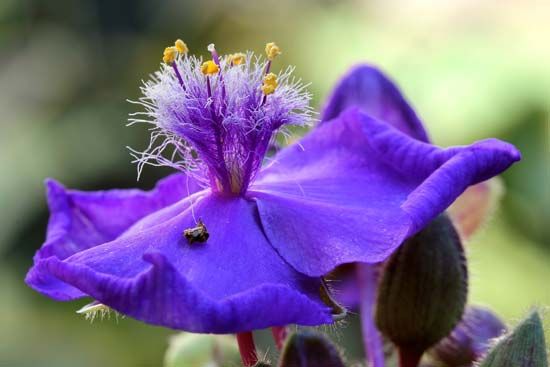
- Flowers: The plants produce bisexual, radially symmetric flowers in small clusters, appearing in shades of white, pink, purple, or blue.1
- Reproduction: Their seeds develop within three-valved capsule fruits.1
Common varieties include the common spiderwort (T. virginiana) and the inch plant, which is prized for its diverse, colorful foliage.1
How can spiderwort be cultivated and cared for in gardens?
Spiderworts (Tradescantia) are versatile plants that are relatively straightforward to cultivate in garden settings. While the provided search results highlight their popularity as indoor plants and ground cover in warmer climates, they offer specific insights into their propagation and general care requirements.1
Cultivation and Care
- Propagation: One of the most defining features of spiderwort is its ease of propagation. You can successfully expand your garden collection by taking cuttings, which root readily in soil or water.1
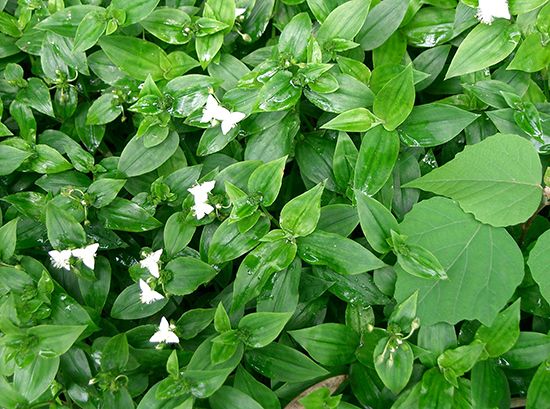
- Garden Use: In warmer climates, certain species are effectively utilized as ground cover. For those looking to add vertical interest, the common spiderwort (T. virginiana) is an excellent choice, as it is an upright, juicy-stemmed plant that thrives in garden beds.1
- Variety Selection: Depending on your aesthetic goals, you can choose from various species. For example, T. ×andersoniana represents a complex series of garden hybrids specifically developed for cultivation, while others like T. sillamontana (white velvet) offer unique textures with their fuzzy leaves and stems.1
What are some common species of spiderwort and how do they differ?
The genus Tradescantia includes approximately 75 species, which vary significantly in their growth habits, foliage, and intended use. Here are some common species and their defining differences:
Common Species and Characteristics
- Inch plant (T. zebrina): Primarily grown as a houseplant, this species is noted for its ornamental, colorful foliage. It includes distinct varieties such as ‘Purpusii,’ which features dark red or bronzy leaves, and ‘Quadricolor,’ characterized by metallic-green leaves striped with green, red, and white.1
- Common spiderwort (T. virginiana): Also known as widow’s tears, this is an upright, juicy-stemmed plant typically grown in gardens. It produces flowers in shades of white, pink, or purple.1
- Small-leaf spiderwort (T. fluminensis): This species is frequently cultivated as an indoor plant, often displayed in hanging baskets.1
- White velvet (T. sillamontana): Distinguished by its unique texture, this plant features leaves and stems covered in a whitish fuzz.1
- Flowering inch plant (T. cerinthoides): This variety is identifiable by its leaves, which are green and smooth on the top but purplish and fuzzy underneath; it produces purplish, hairy blossoms.1
- Garden Hybrids (T. ×andersoniana): This group consists of a complex series of hybrids specifically developed for garden cultivation.1
How do spiderwort plants reproduce and spread in their natural environment?
Spiderwort plants (Tradescantia) reproduce and spread in their natural environment through both sexual and asexual means.
Sexual Reproduction
Spiderworts are perennial herbs that produce bisexual flowers, which are typically white, pink, or various shades of blue and purple. These flowers develop into three-valved capsule fruits that contain the plant’s seeds. These seeds serve as the primary mechanism for sexual reproduction and dispersal, allowing the plants to colonize new areas.3
Asexual Reproduction
In addition to seed production, spiderworts are highly capable of asexual reproduction through fragmentation. The plant body can break into smaller pieces, and these fragments—which may include stems or other portions—are capable of regeneration. Under suitable conditions, these fragments can take root and develop into new, independent organisms. This inherent ability to propagate from cuttings is a well-documented trait of the genus, contributing to their success as both garden plants and ground cover in their native habitats across the Americas.13
Sources
- spiderwort — Encyclopædia Britannica
- tradescantia — Merriam-Webster
- Plant reproductive system - Reproduction by fragments — Encyclopædia Britannica
- Seed - Dispersal by water — Encyclopædia Britannica
Published on · 3 min read