Woodbine
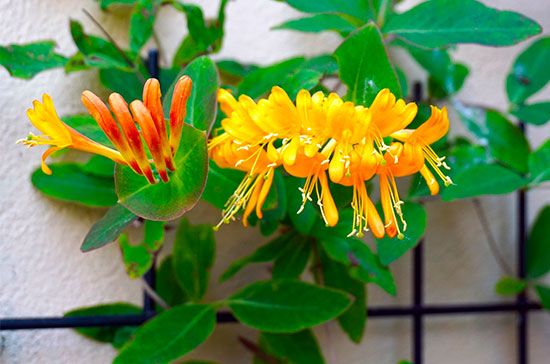
Woodbine is a common name applied to various species of climbing vines across several flowering-plant families. The term most frequently refers to two…
What is Woodbine?
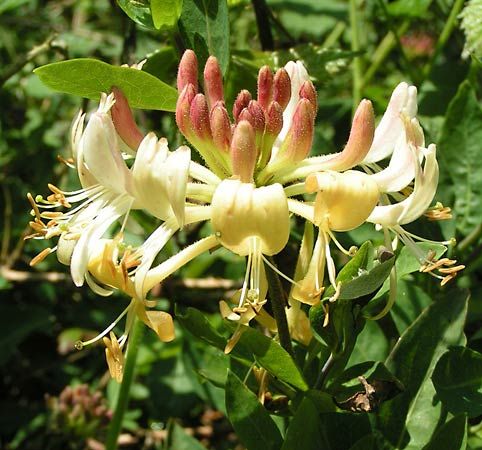
Woodbine is a common name applied to various species of climbing vines across several flowering-plant families. The term most frequently refers to two specific plants:1
- European honeysuckle (Lonicera periclymenum): A Eurasian species of honeysuckle that twines up to 6 meters (20 feet). It is well-known for its whorled clusters of yellowish, purple-tinged flowers and is often cultivated in gardens for its pleasant fragrance.12
- Virginia creeper (Parthenocissus quinquefolia): A vigorous vine native to North America that is also commonly referred to as woodbine.1
The name itself is derived from the Middle English wodebinde and the Old English wudubinde, combining the words for “wood” and “bind,” which describes the plant’s habit of winding around trees.3
What is the difference between a vine and a shrub?
The primary difference between a shrub and a vine lies in their growth habits and structural requirements.
Shrubs
A shrub is a woody plant characterized by having several stems arising from the base, with no single dominant trunk. They are typically less than 3 meters (10 feet) tall, though some can reach up to 6 meters. Because they are self-supporting, they do not require external structures to maintain their form.45
Vines
In contrast, a vine is defined by a stem that requires support to grow. These plants climb by using specialized adaptations such as tendrils or by twining around objects, though some species simply creep along the ground. While some vines are woody perennials—such as ivy or wisteria—others are herbaceous, such as morning glory or even sprawling plants like potatoes.675
In short, while a shrub is a self-supporting woody plant with multiple stems, a vine is a plant that relies on climbing or creeping to extend its reach.46
How do invasive species like Japanese honeysuckle affect local ecosystems?
Invasive species like the Japanese honeysuckle (Lonicera japonica) significantly disrupt local ecosystems by causing habitat degradation. As an invasive species, it outcompetes native flora by aggressively growing over other plants, which effectively blocks essential sunlight and prevents native species from accessing necessary resources like water and living space.1011
This process of degradation increases the difficulty of survival for native plants and animals, as the invasive vine can alter the composition of an entire habitat. By displacing native vegetation, such species reduce the biodiversity of an area and can fundamentally change the environmental conditions required for native life to thrive. While originally introduced for ornamental purposes, its ability to thrive in various conditions has made it a troublesome weed that threatens the stability of the ecosystems it invades.10211
What are some other examples of climbing plants?
Climbing plants, or vines, are diverse in form and function, ranging from woody perennials to rapid-growing herbaceous species. They are frequently utilized in gardening to soften architectural lines, provide shade, or serve as ground cover.8
Common examples of climbing plants include:
- Woody Perennials: These include ivies, wisteria, clematis, trumpet creeper, and climbing roses.8
- Fruit and Vegetable Vines: Many grapes, melons, and bittersweet varieties fall into this category.5
- Houseplants: Popular indoor climbers and trailers include the wax plant (Hoya), grape ivy, spider plants, and various species of Tradescantia and Zebrina.12
- Annuals: Plants such as morning glory and ornamental gourds are often used for temporary, rapid coverage.8
- Lianas: These are woody, climbing plants often found in tropical forests.5
Sources
- Woodbine — Encyclopædia Britannica
- Honeysuckle — Encyclopædia Britannica
- woodbine — Merriam-Webster
- Shrub — Encyclopædia Britannica
- gardening - Shrubs and vines (climbers) — Encyclopædia Britannica
- Asparagales - Order growth characteristics — Encyclopædia Britannica
- vine — Merriam-Webster
- vine — Encyclopædia Britannica
- shrubby — Merriam-Webster
- Japanese honeysuckle — Merriam-Webster
- habitat loss — Encyclopædia Britannica
- climbing plant — Merriam-Webster
- houseplant - Climbers and trailers — Encyclopædia Britannica
Published on · 3 min read