Spoonworm
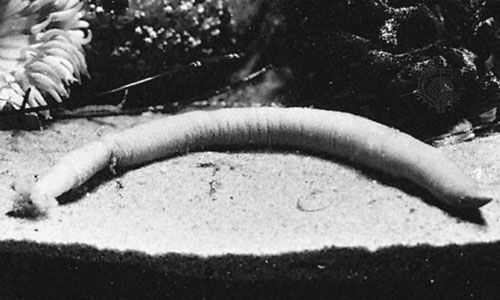
Spoonworms (phylum Echiura) are marine invertebrates that typically inhabit burrows in the mud of the seabed. Their movement and burrowing activities are…
How do spoonworms move and burrow in the ocean floor?
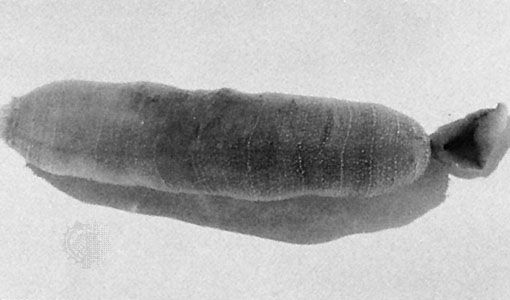
Spoonworms (phylum Echiura) are marine invertebrates that typically inhabit burrows in the mud of the seabed. Their movement and burrowing activities are supported by a saclike trunk with a body wall composed of three muscle layers.1
To maintain their environment, spoonworms use peristaltic contractions of these body wall muscles to create a constant flow of water through their burrows. This water flow serves multiple purposes, including respiration—where water is pumped in and out through the anus—and feeding.1
While the proboscis is highly mobile and capable of great extension for food collection, the actual process of burrowing is a characteristic behavior that develops after the free-swimming trochophore larva undergoes metamorphosis. Once established in their burrows, some species secrete a mucous tube that lines the burrow, which helps stabilize the structure and aids in capturing food particles drawn in by the water current.1
How are spoonworms different from other types of marine worms?
Spoonworms (phylum Echiura) are distinct from other marine worms, such as peanut worms (phylum Sipuncula) and annelids, due to specific anatomical and developmental characteristics.
Key Differences from Peanut Worms
While both groups share spiral cleavage and a trochophore larva stage, they differ significantly in their physical structure:
- Proboscis vs. Introvert: Spoonworms possess a nonretractable, muscular proboscis used for food collection, whereas peanut worms have a retractable “introvert” with tentacles surrounding the mouth at its tip.13
- Setae: Spoonworms typically have setae (bristles) on their bodies, which are entirely absent in peanut worms.13
- Internal Anatomy: Spoonworms feature anal vesicles for excretion, which are not present in peanut worms. Additionally, the anus of a spoonworm is located posteriorly, while the anus of a peanut worm is positioned anteriorly near the head.13
Relationship to Annelids
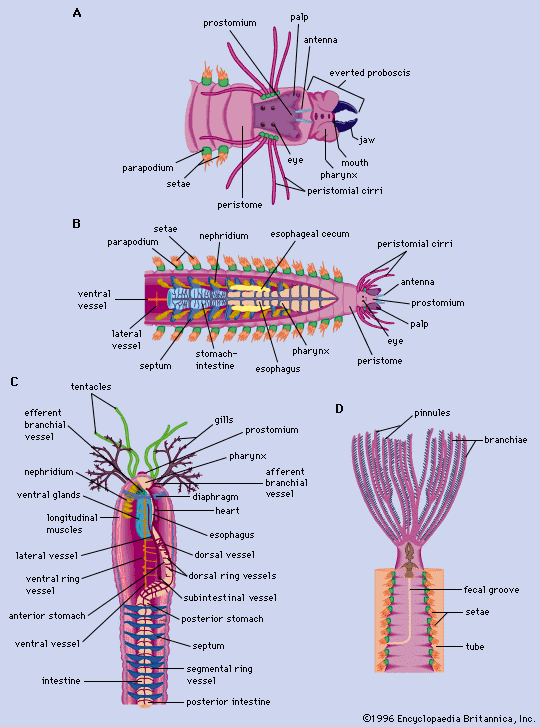
Spoonworms were historically debated as members of the phylum Annelida. Although they lack the visible segmentation characteristic of adult annelids, modern molecular studies suggest they may share a common ancestor with them. Unlike peanut worms, which are thought to be more closely related to mollusks, spoonworms possess a circulatory system that follows a pattern similar to that of annelids.134
What is the typical habitat and distribution of spoonworms in the world’s oceans?
Spoonworms (phylum Echiura) are exclusively marine organisms found in seabeds throughout the world’s oceans. Their distribution is global, spanning diverse marine environments from the intertidal zone to deeper waters.
Regarding their specific habitat preferences, most of the approximately 150 described species are burrowers that live within the mud of the seafloor. While this is their primary environment, their habitat flexibility allows some species to occupy rock crevices. Additionally, a small number of species are capable of inhabiting brackish water environments.
Within these habitats, spoonworms maintain their environment by creating burrows, which they stabilize through the secretion of mucus or by utilizing peristaltic muscle contractions to manage water flow for respiration and feeding.
How have spoonworms been studied by marine biologists, and what recent discoveries have been made about them?
Marine biologists have studied spoonworms (phylum Echiura) through various lenses, ranging from early anatomical observations to modern molecular analysis. Historically, researchers struggled to classify these organisms, initially linking them to peanut worms before they were assigned to the phylum Annelida.
Key milestones in their study include:
- Embryological Foundations: In 1940, W.W. Newby conducted a landmark study on the development of Urechis caupo. His research into their embryology was instrumental in establishing spoonworms as a distinct phylum, separate from annelids.1
- Molecular Reclassification: Research from the late 1990s utilized molecular data to revisit the evolutionary history of spoonworms. These studies revealed that despite lacking adult segmentation, spoonworms likely share a common ancestor with annelids. Consequently, some modern authorities now classify them as a class within the phylum Annelida.1
- Reproductive Biology: Biologists have extensively documented the unique parasitic life cycle of the family Bonelliidae. Discoveries show that larval development is environmentally determined: larvae that contact a female’s proboscis are exposed to hormones that trigger their transformation into tiny, parasitic males.1
Sources
- spoonworm — Encyclopædia Britannica
- mollusk - Habitats, feeding habits, and associations — Encyclopædia Britannica
- peanut worm — Encyclopædia Britannica
- Circulatory system - Echiura — Encyclopædia Britannica
- echinoderm - Size range and diversity of structure — Encyclopædia Britannica
Published on · 3 min read