Worm
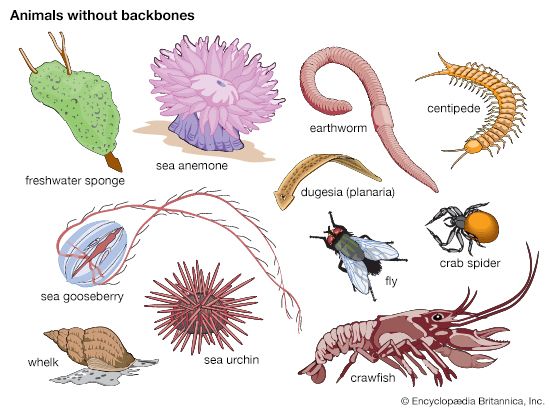
Worms are a diverse group of invertebrate animals characterized by soft, elongated, and typically tubelike bodies that usually lack appendages. Unlike many…
How do worms differ from other animals in terms of their body structure and anatomy?
Worms are a diverse group of invertebrate animals characterized by soft, elongated, and typically tubelike bodies that usually lack appendages. Unlike many other animals, their anatomy varies significantly across different phyla, leading to distinct structural adaptations.12
Key Anatomical Differences
- Body Cavity: Worms are categorized by their internal space. Flatworms are acoelomates, meaning they lack a body cavity and rely on mesenchyme tissue. Roundworms are pseudocoelomates with a fluid-filled cavity lacking a peritoneal lining. Segmented worms, such as earthworms, possess a true coelom, a fluid-filled cavity often divided into segments.3425
- Musculature: Worms utilize unique muscle systems. Flatworms have complex layers of circular, diagonal, and longitudinal muscles. Roundworms possess only longitudinal muscles and are enclosed in a thick cuticle that prevents swelling, forcing the body to bend dorsally or ventrally. Annelids use a hydrostatic skeleton, where antagonistic circular and longitudinal muscles act against the incompressible fluid of the coelom to facilitate movement.25
- Circulatory Systems: Many worms lack a formal circulatory system, relying on diffusion. However, annelids typically feature a well-developed closed circulatory system, while ribbon worms (Nemertea) possess the simplest true vascular system.46
What are the main types of worms, and how are they classified?
The term “worm” is a broad, informal classification for various unrelated invertebrate animals that typically possess soft, slender, and elongated bodies without appendages. Because these animals belong to several distinct phyla, they are classified based on their internal anatomy, body cavity structure, and developmental characteristics.12
Major Phyla of Worms
Worms are categorized into several primary groups, each with unique structural features:
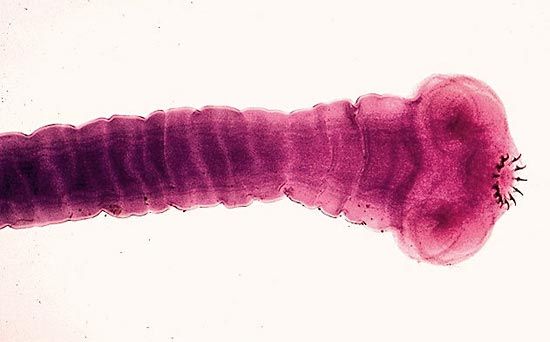
- Platyhelminthes (Flatworms): These are unsegmented, acoelomate animals (lacking a body cavity). They are triploblastic and often leaf-shaped or ribbon-like.18
- Annelida (Segmented worms): Characterized by a true coelom divided into successive segments, this group includes earthworms and many marine species.12
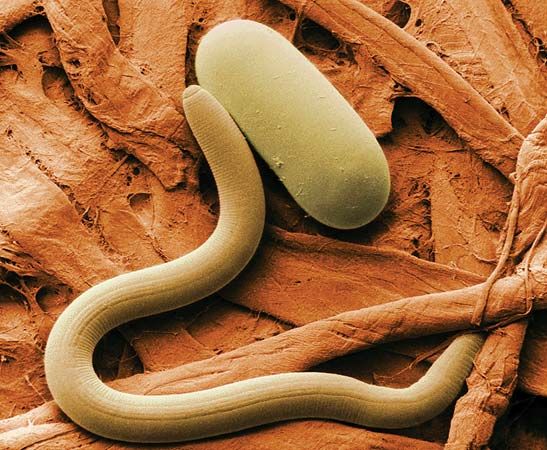
- Nematoda (Roundworms): These are pseudocoelomates enclosed in a thick cuticle. They possess longitudinal muscles but lack circular muscles.12
- Nemertea (Ribbon worms): These are the simplest animals to possess a circulatory system and a complete gut with both a mouth and an anus.9
Other groups include Sipuncula (peanut worms), Echiura (spoonworms), Acanthocephala (spiny-headed worms), Pogonophora (beardworms), and Chaetognatha (arrowworms).1
What is the importance of worms in the food chain and as a food source for other animals?
Worms serve as a vital link in the food chains of virtually all ecosystems worldwide. Their role is multifaceted, functioning both as essential decomposers and as a primary food source for a wide variety of other animals.1
Importance in the Food Chain
- Decomposition and Nutrient Cycling: Many worms, particularly earthworms, are critical to soil health. By consuming decaying plant and animal matter, they accelerate the breakdown of complex organic substances, releasing nutrients like nitrogen and sulfur back into the soil in forms that plants can utilize.1011
- Energy Transfer: As they process organic matter, worms convert it into their own biomass, effectively moving energy from decaying material to higher trophic levels. This makes them a fundamental food source for numerous predators, including birds, small mammals, and various other invertebrates.1011
- Parasitic Interactions: Some worms exist as parasites, creating complex links within food webs. Certain species have evolved to alternate between hosts, moving from an intermediate host (such as an invertebrate) to a predator that consumes it, thereby continuing their life cycle within the food chain.12
What is the difference between a coelomate and an acoelomate body plan?
The primary difference between coelomate and acoelomate body plans lies in the presence and structure of an internal body cavity. These classifications are based on the organization of the three embryonic germ layers: the ectoderm, mesoderm, and endoderm.1415
- Acoelomates: These animals lack an internal, fluid-filled body cavity (coelom) between the digestive tract and the outer body wall. Their tissues are solid, with the space between the gut and the body wall filled with cells.14
- Coelomates: These animals possess a true coelom, which is a fluid-filled cavity located entirely within the mesoderm. This cavity allows for the suspension of internal organs, such as the gut, by mesenteric tissue. This structural arrangement provides significant advantages, including the ability to support larger body sizes and more complex organ systems.1614
While acoelomates are generally more limited in size, coelomates have evolved to occupy diverse niches, with the coelom playing various roles in locomotion and internal organ support.1614
Sources
- worm — Encyclopædia Britannica
- muscle - Worms — Encyclopædia Britannica
- flatworm - Distinguishing taxonomic features — Encyclopædia Britannica
- Circulatory system - Annelida — Encyclopædia Britannica
- skeleton - Skeletomusculature of an earthworm — Encyclopædia Britannica
- flatworm - Ecology — Encyclopædia Britannica
- Circulatory system - Acoelomates and pseudocoelomates — Encyclopædia Britannica
- flatworm - Annotated classification — Encyclopædia Britannica
- ribbon worm — Encyclopædia Britannica
- earthworm — Encyclopædia Britannica
- soil organism — Encyclopædia Britannica
- parasitic disease — Encyclopædia Britannica
- community ecology - Alternation among hosts — Encyclopædia Britannica
- schizocoelomate — Encyclopædia Britannica
- Animal - Coelomates — Encyclopædia Britannica
- Animal - Bilateria: an organ level of organization — Encyclopædia Britannica
- Animal development - Gastrulation — Encyclopædia Britannica
Published on · 3 min read