Stangeria
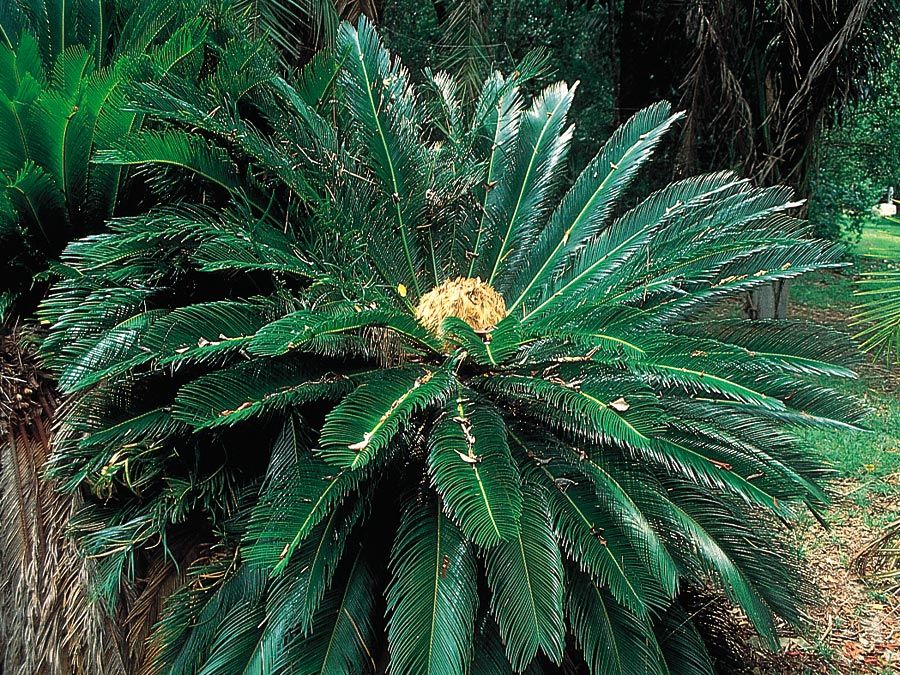
Stangeria is a genus of cycads native to the coastal regions of southern Africa, represented by a single species, Stangeria eriopus. Often called Stanger’s…
What is Stangeria?
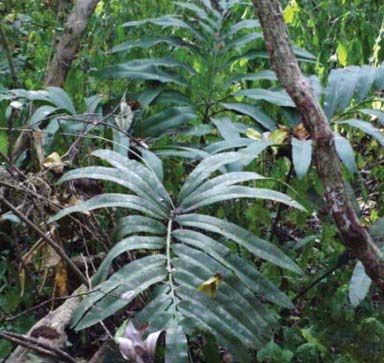
Stangeria is a genus of cycads native to the coastal regions of southern Africa, represented by a single species, Stangeria eriopus. Often called Stanger’s cycad or the Natal grass cycad, the plant is notable for its leaves, which closely resemble those of ferns, distinguishing it from other cycads.12
The plant features a thick, tuberlike underground stem and cylindrical cones with vertical ranks of sporophylls. Due to its limited range and environmental pressures, it is currently listed as vulnerable on the IUCN Red List of Threatened Species. The genus is named in honor of William Stanger, a 19th-century English surveyor general in Natal.12
What are the main differences between cycads and ferns?
While cycads and ferns share some primitive reproductive characteristics, they are distinct groups of plants with fundamental differences in their biology, anatomy, and reproductive strategies.
Reproduction
The most significant similarity is that both cycads and ferns are zooidogamous, meaning they rely on flagellated, motile male gametes (spermatozoids) for fertilization. However, their reproductive structures differ greatly:3
- Cycads: These are gymnosperms that produce seeds. They are dioecious, meaning male and female reproductive structures are borne on separate plants. Most cycads produce these structures in organized, cone-like strobili.4
- Ferns: Ferns are vascular cryptogams that do not produce seeds. Instead, they reproduce via spores, which are typically produced in clusters called sori.43
Anatomy and Growth
- Woody Growth: Cycads are woody plants capable of secondary growth, which allows them to increase in diameter over time. In contrast, most modern ferns lack significant secondary growth; even large tree ferns derive their structural strength from strengthening tissues surrounding vascular bundles or mantles of roots rather than true woody tissue.5
- Stems: Cycad stems are typically stout and pachycaulous (thick), often covered in hardened leaf bases. They utilize a primary thickening meristem to achieve their girth. Fern stems, such as the siphonosteles found in many species, generally lack this specific mechanism for diameter expansion.65
- Leaves: While some cycads, such as Stangeria, have evolved fernlike leaves, most cycads possess compound leaves with distinct vascular patterns. Ferns exhibit a wide variety of leaf forms, but they lack the seed-bearing capability and the complex internal vascular architecture characteristic of the cycadophyte lineage.785
Why is Stangeria considered a vulnerable species?
Stangeria eriopus is classified as a vulnerable species primarily due to the significant threats facing its native coastal habitats in southern Africa. As a specialized plant with a limited geographic range, it is highly susceptible to environmental degradation and human-driven disturbances.
While the specific ecological pressures are complex, the vulnerability of Stangeria is compounded by its slow growth rate and the high demand for cycads in the horticultural trade, which can lead to the illegal harvesting of wild populations. Because these plants are slow to mature and reproduce, they struggle to recover from habitat loss or over-collection, leading to a decline in their overall population numbers as tracked by the IUCN Red List of Threatened Species.1
How do cycads reproduce using cones?
Cycads are dioecious plants, meaning male and female reproductive structures are produced on separate individuals. Their reproduction centers on the formation of strobili, or cones, which house the reproductive organs.910
Male and Female Structures
- Male Cones: Male plants produce microsporophylls arranged spirally around a central axis to form a pollen-bearing cone. These microsporophylls contain clusters of microsporangia (pollen sacs) on their undersides, which release vast quantities of pollen.910
- Female Cones: Female plants produce megasporophylls, which bear ovules. In most genera, these are also organized into a cone, though in the genus Cycas, they are arranged in whorls at the stem apex rather than forming a compact cone.10
Pollination and Fertilization
While the massive pollen production might suggest wind dispersal, most cycads rely on insect vectors, such as snout weevils, to transport pollen to the female ovules. Once pollen enters the ovule through an opening called the micropyle, it develops into a pollen tube. Simultaneously, the female gametophyte matures within the ovule, forming large eggs within structures called archegonia. Eventually, the male gametophyte releases multiflagellated spermatozoids that swim to the egg to achieve fertilization, resulting in the development of a seed.93
Sources
- Stangeria — Encyclopædia Britannica
- Stangeria — Merriam-Webster
- cycadophyte - Sporophylls and strobili — Encyclopædia Britannica
- cycadophyte - Annotated classification — Encyclopædia Britannica
- cycadophyte - Cycads — Encyclopædia Britannica
- cycadophyte - Distribution and abundance — Encyclopædia Britannica
- cycadophyte - Stem — Encyclopædia Britannica
- lower vascular plant - Vascular system — Encyclopædia Britannica
- cycadophyte - Sporophyte phase — Encyclopædia Britannica
- cycadophyte - Gametophyte phase — Encyclopædia Britannica
Published on · 3 min read