Dawn Redwood
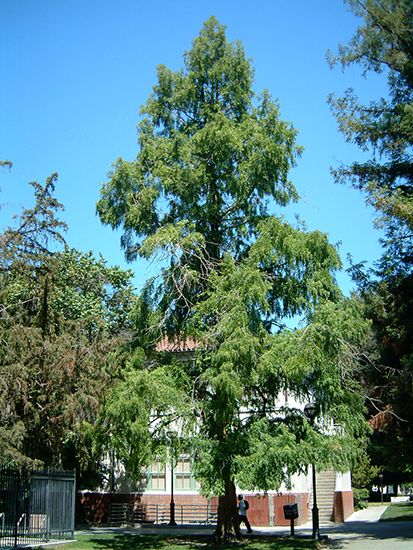
The dawn redwood (Metasequoia glyptostroboides) is a remarkable example of a "living fossil." For years, the plant was known to science only through fossil…
How was the dawn redwood rediscovered in the 20th century after being thought extinct?
The dawn redwood (Metasequoia glyptostroboides) is a remarkable example of a “living fossil.” For years, the plant was known to science only through fossil records, which indicated it had been widespread across the Northern Hemisphere millions of years ago.
The path to its rediscovery began in 1941, when Japanese botanist Miki Shigeru identified distinct differences between these fossils and other known conifer species, leading him to coin the genus name Metasequoia. Shortly thereafter, in 1944, the first living specimens were discovered in the Sichuan province of China by the Chinese botanist Wang Zhan.1
While once thought to be extinct, the tree survived in a small, relic distribution. Today, it is widely cultivated as an ornamental, though it remains an endangered species in the wild due to habitat loss.1
In what type of environments does the dawn redwood naturally grow, and how has it adapted to different climates?
The dawn redwood (Metasequoia glyptostroboides) is native to central China, where it exists today in a limited, relic distribution within the Sichuan province. While it was once widespread across the Northern Hemisphere during the Cretaceous Period, global climatic cooling and drying trends throughout the Cenozoic Era forced its range to contract significantly.2
The tree’s primary adaptation to changing environments is its deciduous nature. Unlike many other conifers, the dawn redwood sheds its leaves and branchlets annually. This trait likely allowed the genus to survive historical climate shifts and contributes to its success as a widely cultivated ornamental tree in temperate climates worldwide. Despite its adaptability in cultivation, the species remains an endangered species in the wild, primarily threatened by habitat loss.2
What are the unique characteristics of the dawn redwood’s foliage and growth pattern?
The dawn redwood (Metasequoia glyptostroboides) possesses distinct botanical features that set it apart from its relatives, such as the coast redwood. Its most notable characteristic is its deciduous nature; unlike many other conifers, the tree sheds its leaves and branchlets annually.21
Regarding its growth pattern and foliage, the dawn redwood is defined by the following:
- Leaf Arrangement: A key diagnostic feature is the arrangement of its leaves, which grow in opposite pairs along the branchlets. This contrasts with the spirally arranged leaves found in related genera like Sequoia.1
- Deciduous Habit: The tree’s tendency to drop its foliage is a significant adaptation that likely contributed to its prevalence in the fossil record, as these shed branchlets were frequently preserved.1
- General Morphology: While it shares a general resemblance to the coast redwood, its unique combination of deciduous foliage and specific leaf orientation makes it a distinct member of the Cupressaceae family.21
What is the scientific name of the dawn redwood and what family does it belong to?
The scientific name of the dawn redwood is Metasequoia glyptostroboides. It belongs to the family Cupressaceae.123
Sources
- dawn redwood — Encyclopædia Britannica
- dawn redwood — Merriam-Webster
- redwood — Encyclopædia Britannica
Published on · 2 min read