Staubbach Falls
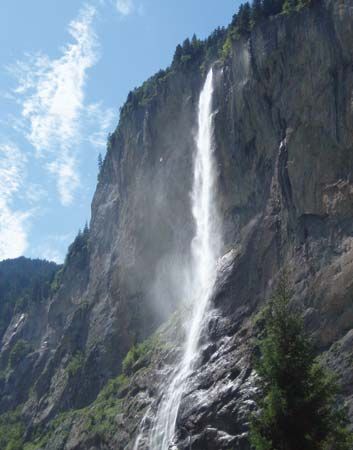
Staubbach Falls is a waterfall located in the Bernese Alps of south-central Switzerland, situated on a stream near the village of Lauterbrunnen.
What is Staubbach Falls?
Staubbach Falls is a waterfall located in the Bernese Alps of south-central Switzerland, situated on a stream near the village of Lauterbrunnen.1
The name translates to “spray stream,” a reference to the waterfall’s characteristic veil-like appearance. Because of this delicate flow, the water often appears to dissipate into mist, particularly during drier seasons. The falls feature a dramatic drop of 984 feet (300 metres).1
What are the Bernese Alps known for?
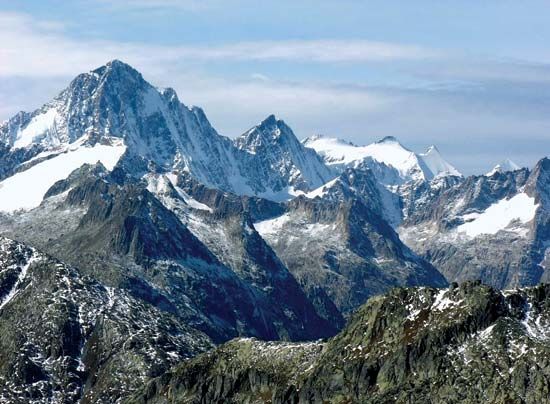
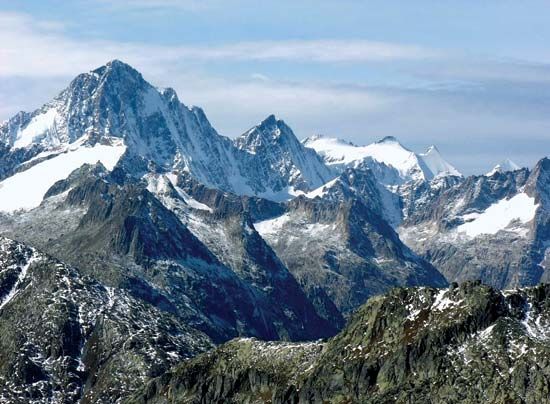
The Bernese Alps are a prominent segment of the Central Alps in southwestern Switzerland, renowned for their magnificent scenery and significant geological features.
Key Characteristics
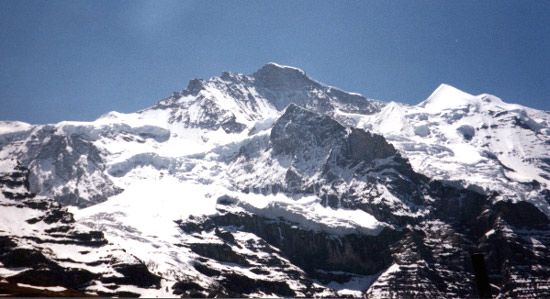
- High Peaks and Glaciers: The range contains numerous peaks exceeding 12,000 feet (3,660 metres), including the Finsteraarhorn, Jungfrau, and Aletschhorn. It is also home to the Aletsch Glacier, one of the longest in the Alps.2
- Tourism and Recreation: The region is a major hub for tourism, supporting famous resorts such as Interlaken, Grindelwald, Mürren, Wengen, Kandersteg, and Gstaad. It has long been a popular destination for mountain climbing and general Alpine sightseeing.23
- Geological Significance: The landscape was dramatically shaped by glaciation, which carved deep U-shaped valleys and created hanging valleys that produce spectacular waterfalls, such as the Staubbach and Trümmelbach Falls.4
- Heritage: The area is recognized for its natural value, notably through the Swiss Alps Jungfrau-Aletsch World Heritage site.5
How do waterfalls form in glacial valleys?
Waterfalls in glacial valleys are primarily formed through the creation of hanging valleys during the process of glaciation.67
The Formation Process
- Differential Erosion: Large trunk glaciers possess greater mass and erosive capability than the smaller tributary glaciers that feed into them. As the main glacier moves, it deepens and widens the main valley floor significantly more than the tributary glaciers can erode their own paths.68
- Creation of Hanging Valleys: Because the main valley is eroded more rapidly, the floors of the tributary valleys are left at a much higher elevation than the floor of the main valley once the ice retreats.87
- Waterfall Development: After the glaciers melt, streams flowing through these elevated tributary valleys reach the edge of the main valley wall. To join the drainage system of the main valley floor, these streams must drop abruptly, resulting in the formation of waterfalls.679
Famous examples of this phenomenon include Yosemite Falls in California and the Staubbach Falls in Switzerland.691
What other famous waterfalls are in Switzerland?
Switzerland is home to several iconic waterfalls, each known for its unique geological features and scenic beauty:
- Rhine Falls: Located in northern Switzerland near Schaffhausen, this is the most spectacular waterfall in central Europe. It spans 492 feet (150 meters) in width and features a total drop of about 100 feet (30 meters), including its rapids.
- Trümmelbach Falls: Situated in the Bernese Alps, these falls consist of a series of five cascades fed by melting snow. They are notable for their impressive scale, with a total drop of 1,300 feet (400 meters).
- Staubbach Falls: Also found in the Bernese Alps near Lauterbrunnen, this waterfall is famous for its veil-like flow. Its name translates to “spray stream,” reflecting how the water often disperses into a fine mist during drier seasons, falling from a height of 984 feet (300 meters).
Sources
- Staubbach Falls — Encyclopædia Britannica
- Bernese Alps — Encyclopædia Britannica
- Alps - Geology — Encyclopædia Britannica
- list of World Heritage sites - Switzerland — Encyclopædia Britannica
- Switzerland - Services — Encyclopædia Britannica
- glacial valley — Encyclopædia Britannica
- glacial landform - Hanging valleys — Encyclopædia Britannica
- river - Falls attributable to discordance of river profile — Encyclopædia Britannica
- waterfall — Encyclopædia Britannica
- Trümmelbach Falls — Encyclopædia Britannica
- Rhine Falls — Encyclopædia Britannica
- Rhine River - Physiography — Encyclopædia Britannica
Published on · 2 min read