Bernese Alps
The Bernese Alps, like the rest of the Alps, were formed primarily through the Alpine orogeny, a massive mountain-building event that began approximately 65…
How were the Bernese Alps formed geologically?
The Bernese Alps, like the rest of the Alps, were formed primarily through the Alpine orogeny, a massive mountain-building event that began approximately 65 million years ago.12
The geological process involved several key stages:
- Sedimentation: During the Mesozoic Era, eroded materials from an ancient landmass known as Tyrrhenia were deposited into the Tethys Sea. These deposits formed thick, horizontal layers of limestone, shale, and sandstone4.
- Tectonic Collision: Starting about 44 million years ago, intense pressure from the south—driven by the collision of the African and Eurasian plates—folded these deep sedimentary layers against crystalline bedrock and thrust them upward to great heights.32
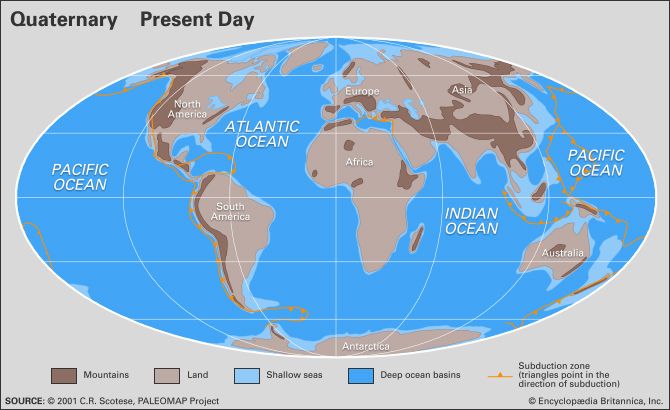
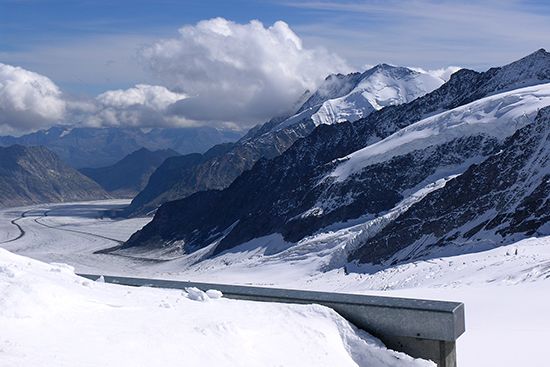
- Glacial Sculpting: During the Quaternary Period, the landscape was significantly modeled by glaciation. Expanding ice tongues carved out U-shaped valleys, cirques, and ridges, creating the dramatic peaks and deep valleys characteristic of the region today.2
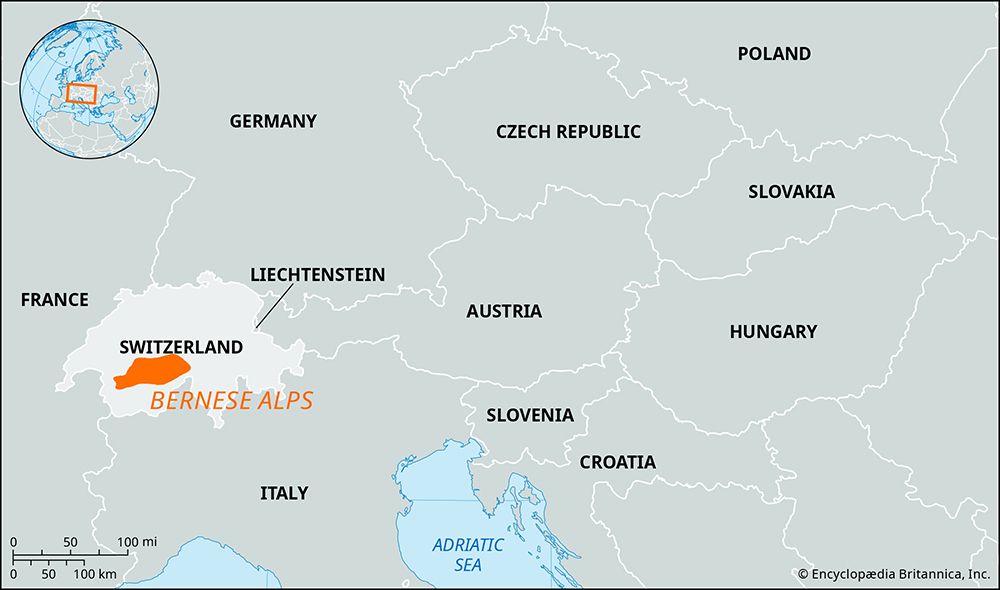
What are some popular tourist activities and attractions in the Bernese Alps region?
The Bernese Alps are a premier destination for outdoor enthusiasts, offering a variety of activities centered around their magnificent scenery and high-altitude terrain.
Popular Activities and Attractions
- Mountain Climbing: The region is world-renowned for its challenging peaks, including the Finsteraarhorn, Jungfrau, and Aletschhorn, which have long attracted mountaineers.2
- Glacier Sightseeing: Visitors can explore the Aletsch Glacier, which stands as one of the longest and most impressive glaciers in the entire Alps range.2
- Resort Tourism: The region is home to several famous mountain resorts that serve as hubs for tourism, including Interlaken, Grindelwald, Mürren, Wengen, Kandersteg, and Gstaad.2
- Scenic Transit: Travelers can experience the dramatic landscape by crossing the range via historic mountain passes like the Lötschen, Gemmi, and Pillon, or by taking the Lötschberg railway tunnel.2
While the Bernina Alps—a different range in eastern Switzerland—are also popular for winter sports and feature the UNESCO World Heritage site railway near Saint Moritz, the Bernese Alps remain a central pillar of Swiss alpine tourism.25
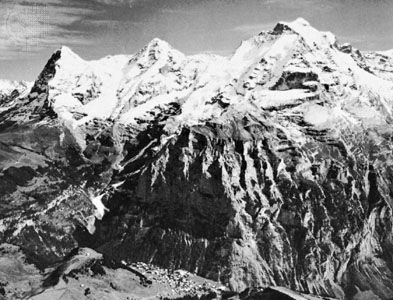
What are some of the most famous peaks in the Bernese Alps?
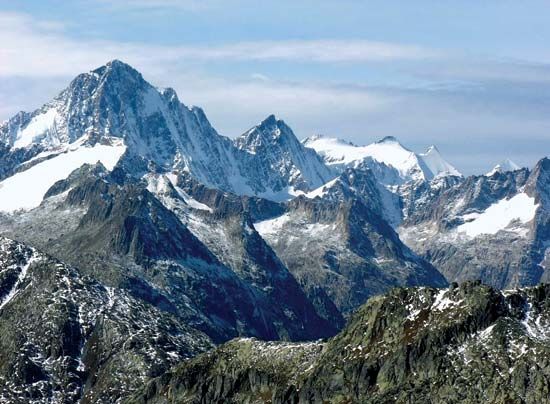
The Bernese Alps are home to several of the most prominent and highest peaks in the region, many of which exceed 12,000 feet (3,660 meters) in elevation.6
Notable Peaks
- Finsteraarhorn: Standing at 14,022 feet (4,274 meters), this is the highest peak in the Bernese Alps. It is located between the cantons of Bern and Valais and is a popular, albeit challenging, destination for mountaineers.726
- Aletschhorn: With an elevation of 13,763 feet, it is one of the highest summits in the range, surpassing the Jungfrau in height.76
- Jungfrau: Rising to 13,642 feet (4,158 meters), this iconic peak dominates the Lauterbrunnen valley. It is famously connected to the Mönch peak via the Jungfraujoch, a high-altitude pass accessible by one of Europe’s highest railways.7
- Mönch: Located near the Jungfrau, this peak is part of the massif famously tunneled through by the railway leading to the Jungfraujoch.7
- Eiger: Known for its dramatic north face, this peak is also part of the mountain group traversed by the railway tunnel.7
What are some traditional Swiss foods associated with the Bernese Alps region?
Traditional Swiss cuisine is deeply influenced by the country’s Alpine geography, with cheese-based dishes being particularly characteristic of mountain regions like the Bernese Alps.
Traditional Alpine Specialties
- Fondue: A quintessential national dish consisting of melted cheeses—typically Emmentaler and Gruyère—mixed with wine. It is traditionally served in a communal pot into which cubes of bread are dipped.
- Raclette: A popular Alpine staple where cheese is melted over a fire or specialized heater and then scraped onto plates, typically served alongside potatoes or bread.
- Dairy Products: The region’s history of dairying has made the Swiss chocolate industry world-famous, as it was originally developed to utilize the abundant milk produced in pre-Alpine pastures.
- Rösti: While popular throughout German-speaking Switzerland, this dish of fried, shredded potatoes is a common comfort food found in mountain regions.
While modern Swiss cuisine has become increasingly international, these traditional dishes remain central to the culinary identity of the Alpine cantons.
Sources
- Alpine orogeny — Encyclopædia Britannica
- Bernese Alps — Encyclopædia Britannica
- Tethys Sea — Encyclopædia Britannica
- Alps - Geology — Encyclopædia Britannica
- Bernina Alps — Encyclopædia Britannica
- Jungfrau — Encyclopædia Britannica
- Finsteraarhorn — Encyclopædia Britannica
- Switzerland - Daily life and social customs — Encyclopædia Britannica
Published on · 3 min read