Steppe
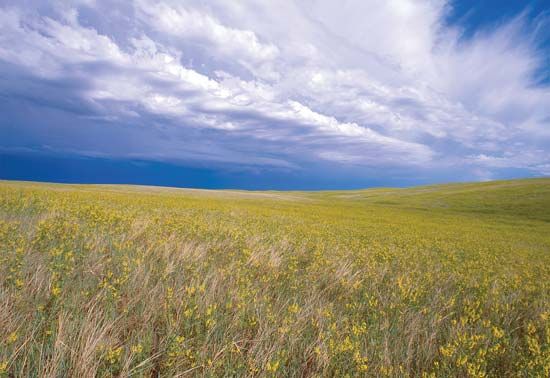
A steppe is a vast, treeless grassland characterized by low vegetation and a semiarid climate, typically receiving only 25 to 30 cm (10 to 12 inches) of…
What is Steppe?
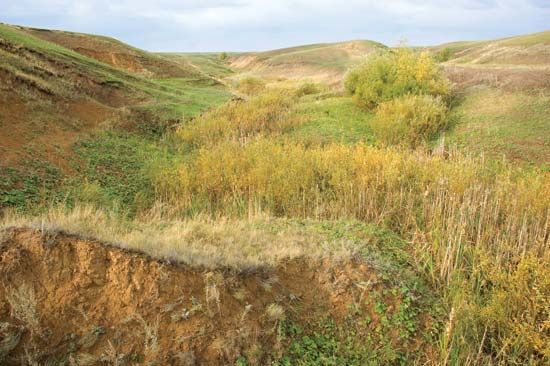
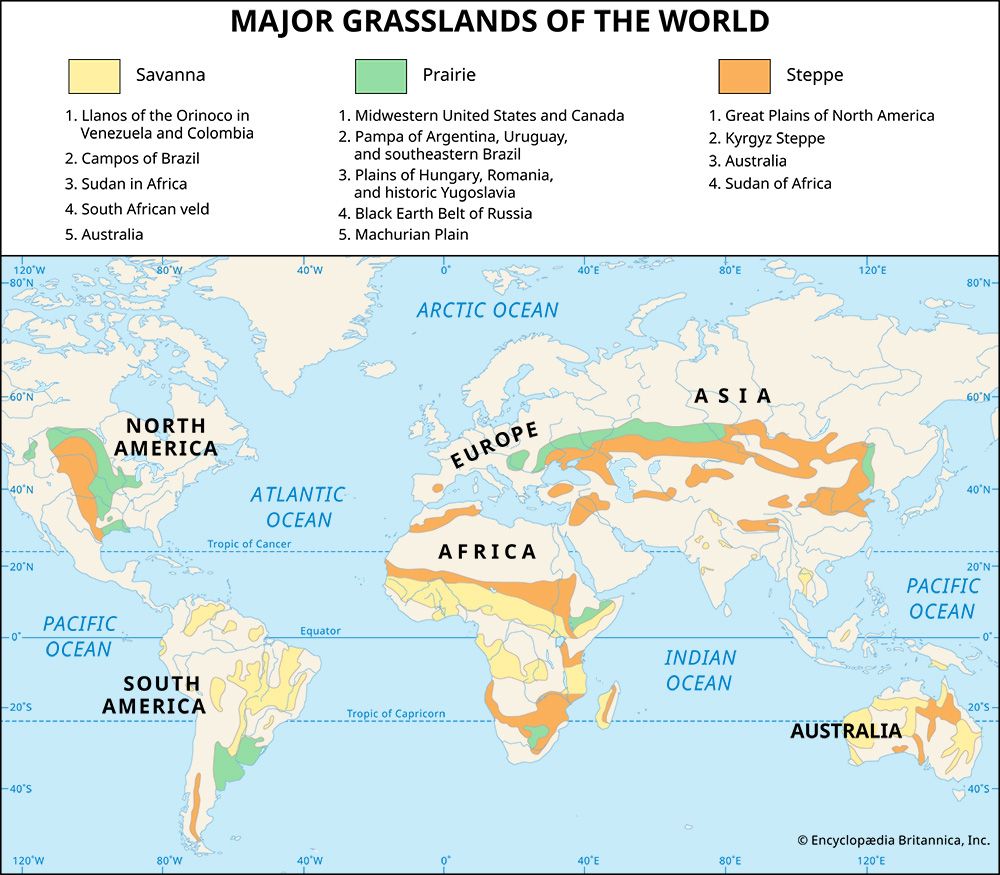
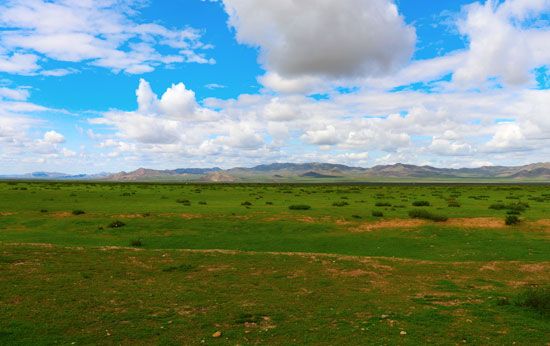
A steppe is a vast, treeless grassland characterized by low vegetation and a semiarid climate, typically receiving only 25 to 30 cm (10 to 12 inches) of rainfall annually. The term, derived from a Russian word meaning “flat grassy plain,” is most famously applied to the Eurasian Steppe, which stretches 8,000 km from Hungary to Manchuria.1
These regions experience sharply contrasting seasons, with hot summers and cold winters. Because they are located deep within continental interiors, often isolated by mountains, they lack the moisture required to support forests or savannas. The soil is frequently Chernozem, a highly fertile, dark “black earth” rich in humus.123
The open landscape has shaped the evolution of its wildlife, favoring herbivores adept at running and burrowing animals that can survive without natural cover. Today, many steppes face significant environmental challenges, including overgrazing and the conversion of wild habitats into agricultural land, which has threatened several native species.13
How does the soil in a steppe support grain farming?
The soil of the steppe, primarily known as Chernozem or “black earth,” is exceptionally well-suited for grain farming due to its high natural fertility and unique chemical composition.35
This fertility is driven by several key factors:
- Humus Accumulation: The thick cover of native grasses provides an abundance of organic material. Because winter frosts and summer droughts inhibit the decomposition of this matter, and high evaporation rates prevent leaching, a deep, nutrient-rich layer of humus builds up, often reaching over three feet in thickness.35
- Nutrient Retention: Unlike other soil types, these soils—classified as Mollisols—retain essential mineral nutrients such as calcium, magnesium, and potassium throughout their profile.6
- Chemical Balance: The soil typically exhibits low acidity. Furthermore, calcium compounds that are leached downward by spring snowmelt are drawn back toward the surface during the dry summer, maintaining a nutrient-rich environment for crops.35
While these regions serve as global “breadbaskets,” intensive cultivation has made them susceptible to soil erosion and gullying, particularly on slopes or during hot, dry seasons.75
What are the main differences between a steppe and a savanna?
The primary differences between a steppe and a savanna lie in their geographic location, climate, and vegetation structure. While both are dominated by grasses, they exist in distinct environmental zones.
Key Differences
Feature
Steppe
Savanna
Location
Temperate regions (e.g., Eurasia, North America)
Tropical regions (8° to 20° from the Equator)
Climate
Semiarid; hot summers and cold winters
Warm to hot year-round; alternating wet and dry seasons
Vegetation
Treeless; dominated by short, perennial grasses
Open canopy; scattered trees and shrubs among grasses
Rainfall
Low (approx. 25–30 cm annually)
Higher (approx. 50–150 cm annually)
Structural and Environmental Distinctions
- Vegetation Composition: Steppes are characterized by a lack of trees, with vegetation typically growing no more than half a meter in height. In contrast, savannas are defined by a continuous grass cover occasionally interrupted by trees and shrubs. The presence of trees in savannas is often influenced by soil type, grazing intensity, and fire frequency.831
- Climate Dynamics: Steppes are located in continental interiors, often isolated by mountains, and experience sharp seasonal temperature contrasts. Savannas are transitional zones between rainforests and deserts, where growth patterns are dictated by the length of the dry season.83
- Soil and Fertility: Steppes are famous for Chernozem, a highly fertile “black earth” rich in humus that supports extensive grain cultivation. Savanna soils generally have lower fertility, though they can show marked variations, with trees often playing a role in cycling nutrients from deeper soil layers.1083
Why do animals in the steppe often live in burrows?
Animals in the steppe frequently live in burrows primarily because the open, flat landscape lacks natural shelter, such as trees or dense cover, to protect them from predators and harsh environmental conditions.113
The absence of natural cover on the steppe has significantly influenced the evolution of its inhabitants. By constructing elaborate subsurface burrows, animals—particularly rodents like marmots, mole voles, and prairie dogs—gain several survival advantages:13
- Protection from Predators: Burrows provide a vital refuge for small animals that would otherwise be highly vulnerable in the low, sparse vegetation of the open plains.113
- Climate Regulation: Steppes are characterized by sharply contrasting seasons, including hot summers and cold winters. Underground tunnels offer a more stable microclimate, shielding animals from extreme surface temperatures and low humidity.113
- Access to Resources: For some species, such as the mole vole, burrowing is also a means of accessing food, as they consume the underground parts of plants, including roots and rhizomes.3
These burrowing behaviors are often accompanied by physical adaptations, such as powerful forelimbs for digging and, in some specialized species, reduced eyes and ears or velvety fur that facilitates movement through the soil.314
Sources
- Steppe — Encyclopædia Britannica
- Mid-latitude steppe and desert climate — Encyclopædia Britannica
- Russia - Wooded steppe and steppe — Encyclopædia Britannica
- savanna — Merriam-Webster
- Mollisol — Encyclopædia Britannica
- Ukraine - Soils of Ukraine — Encyclopædia Britannica
- Asia - The forest-steppe and steppe — Encyclopædia Britannica
- Savanna: Top Questions — Encyclopædia Britannica
- Savanna - Environment — Encyclopædia Britannica
- Savanna - Population and community development and structure — Encyclopædia Britannica
- Savanna - Origin — Encyclopædia Britannica
- the Steppe - Geography of adjacent regions — Encyclopædia Britannica
- vole — Encyclopædia Britannica
- Burrowing — Encyclopædia Britannica
Published on · 4 min read