Ornitholestes
Ornitholestes is a genus of small, lightly built carnivorous dinosaur that lived during the Late Jurassic Period, approximately 161 million to 146 million…
What is Ornitholestes?
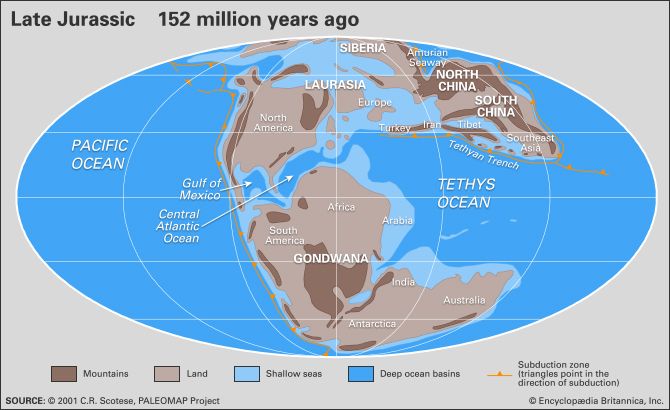
Ornitholestes is a genus of small, lightly built carnivorous dinosaur that lived during the Late Jurassic Period, approximately 161 million to 146 million years ago. Fossils of this creature, including a nearly complete skeleton, have been discovered in Wyoming, U.S.1
Measuring about 2 meters (6.6 feet) in length, Ornitholestes possessed a long, flexible neck and a long skull. Its well-developed forelimbs ended in three long, clawed fingers, which likely allowed it to capture quick, elusive prey. While its name translates to “bird robber,” it is believed to have primarily consumed small, speedy lizards and early mammals rather than birds. The animal also featured strong hind limbs, indicating it was well-adapted for running. Although some researchers have historically equated Ornitholestes with the genus Coelurus, they are currently considered to be separate genera.12
What are the main differences between Saurischia and Ornithischia dinosaurs?
The primary distinction between the two major orders of dinosaurs, Saurischia and Ornithischia, lies in the configuration of their pelvis. This classification was established by biologist H.G. Seeley in 1887 based on the orientation of the pubic bone.45
Pelvic Structure
- Saurischia (“lizard-hipped”): In these dinosaurs, the pubis points down and forward, a configuration similar to that of typical reptiles. When viewed from the side, the pelvic bones form a triangular outline.54
- Ornithischia (“bird-hipped”): In these dinosaurs, a portion of the pubis points downward and backward, lying parallel to the ischium. While this arrangement superficially resembles that of modern birds, ornithischians are not actually related to birds; birds evolved from theropod saurischians.465
Other Key Differences
Beyond the hips, the two groups exhibit significant anatomical variations:
- Diet and Jaws: All ornithischians were herbivorous and possessed a unique extra bone at the tip of the lower jaw called the predentary. They typically featured leaf-shaped teeth and a toothless horny beak for processing vegetation. In contrast, saurischians include both carnivorous theropods and herbivorous sauropodomorphs.65
- Skull and Limbs: The two orders are further distinguished by marked dissimilarities in their teeth, limbs, and overall skull structure.4
How do scientists determine what a dinosaur ate based on its fossilized teeth and claws?
To determine the diet of extinct dinosaurs, paleontologists utilize a combination of functional anatomy, biomechanical modeling, and direct physical evidence.
Dental Analysis
Teeth are primary indicators of feeding habits. Scientists examine tooth structure and wear patterns to infer how a dinosaur processed food.7
- Herbivores: Many plant-eaters, such as hadrosaurs and ceratopsians, possessed “dental batteries”—tightly packed rows of teeth that formed long grinding or shearing surfaces for processing tough, fibrous vegetation.8
- Carnivores: Sharp, serrated teeth are characteristic of flesh-eaters, designed for tearing and slicing.8
Biomechanical and Physical Evidence
Beyond teeth, researchers use several other methods to reconstruct feeding behaviors:
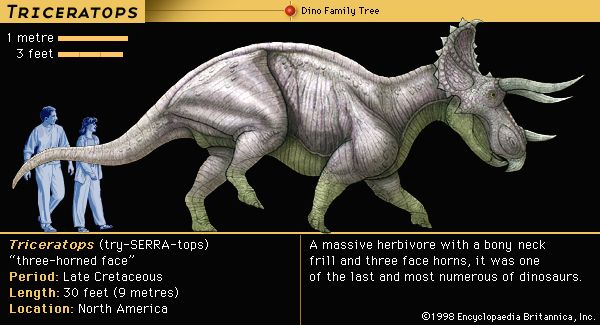
- Functional Anatomy: The overall body plan, including the shape of the skull and the structure of the limbs, provides clues. For instance, the presence of unclawed, hooflike feet in bulky dinosaurs like Triceratops supports their classification as herbivores.8
- Direct Evidence: Occasionally, scientists find fossilized stomach contents, such as pine needles in a hadrosaur, or coprolites (fossilized feces) containing bone fragments, which provide definitive proof of diet.89
- Gastroliths: Some dinosaurs ingested “stomach-stones” to aid in pulverizing food, which are sometimes found preserved within the skeleton.87
- Comparative Modeling: Scientists apply biomechanical analysis to jaw mechanisms and trackways, often using analogous traits from modern animals to simulate how these creatures moved and fed.7
What other small carnivorous dinosaurs lived during the Late Jurassic period?
In addition to larger theropods like Allosaurus, the Late Jurassic period was home to several small, agile carnivorous dinosaurs. Notable examples include:
- Ornitholestes: Found in North America, this lightly built dinosaur reached about 2 meters (6.6 feet) in length. It possessed a flexible neck and well-developed forelimbs with three clawed fingers, which it likely used to catch small, elusive prey such as lizards and early mammals.1
- Compsognathus: One of the smallest known dinosaurs, this genus lived in Europe and grew only to the size of a chicken (approximately 60–90 cm, or 2–3 feet, in length). It was a swift, predaceous runner with strong hind limbs. Evidence of its diet has been preserved in the form of a fossilized lizard skeleton found within the rib cage of a Compsognathus specimen.1213
- Archaeopteryx: Often recognized as one of the earliest feathered dinosaurs, Archaeopteryx was a small, saurischian dinosaur that retained primitive features such as teeth, a lizard-like tail, and claws on its wing tips.14
These small theropods highlight the diversity of predatory niches occupied by dinosaurs during the Late Jurassic.14
Sources
- Ornitholestes — Encyclopædia Britannica
- dinosaur - Reconstruction and classification — Encyclopædia Britannica
- Ornitholestes — Merriam-Webster
- dinosaur - Classification — Encyclopædia Britannica
- ornithischian — Encyclopædia Britannica
- saurischian — Encyclopædia Britannica
- dinosaur - The plant eaters — Encyclopædia Britannica
- dinosaur - The flesh eaters — Encyclopædia Britannica
- mammal - Teeth — Encyclopædia Britannica
- dinosaur - Modern studies — Encyclopædia Britannica
- ornithopod — Encyclopædia Britannica
- Jurassic Period - Vertebrates — Encyclopædia Britannica
- Jurassic Period - Protists and invertebrates — Encyclopædia Britannica
- Morrison Formation — Encyclopædia Britannica
- Compsognathus — Encyclopædia Britannica
- Triassic Period - The first dinosaurs — Encyclopædia Britannica
- Compsognathus — Merriam-Webster
Published on · 3 min read