Sumbawa
Sumbawa holds significant historical importance in Indonesia due to its political history and a catastrophic natural event that had global repercussions.
What is the historical significance of Sumbawa in Indonesian history?
Sumbawa holds significant historical importance in Indonesia due to its political history and a catastrophic natural event that had global repercussions.
Political History
Historically, the island was part of the Javanese Majapahit kingdom. By 1674, the local nobility entered into agreements with the Dutch East India Company, marking the beginning of Dutch influence over the region. During the 20th century, the island was occupied by Japan during World War II.1
The 1815 Eruption of Mount Tambora
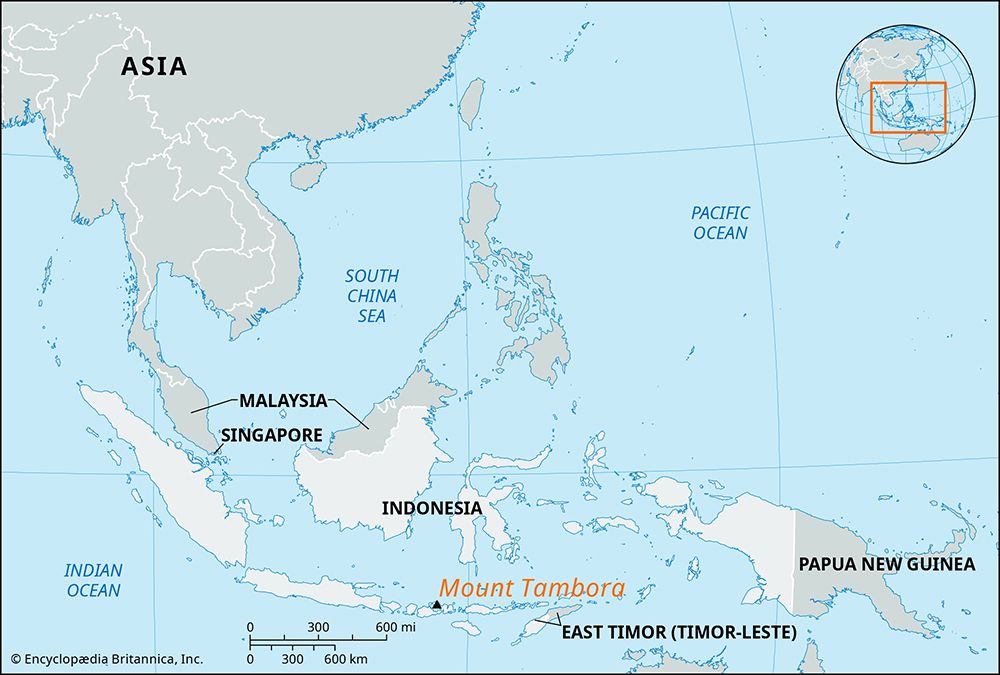
Sumbawa is most globally recognized as the site of the 1815 eruption of Mount Tambora, the largest and most destructive volcanic event in recorded history. The eruption caused immediate devastation on the island, killing tens of thousands of people and forcing many others to emigrate.21
The event had profound environmental consequences, as the massive release of ash and aerosols into the atmosphere reduced global temperatures, leading to the “year without a summer” in 1816, which caused widespread crop failures and famine in parts of Europe and North America.2
What languages are spoken on Sumbawa, and how do they relate to other Indonesian languages?
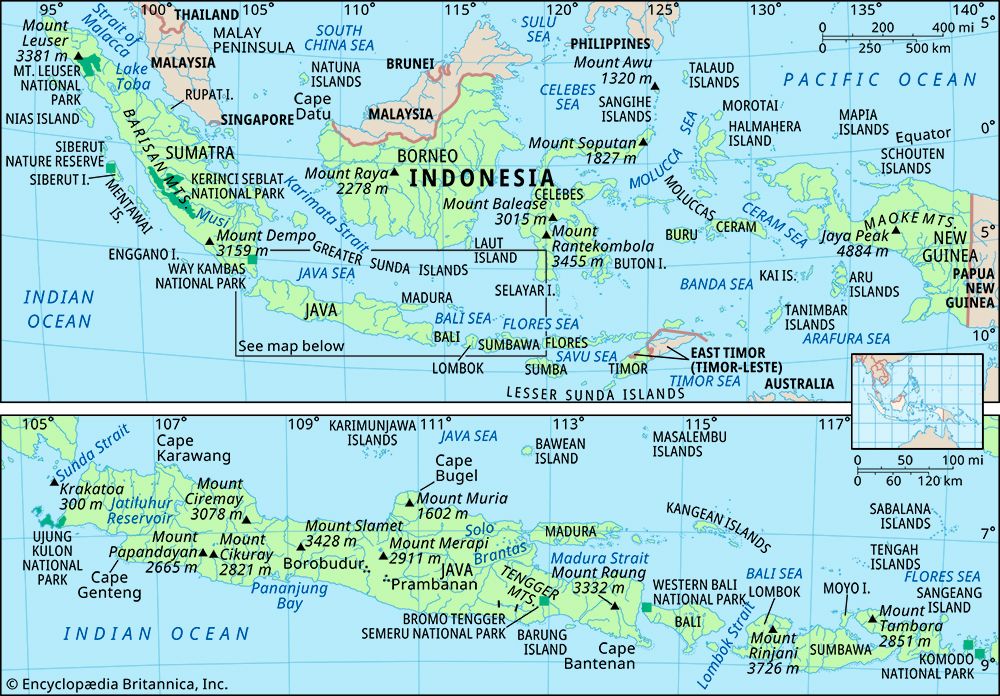
The languages spoken on the island of Sumbawa reflect the island’s diverse cultural geography and its position within the broader Indonesian archipelago.
The linguistic landscape of the island is generally divided between its western and eastern regions:
- Western Sumbawa: The inhabitants in the west are closely related to the Sasak people of the neighboring island of Lombok. Consequently, the languages and cultural practices in this part of the island share significant affinities with those found on Lombok.2
- Eastern Sumbawa: The people of the Bima region in the east exhibit linguistic and cultural characteristics that are much like those of the Makasarese people. Additionally, in the eastern interior, there are strong linguistic and cultural traits associated with Papuan influences.2
These local languages are part of the Austronesian language family, which encompasses the vast majority of languages spoken across Indonesia. While these regional tongues remain central to local identity, Malay—which serves as the basis for the national language, Bahasa Indonesia—functions as a vital lingua franca across the archipelago, facilitating communication between different ethnic groups.5
Where is Sumbawa located within Indonesia, and what are its key geographical features?
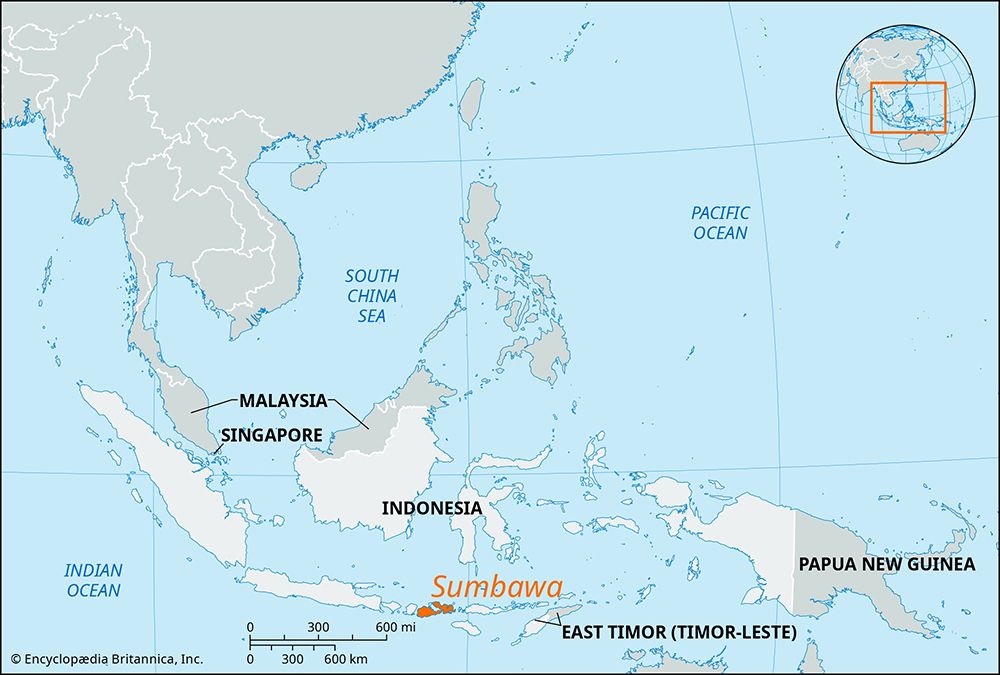
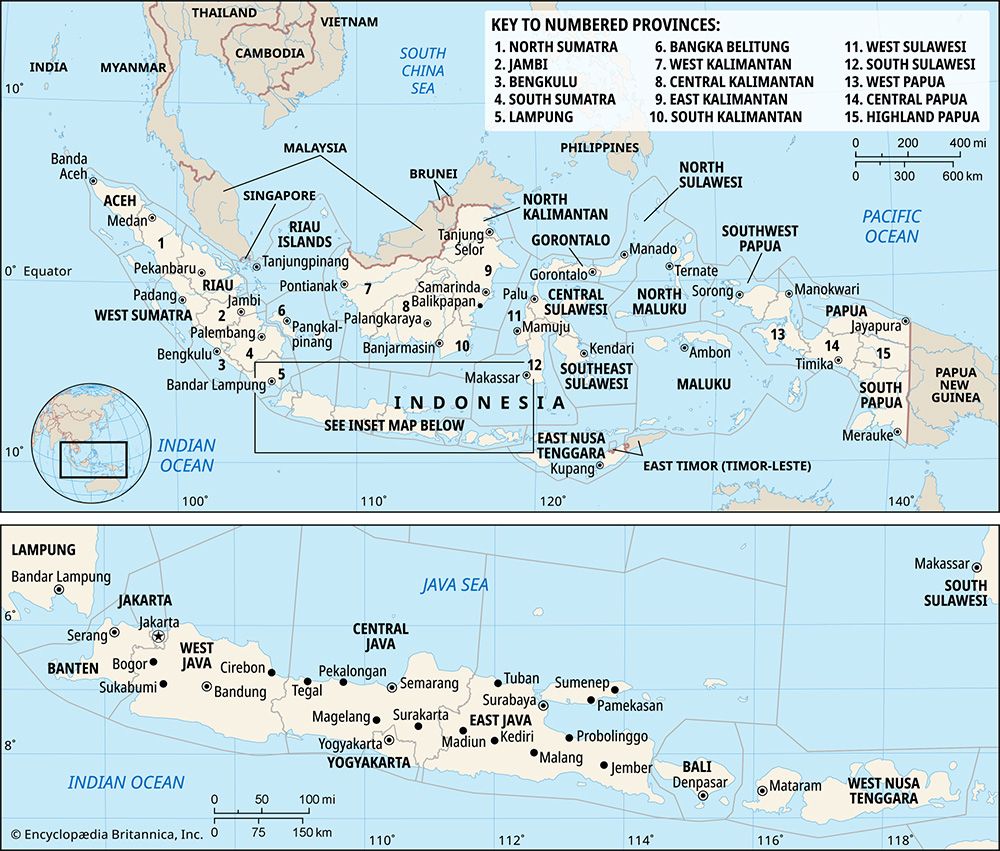
Sumbawa is an island located in the west-central part of the West Nusa Tenggara province in southern Indonesia. It is part of the Lesser Sunda Islands, situated east of Lombok and west of Flores.28
The island’s geography is defined by several key features:
- Topography: Sumbawa is largely mountainous with rocky, precipitous coasts and only a few small plains.28
- Volcanism: The island is part of a volcanic chain. Its highest peak is the active stratovolcano Mount Tambora, which reaches an elevation of 9,354 feet (2,851 meters).98
- Coastline: The island features deeply cut bays that create numerous peninsulas. Notably, Saleh Bay divides the island nearly in half, and the island possesses the excellent harbor of Bima.28
- Vegetation: Due to a long history of shifting cultivation and grazing, large portions of the island are covered by thornbush and scrub vegetation.28
How does the culture of Sumbawa differ from other Indonesian islands?
The culture of Sumbawa is distinct due to its unique blend of regional influences, which vary significantly across the island. Unlike more homogeneous regions in Indonesia, Sumbawa’s cultural identity is geographically split:
- Western Influence: The western portion of the island is culturally and linguistically tied to the Sasak people of neighboring Lombok, reflecting a shared history and proximity.2
- Eastern Influence: The eastern region, particularly around Bima, shares strong customs and linguistic traits with the Makasarese people. Furthermore, the eastern interior is notable for its strong Papuan cultural and linguistic influences, a feature that distinguishes it from many other islands in the western archipelago.2
While Islam is the prevailing religion across the island, the population is of Malay ancestry, and the island’s history—including its past as part of the Majapahit empire—has left a lasting mark on its social structure. Unlike islands such as Sumba, where animism remains a significant religious force, Sumbawa is more uniformly Islamic, though it maintains its own local rituals and traditions.2311
Sources
- Mount Tambora — Encyclopædia Britannica
- Sumbawa — Encyclopædia Britannica
- Sumba — Encyclopædia Britannica
- history of Indonesia - Dutch rule from 1815 to c. 1920 — Encyclopædia Britannica
- Austronesian languages - Major languages — Encyclopædia Britannica
- West Nusa Tenggara — Encyclopædia Britannica
- Sumbawanese — Merriam-Webster
- Mount Tambora: Top Questions — Encyclopædia Britannica
- How the 1815 Eruption of Mount Tambora Produced the “Year Without a Summer” — Encyclopædia Britannica
- Indonesia - Islands of the Sunda Shelf — Encyclopædia Britannica
- Indonesia - The archipelago: its prehistory and early historical records — Encyclopædia Britannica
- Indonesia - Religions of Indonesia — Encyclopædia Britannica
Published on · 3 min read