Oilbird
The oilbird (Steatornis caripensis) and bats both utilize echolocation to navigate their environments, but their systems differ significantly in frequency…
How does the oilbird’s echolocation system work, and how does it compare to bats?
The oilbird (Steatornis caripensis) and bats both utilize echolocation to navigate their environments, but their systems differ significantly in frequency and purpose.
How the Oilbird System Works
Oilbirds use echolocation primarily for navigation within the dark caves where they roost and nest. They emit rapid bursts of clicks—sometimes reaching 250 per second—that reflect off surfaces to help the birds perceive their surroundings. Unlike many other echolocating animals, these clicks are produced at approximately 7,000 hertz, placing them well within the range of human hearing. Outside of caves, oilbirds rely on their large, sensitive eyes for navigation.12
Comparison to Bats
While both animals use sound to perceive spatial relations, their systems have key distinctions:
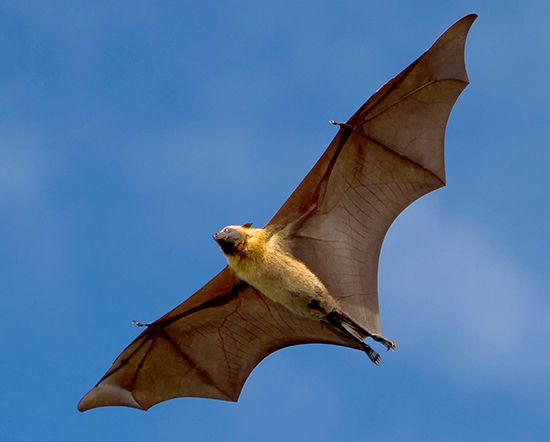
- Frequency: Bats typically use high-frequency, ultrasonic pulses (often ranging from 30,000 to over 200,000 hertz) to detect fine details, such as small flying insects. Oilbird clicks are much lower in frequency (7,000 hertz) and are audible to humans.342
- Function: Bats use echolocation for complex tasks like tracking and catching prey on the wing. Oilbirds use it primarily for orientation and obstacle avoidance in dark cave environments.413
- Adaptations: Bats have evolved specialized laryngeal structures and highly sensitive auditory systems to process ultrasonic echoes. Oilbirds, conversely, are nocturnal birds that maintain large eyes for visual navigation outside of their caves.412
What role do oilbirds play in their ecosystem?
The oilbird (Steatornis caripensis) plays a vital role in its ecosystem primarily as a specialized frugivore and agent of seed dispersal.
Ecological Contributions
- Seed Dispersal: As an exclusively fruit-eating bird, the oilbird consumes the fruits of various trees—particularly those from the palm, laurel, and bursera families—which contain large, hard seeds. By swallowing these fruits whole and later regurgitating the seeds, the oilbird facilitates the movement of these plants away from parent trees. This process is essential for the reproductive success of many rainforest plants, as it allows seedlings to escape competition with the parent plant and helps expand the species’ range.15
- Nutrient Cycling: The nesting habits of oilbirds contribute to the local environment within their cave habitats. They construct nest rims using regurgitated fruit matter and organic debris. Over time, the accumulation of these materials, along with the feces of nestlings, creates a unique micro-environment within the caves they inhabit.6
By maintaining this mutualistic relationship with fruit-bearing trees, the oilbird acts as a key link in the forest community, ensuring the survival and distribution of diverse plant species that rely on animals for their propagation.5
How did the oilbird get its name, and what other names is it known by?
The oilbird (Steatornis caripensis) earned its common name due to the historical practice of indigenous peoples rendering the bird’s exceptionally fatty nestlings to produce an odorless oil used for cooking and lighting. This unique biological trait—where young birds become significantly heavier than adults before fledging—is also reflected in the bird’s scientific family name, Steatornithidae, which is derived from the Greek word for fat.18
In addition to being called the oilbird, the species is widely known by the name guácharo. This term is of Spanish origin and translates to “wailer,” a name inspired by the bird’s distinctive and often unsettling vocalizations, which include loud squawks and shrieks emitted while inside its cave habitats.18
What are the unique physical characteristics of the oilbird?
The oilbird (Steatornis caripensis) is an aberrant member of the order Caprimulgiformes, possessing several distinct physical adaptations suited to its nocturnal, cave-dwelling lifestyle.1
Physical Appearance
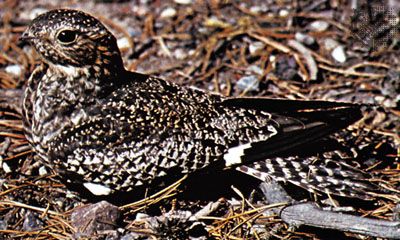
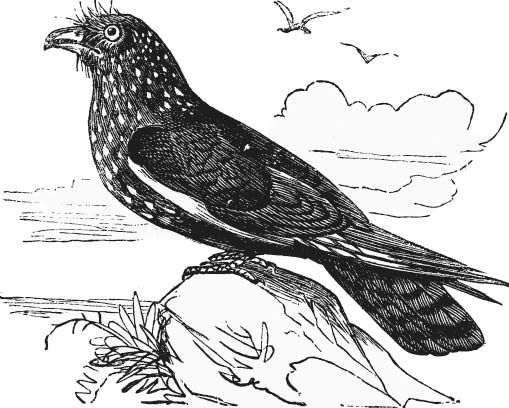
- Size and Build: The oilbird measures approximately 30 centimetres (12 inches) in length. It features a fanlike tail and long, broad wings that facilitate its flight.1
- Plumage: Its feathers are dark reddish brown, characterized by black barring and white spotting.1
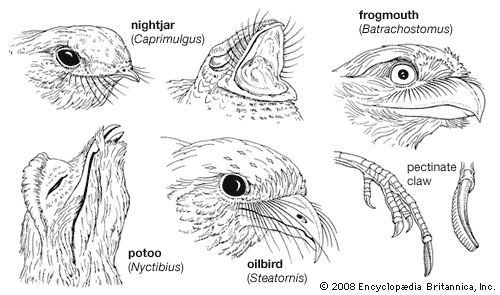
- Head and Sensory Features: The bird has a strong, hook-tipped bill and a wide gape surrounded by long bristles, which assist in its feeding habits. It also possesses large, dark eyes adapted for low-light conditions.1
Specialized Adaptations
- Echolocation: Unlike most other birds, the oilbird utilizes echolocation to navigate within the total darkness of its cave habitats. It emits rapid, audible clicks—up to 250 per second—to orient itself.19
- Olfactory Sense: The oilbird possesses an efficient sense of smell, which it employs to locate specific fruit-bearing trees during its nocturnal foraging flights.6
Sources
- Oilbird — Encyclopædia Britannica
- Echolocation — Encyclopædia Britannica
- Caprimulgiform - Vocalizations — Encyclopædia Britannica
- sound reception - Echolocation in bats — Encyclopædia Britannica
- Caprimulgiform - Reproduction — Encyclopædia Britannica
- Caprimulgiform - Food habits — Encyclopædia Britannica
- Tropical rainforest - Relationships between the flora and fauna — Encyclopædia Britannica
- oilbird — Merriam-Webster
- Caprimulgiform - Natural history — Encyclopædia Britannica
Published on · 3 min read