Poorwill
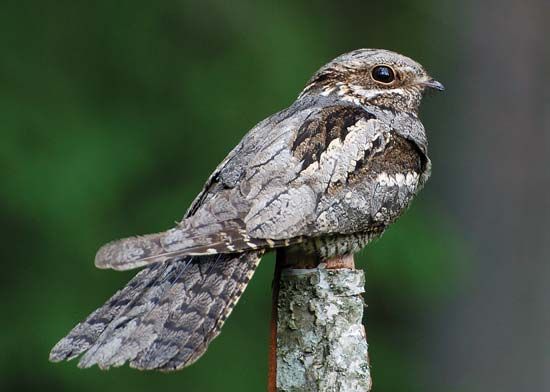
The poorwill (Phalaenoptilus nuttallii) is a nocturnal bird native to western North America, belonging to the nightjar family (Caprimulgidae). Named for its…
What is Poorwill?
The poorwill (Phalaenoptilus nuttallii) is a nocturnal bird native to western North America, belonging to the nightjar family (Caprimulgidae). Named for its distinct two-syllable call, the bird measures approximately 20 cm (8 inches) in length and features mottled gray plumage.12
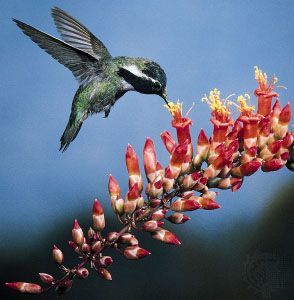
The species is notable for being one of the few birds capable of hibernation. To conserve energy during winter months or periods when flying insects are unavailable, the poorwill enters a state of torpor, often hiding in rock crevices. During this time, its body temperature can drop to match the surrounding environment, significantly reducing its metabolic rate. While a hummingbird may use daily torpor to manage energy, the poorwill’s hibernation is a specialized survival strategy for enduring harsh conditions. It typically breeds in arid regions ranging from the Mississippi River to British Columbia and winters in areas extending into central Mexico.13
What other animals are known to hibernate?
Many animals utilize hibernation or similar states of dormancy to survive periods of food scarcity or extreme temperatures. While the term is often applied broadly to winter dormancy in vertebrates, true hibernators undergo significant physiological changes, including a dramatic drop in body temperature and metabolic rate.45
Mammalian Hibernators
True hibernation among mammals is primarily found in specific orders:
- Chiroptera: Various species of bats, such as the little brown bat4.5
- Insectivora: Hedgehogs and their allies.5
- Rodentia: This group includes ground squirrels, marmots, woodchucks, jumping mice, and eastern chipmunks.45
Note that while bears are commonly associated with winter sleep, they are not considered true hibernators because their body temperature does not lower significantly, and they can be awakened relatively easily.45
Other Vertebrates
- Birds: The poorwill is the only bird known to hibernate, using it as a specialized survival strategy. Hummingbirds also utilize a related, shorter-term state called torpor to conserve energy.425
- Cold-blooded Vertebrates: Many fishes, amphibians, and reptiles undergo winter dormancy, often called brumation, where they remain at temperatures near freezing.56
How do nocturnal birds adapt to hunting in the dark?
Nocturnal birds have evolved specialized physical and sensory adaptations to navigate and hunt effectively in low-light environments.
Visual Adaptations
Many nocturnal birds, particularly owls, possess exceptionally large eyes encased in bony tubes that provide high light sensitivity. Their retinas are dominated by rods, which enhance visual acuity in dim conditions, though this often results in a lack of color vision. To compensate for their fixed eyes, these birds have highly flexible necks, allowing them to rotate their heads more than 180° to track movement.7
Auditory Specializations
Hearing is a primary tool for nocturnal hunting. Many owls feature asymmetrical ear openings, which allow them to localize sounds in two planes simultaneously by detecting minute differences in the time it takes for sound to reach each ear. Their ears are often surrounded by a ruff of lacy, sound-permeable feathers that act as a baffle to concentrate auditory signals. This acute hearing allows some species to capture prey in total darkness by pinpointing the rustle of small animals.789
Specialized Navigation
While most nocturnal birds rely on hearing, a few species, such as oilbirds and certain swiftlets, utilize echolocation to navigate dark environments like caves. Additionally, many nocturnal birds have evolved soft, dense plumage with specialized flight feathers that dampen sound, enabling silent flight and preventing interference with their own auditory perception.109117
What is the difference between torpor and hibernation?
While the terms are often used interchangeably, torpor and hibernation represent different scales of energy conservation.
Torpor
Torpor is a state of lowered body temperature and metabolic activity used by animals to survive adverse conditions, such as extreme heat or cold. It is a flexible, short-term strategy; for example, hummingbirds enter a state of circadian torpor nightly to conserve energy, waking up before dawn.145
Hibernation
Hibernation is a specific, long-term form of dormancy adopted by certain mammals to survive winter. While torpor can be brief, true hibernation involves a profound, sustained reduction in metabolism and body temperature, often lasting for months.1514
Key differences include:
- Depth of State: A true hibernator’s body temperature may drop near 0°C (32°F), with heart and respiration rates slowing to near-imperceptible levels.15
- Control: Unlike cold-blooded animals, true hibernators retain the ability to “turn off their thermostat” and can independently elevate their body temperature to awaken, even if the environmental temperature remains low.2
- Scope: Hibernation is generally reserved for warm-blooded animals, whereas torpor is a broader physiological state observed across a wider range of species, including insects and reptiles.142
Sources
- Poorwill — Encyclopædia Britannica
- Dormancy - Energy conservation — Encyclopædia Britannica
- poorwill — Merriam-Webster
- Why Do Some Animals Hibernate? — Encyclopædia Britannica
- Hibernation — Encyclopædia Britannica
- Dormancy - Effects of temperature — Encyclopædia Britannica
- Owl - Form and function — Encyclopædia Britannica
- Why do birds chirp at night? — Encyclopædia Britannica
- sound reception - Uses of hearing in birds — Encyclopædia Britannica
- How Do Birds Hear? — Encyclopædia Britannica
- Caprimulgiform - Natural history — Encyclopædia Britannica
- bat - Activity patterns — Encyclopædia Britannica
- Bird: Top Questions — Encyclopædia Britannica
- Torpor — Encyclopædia Britannica
- Dormancy - Homoiotherms and heterotherms — Encyclopædia Britannica
Published on · 3 min read