Table Bay
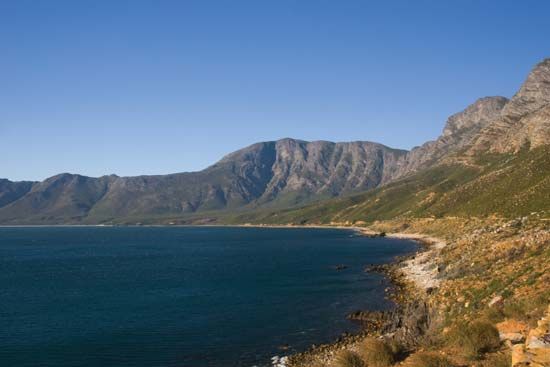
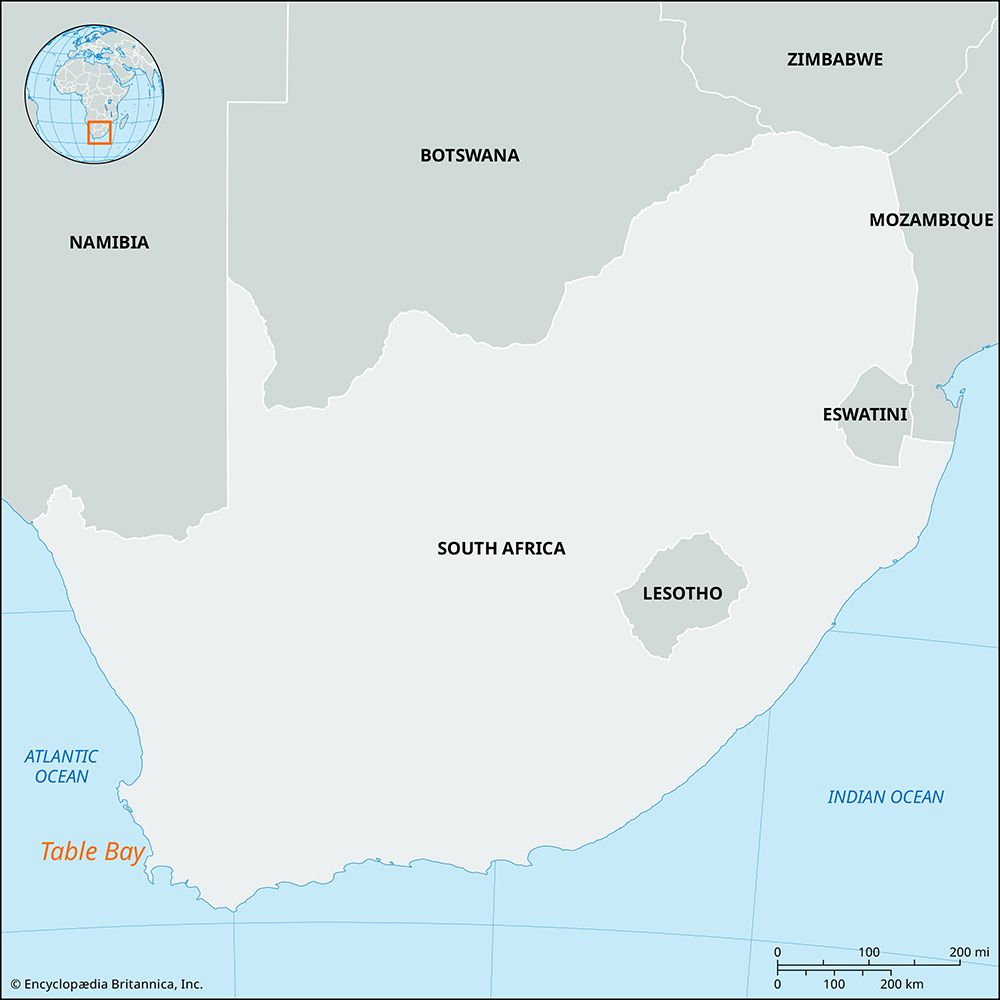
Table Bay is a bay of the Atlantic Ocean located near the southern tip of Africa, serving as the harbour for Cape Town, South Africa. Extending 12 miles (19…
What is Table Bay?
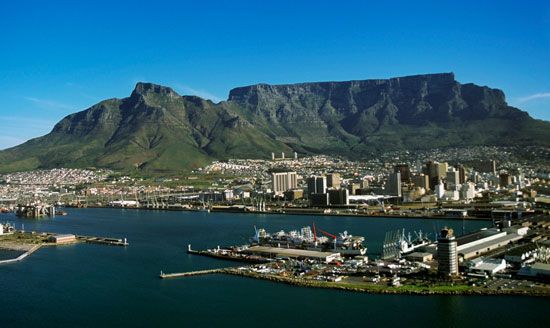
Table Bay is a bay of the Atlantic Ocean located near the southern tip of Africa, serving as the harbour for Cape Town, South Africa. Extending 12 miles (19 km) long and 8 miles wide from Cape Town to Melkbosstrand, the bay contains Robben Island and is famously overlooked by Table Mountain.1
Although the bay was less sheltered than other coastal areas, its reliable supply of fresh water made it a vital stop for ships traveling to India and the East. Portuguese navigators first sighted the bay around 1500, and it was permanently settled by the Dutch in 1652. Its strategic importance was so significant that it was often confused by early sailors with False Bay to the south. Today, the harbour remains a central feature of the region’s geography and history.123
What is the historical significance of Robben Island?
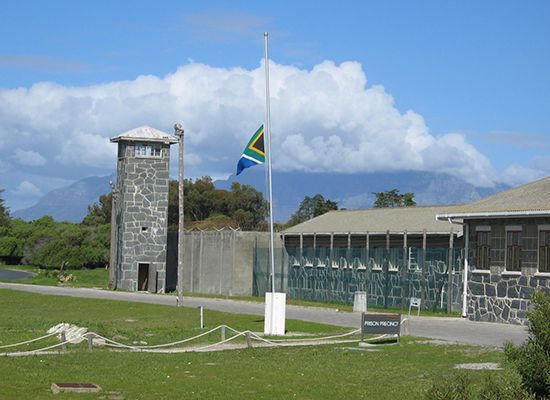
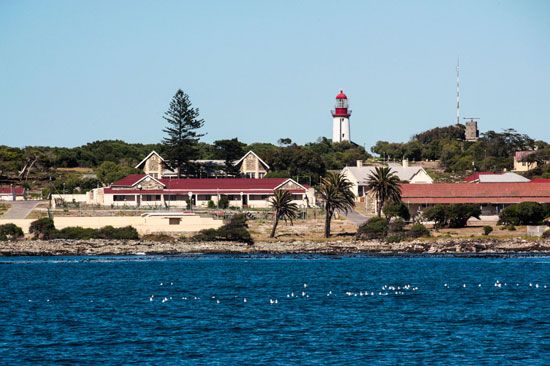
Robben Island, located in Table Bay, holds profound historical significance as a site of long-term confinement and, ultimately, a symbol of the triumph of human rights over oppression.
Throughout its history, the island served various roles:
- Penal and Medical Colony: Following its use as a shipping stop, it functioned as a penal colony under Dutch and British rule. It also housed a leper colony from 1846 to 1931 and served as a place of exile for those judged insane.4
- Maximum-Security Prison: From the mid-1960s to 1991, it was a notorious maximum-security prison for political prisoners, including Nelson Mandela, who was incarcerated there from 1964 to 1982. The prison was used by the state to suppress resistance against apartheid.456
Today, the island stands as a testament to the struggle for democracy in South Africa. In 1997, it was transformed into a museum and declared a national monument, and in 1999, it was designated a World Heritage site.4
How does Table Mountain influence the climate of Cape Town?
Table Mountain significantly modifies the Mediterranean climate of Cape Town through its physical presence and influence on local weather patterns.
The mountain acts as a barrier that creates distinct microclimates. Areas located near its slopes receive significantly more precipitation than those farther away, sometimes recording twice the annual rainfall. During the winter, the mountain’s reservoirs capture moisture brought by northwesterly winds, which provide the bulk of the region’s annual rainfall.78
Additionally, the mountain is famous for the “tablecloth,” a cloud cover that forms rapidly when winds blow from the southeast. These winds, along with those from the southwest, are known as the “Cape doctor” because they help disperse air pollution, keeping levels low in the city. The moisture from the tablecloth is also essential for supporting the lush vegetation found on the mountain’s summit plateau.87
Why did early sailors often confuse False Bay with Table Bay?
Early sailors often confused False Bay with Table Bay because of their geographic proximity on the Cape Peninsula. Located on the south side of the peninsula, False Bay was frequently mistaken for the more northerly Table Bay by mariners navigating the treacherous waters around the Cape of Good Hope.
This confusion is the origin of the name “False Bay,” as the bay proved to be a deceptive landmark for those seeking the harbor at Cape Town. While both bays are significant coastal features, they are distinct in their maritime characteristics; for instance, the waters of False Bay are approximately 10° F (5.5° C) warmer than those of Table Bay due to the influence of the Indian Ocean.3
Sources
- Table Bay — Encyclopædia Britannica
- Cape Town - History of Cape Town — Encyclopædia Britannica
- False Bay — Encyclopædia Britannica
- Robben Island — Encyclopædia Britannica
- Nelson Mandela - Incarceration — Encyclopædia Britannica
- South Africa - Resistance to apartheid — Encyclopædia Britannica
- Table Mountain — Encyclopædia Britannica
- Cape Town - Climate — Encyclopædia Britannica
- Cape of Good Hope — Encyclopædia Britannica
- Cape of Good Hope: Top Questions — Encyclopædia Britannica
Published on · 3 min read