Tachinid Fly
Tachinid flies (family Tachinidae) are highly beneficial in agriculture due to their role as internal parasites of destructive insects, particularly…
What role do tachinid flies play in pest control and agriculture?
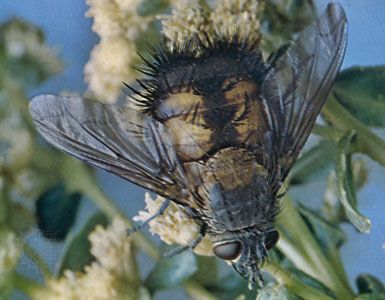
Tachinid flies (family Tachinidae) are highly beneficial in agriculture due to their role as internal parasites of destructive insects, particularly caterpillars and beetle larvae. Because most tachinid larvae destroy their hosts, these flies are frequently utilized in biological control programs to manage pest populations.12
Examples of their impact include:
- The reduction of sugarcane beetle borer populations in Hawaii.1
- The control of the coconut moth in Fiji.1
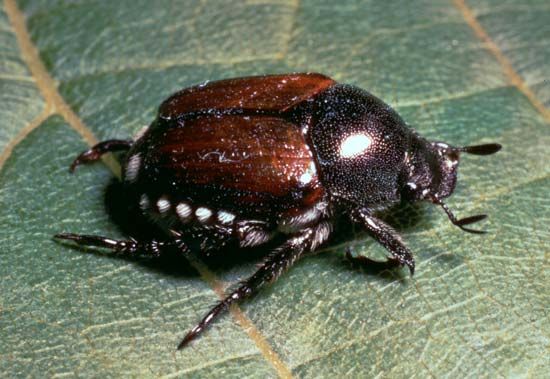
- The suppression of the Japanese beetle in the United States1.
Tachinids employ various strategies to infect hosts, such as laying eggs on vegetation consumed by caterpillars or attaching eggs directly to a host’s exoskeleton. Beyond their role as parasites, many adult tachinids also serve as pollinators by visiting flowers.1
It is important to distinguish these beneficial insects from the tsetse fly, a bloodsucking pest that transmits diseases and has historically hindered agricultural development in parts of Africa.3
How have humans utilized tachinid flies in biological control programs?
Humans have utilized tachinid flies as a key component of biological control programs to manage destructive insect populations. Because their larvae are internal parasites that typically destroy their hosts, these flies are effective at suppressing pests like caterpillars and beetle larvae.1
Specific examples of their successful application include:
- Sugarcane beetle borer: The species Ceromasia sphenophori was introduced to Hawaii from New Guinea to reduce borer populations.1
- Coconut moth: The Malayan tachinid Ptychomyia remota was used to control this pest in Fiji.1
- Japanese beetle: The species Centeter cinerea was transplanted to the United States to check the spread of this destructive beetle.1
While many tachinids are host-specific, some species have been introduced to target a broader range of pests. For instance, Compsilura concinnata was brought from Europe to the United States to control the spongy moth and brown-tail moth, though it is known to attack more than 200 other caterpillar species.1
What are some common host insects targeted by tachinid flies?
Tachinid flies are specialized parasites that target a wide variety of insects, primarily focusing on caterpillars and beetle larvae. Because their larvae are internal parasites, they play a significant role in the natural and human-managed control of various noxious insects.12
Common host insects targeted by these flies include:
- Caterpillars: Many species, such as the armyworm, can experience infestation rates of up to 90 percent by red-tailed tachinids (Winthemia).1
- Beetles: Tachinids are known to parasitize various beetle larvae, including the Japanese beetle and the sugarcane beetle borer.1
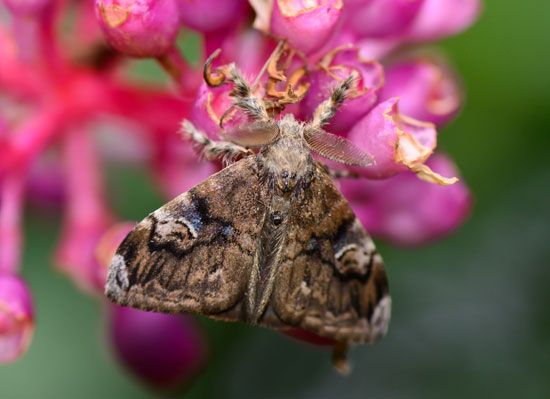
- Moths: Several species are targeted for biological control, including the spongy moth and the brown-tail moth.1
While many tachinid species are host-specific, some are generalists. For example, the introduced species Compsilura concinnata is known to attack more than 200 different species of caterpillars.1
How do tachinid flies locate and parasitize their host insects?
Tachinid flies have evolved highly specialized strategies to locate and parasitize their hosts. To find their victims, some species utilize the sex-attractant pheromones produced by host insects, such as the stinkbug genus Podisus, which inadvertently guide the flies to their location.1
Once a host is located, tachinids employ several methods to deposit their offspring:
- Direct Attachment: Some flies attach eggs directly to the host’s exoskeleton. Upon hatching, the larvae burrow through the host’s body wall.4
- Live Larvae Deposition: Certain species deposit living larvae directly onto the host or in areas where the larvae can easily attach to passing insects.4
- Ingestion: Some tachinids lay their eggs on vegetation, which is then consumed by caterpillars, allowing the larvae to enter the host internally.4
After entering the host, the tachinid maggots typically breathe by maintaining an opening through the host’s body wall or by connecting to its respiratory system. While many larvae eventually destroy their hosts, some do not, and they may either pupate within the host or leave it to complete their transformation.4
Sources
- tachinid fly — Encyclopædia Britannica
- Tachinidae — Merriam-Webster
- tsetse fly — Encyclopædia Britannica
- Chemoreception - Sex-attractant pheromones — Encyclopædia Britannica
- Diptera - Eggs — Encyclopædia Britannica
Published on · 3 min read