Moth Fly
Moth flies (family Psychodidae) are generally considered harmless, though they are often viewed as household nuisances because they are commonly found near…
Are moth flies considered pests, and if so, why?
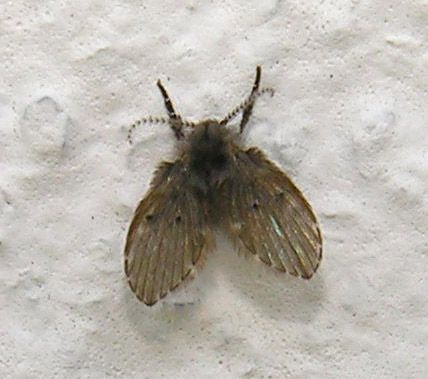
Moth flies (family Psychodidae) are generally considered harmless, though they are often viewed as household nuisances because they are commonly found near drain pipes, sinks, and windows.12
While most species do not pose a direct threat to humans, they can be considered pests in certain contexts due to their presence in kitchens and bathrooms, where their larvae thrive in decaying organic matter within drain pipes. Additionally, some members of the subfamily Phlebotominae, known as sand flies, are bloodsucking insects that can transmit diseases in various parts of the world.12
What natural predators do moth flies have, and how do these predators help control their population?
While specific natural predators of moth flies (family Psychodidae) are not explicitly detailed in the provided search results, these insects are part of the broader insect order Diptera, and their populations are generally regulated by the same types of natural enemies that affect other small insects.1
In general, insect populations are kept in check by a variety of biological controls, which include:
- Predators: Many invertebrates, such as spiders, ants, and various wasps, hunt smaller insects to regulate their numbers.3
- Parasitoids: Insects like tachinid flies and specific wasps often lay their eggs in or on a host. The developing larvae then consume the host, which is often a more effective method of population control than direct predation.3
- Pathogens: Populations can also be suppressed by bacteria, viruses, and fungi, which are particularly effective when insect populations are dense or crowded.3
These natural agents help maintain ecological balance by preventing any single species from becoming overly abundant, though they often require a high population of the host species to be present before the predator or parasite population can expand significantly.4
What are the key characteristics that distinguish moth flies from other insects?
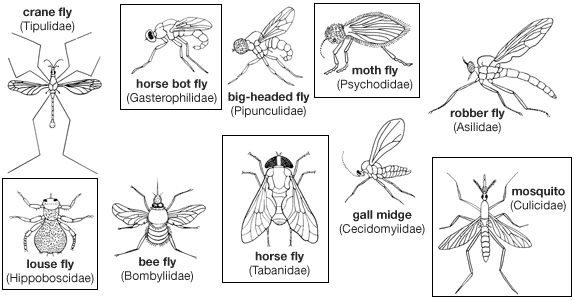
Moth flies (family Psychodidae) are distinct from other insects, including true moths, due to several key physical and biological characteristics:
- Taxonomic Classification: Unlike moths, which belong to the order Lepidoptera, moth flies are members of the fly order, Diptera.16
- Size and Appearance: They are very small, typically measuring no more than 5 mm (0.2 inch) in length. While they are often called “mothlike” because they possess broad, hairy wings, they are structurally different from the larger, often stouter moths.167
- Resting Posture: When at rest, moth flies hold their wings in a rooflike position over their bodies, a trait that contributes to their resemblance to tiny moths.1
- Habitat and Larval Development: Moth flies are commonly found near drain pipes and sinks. Their larvae are specialized to feed on decaying organic matter found within these moist, aquatic environments and can tolerate a wide range of water temperatures.1
- Anatomy: As members of the order Diptera, they possess only two wings, whereas moths (Lepidoptera) have two pairs of wings.17
What are the main differences between moth flies and regular moths?
Moth flies and regular moths are often confused due to their similar appearance, but they belong to entirely different biological groups.
Taxonomic Differences
- Moth Flies: These insects belong to the family Psychodidae within the order Diptera, which is the order of “true flies.”16
- Regular Moths: These are members of the order Lepidoptera, which also includes butterflies and skippers.1011
Physical and Biological Distinctions
- Wing Structure: As dipterans, moth flies possess only one pair of wings. In contrast, moths (lepidopterans) have two pairs of wings.111
- Size: Moth flies are very small, typically measuring no more than 5 mm (0.2 inch) in length, whereas moths vary significantly in size and are often much larger.1
- Larval Development: Moth fly larvae are specialized to feed on decaying organic matter in moist environments like drain pipes. Moths typically undergo a larval stage as caterpillars that feed on various plant parts, such as foliage, stems, or roots.111
- Appearance: While both have hairy or scaly wings, moth flies hold their wings in a rooflike position over their bodies when at rest, which gives them their characteristic “mothlike” look.16
Sources
- moth fly — Encyclopædia Britannica
- Diptera - Annotated classification — Encyclopædia Britannica
- Lepidoptera - Environmental hazards — Encyclopædia Britannica
- 10 Questions About Insects Answered — Encyclopædia Britannica
- Agricultural technology - Biological controls — Encyclopædia Britannica
- What’s the difference between moths and butterflies? — Encyclopædia Britannica
- caddisfly - Distinguishing taxonomic features — Encyclopædia Britannica
- Lepidoptera - Distinguishing taxonomic features — Encyclopædia Britannica
- Lepidoptera - The adult — Encyclopædia Britannica
- moth fly — Merriam-Webster
- Lepidoptera — Encyclopædia Britannica
Published on · 3 min read