Taiwan Strait
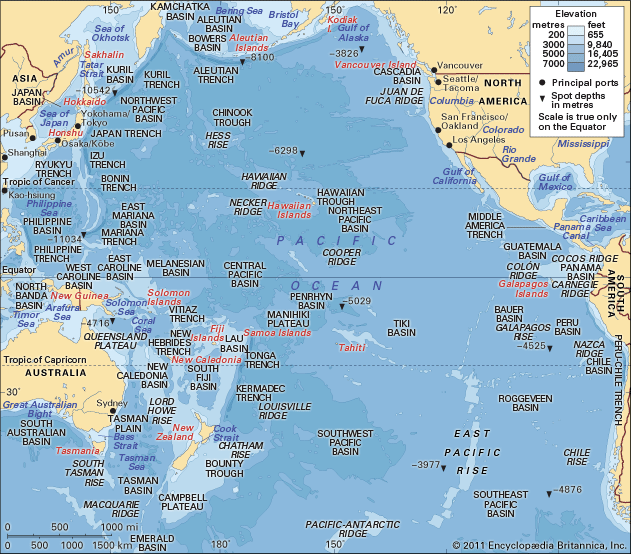
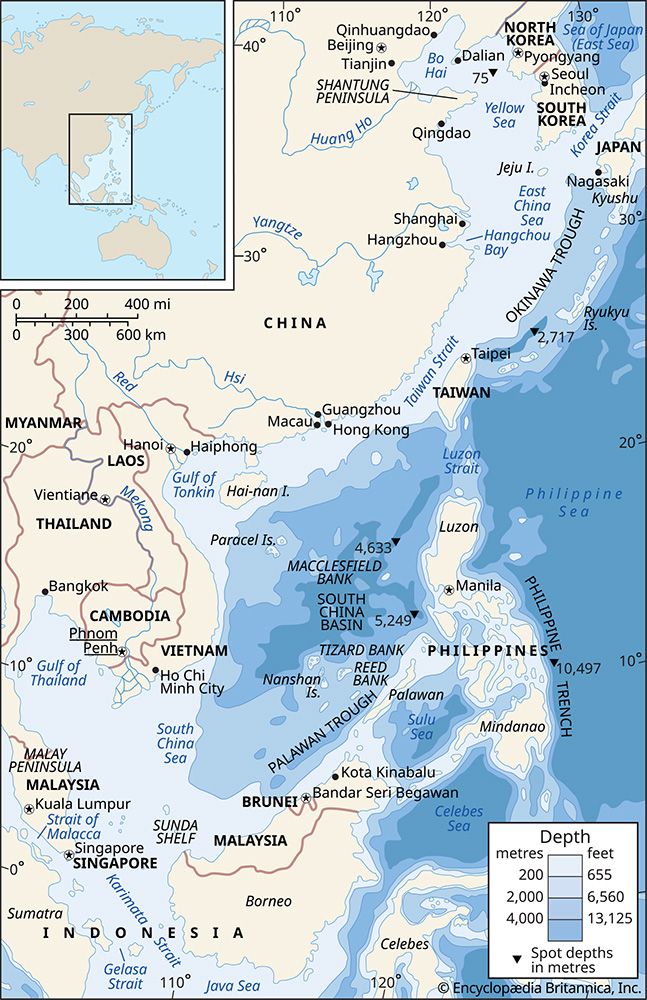
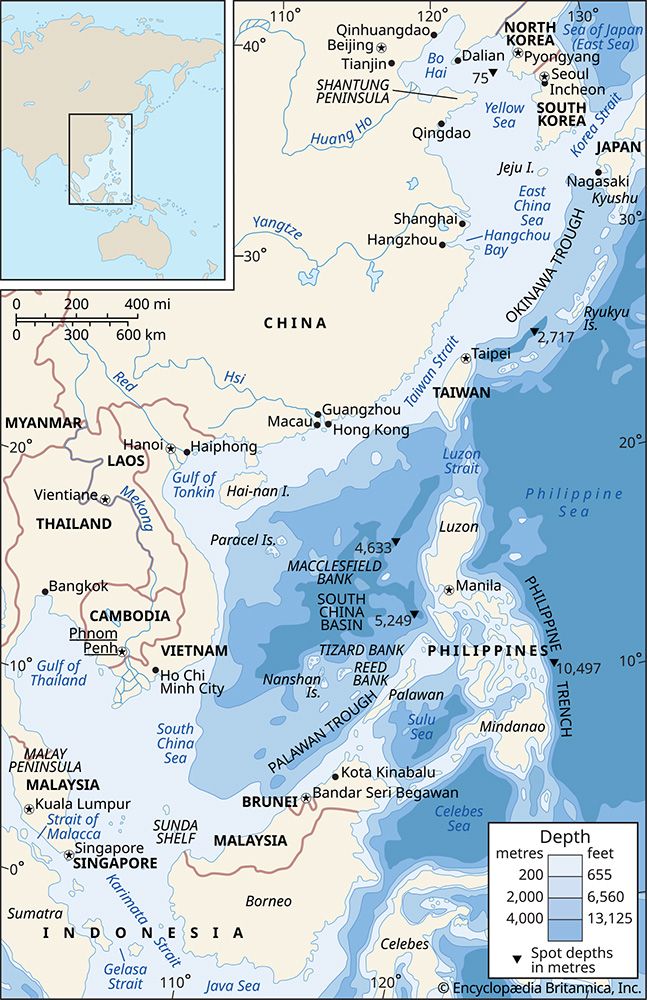
The Taiwan Strait is a 100-mile (160-km) wide arm of the Pacific Ocean that separates the island of Taiwan from the Fujian province of mainland China Fujian…
What is Taiwan Strait?
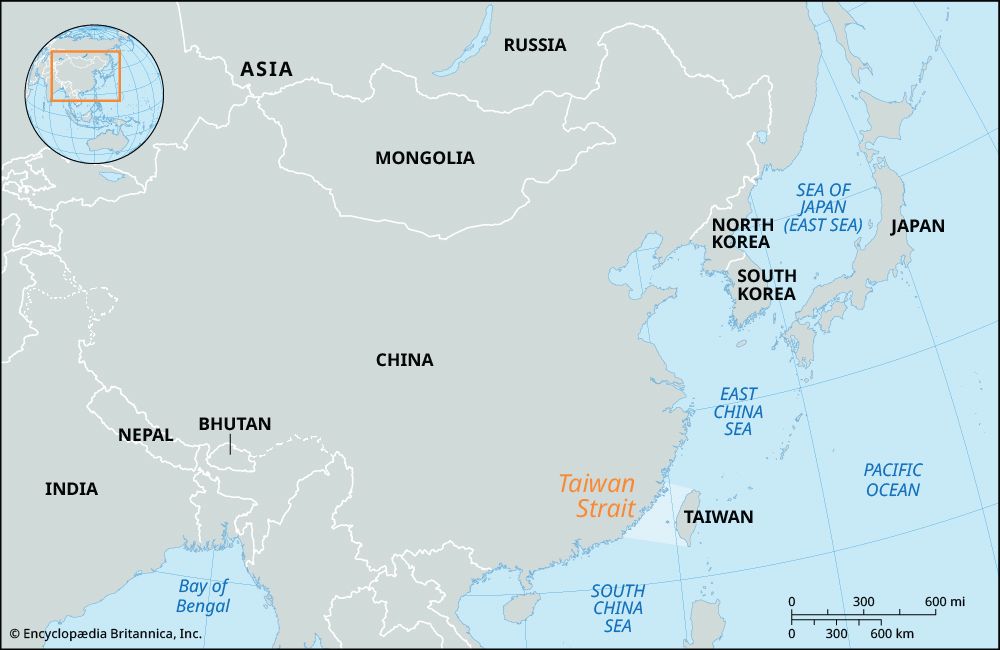
The Taiwan Strait is a 100-mile (160-km) wide arm of the Pacific Ocean that separates the island of Taiwan from the Fujian province of mainland China Fujian province of mainland China. Connecting the East China Sea and the South China Sea, the strait reaches a depth of approximately 230 feet (70 meters) and includes the Pescadores Islands.123
Historically known in the West as the Formosa Strait, the area is located within a typhoon zone. Beyond its geography, the strait is a site of significant geopolitical tension. Since the end of the Chinese Civil War, it has been the setting for a series of confrontations—known as the Taiwan Strait crises—between the People’s Republic of China and the Republic of China (Taiwan), often involving the United States as a key regional actor.234
What is the significance of the Pescadores Islands within the Taiwan Strait?
The Pescadores Islands, also known as the P’eng-hu Islands, serve as a vital strategic outpost within the Taiwan Strait. Located approximately 30 miles west of the main island of Taiwan, this archipelago has historically functioned as a defensive buffer and a base for military operations.51
Their significance is defined by several key factors:
- Strategic Military Position: Throughout history, the islands have been a focal point for regional control. They were used as a base for government military action against rebellions on Taiwan in the 18th century and were occupied by foreign powers, including the Dutch and the French, due to their strategic location.5
- Modern Defense: Since 1949, the islands have remained under the control of the government of the Republic of China. The establishment of a Chinese Nationalist naval base at Ma-kung underscores their ongoing role in monitoring and securing the strait.5
- Historical Gateway: Settled by fishermen from mainland China as early as the 12th century, the islands have long served as a bridge between the mainland and Taiwan, often acting as a staging ground for migration and colonial administration.5
How do typhoons affect maritime travel and trade in this region?
The Taiwan Strait is located within a major typhoon zone, making it highly susceptible to tropical cyclones from late summer to early fall. These storms are among the strongest in the world and present significant challenges to maritime travel and trade in the region.61
The impact of these typhoons includes:
- Navigation Hazards: The extreme winds and high seas generated by typhoons pose severe risks to shipping vessels navigating the strait, which serves as a critical maritime corridor connecting the East China Sea and the South China Sea.1
- Port Disruptions: Severe weather conditions can force the closure of major regional ports, such as Kao-hsiung on Taiwan and Amoy in mainland China, leading to delays in the movement of goods and supply chain interruptions.1
- Infrastructure Damage: Beyond maritime operations, the intense rainfall and flooding associated with these storms can damage coastal infrastructure, further complicating trade logistics.6
What is the ‘One China’ principle and why is it important to this conflict?
The “one-China” policy is a position maintained by the government in Beijing, which asserts that there is only one China and that Taiwan is an integral part of its territory. This should not be confused with China’s historical “one-child policy,” which was a family planning program.78
The one-China principle is central to the ongoing conflict because it defines the fundamental disagreement regarding sovereignty. Following the 1949 victory of communist forces in the Chinese Civil War, the Nationalist government fled to Taiwan, leading to a long-standing separation between the two entities. While the government in Beijing insists on its jurisdiction over Taiwan, there is no international consensus or agreement on how or if the two will ever be reunified. This stance remains a cornerstone of Beijing’s foreign policy and a primary point of tension in regional and international relations.7
Sources
- Taiwan Strait — Encyclopædia Britannica
- Taiwan Strait crises — Encyclopædia Britannica
- Taiwan Strait — Merriam-Webster
- Taiwan - Land — Encyclopædia Britannica
- P’eng-hu Islands — Encyclopædia Britannica
- Taiwan - Climate of Taiwan — Encyclopædia Britannica
- Taiwan — Encyclopædia Britannica
- one-child policy: Top Questions — Encyclopædia Britannica
- Open Door policy — Encyclopædia Britannica
Published on · 3 min read