Talking Ocean Trash: Ghost Gear Keeps on Fishing
"Talking Ocean Trash: Ghost Gear Keeps on Fishing" is an article detailing the environmental crisis caused by "ghost fishing gear"—lost, abandoned, or…
What is Talking Ocean Trash: Ghost Gear Keeps on Fishing?
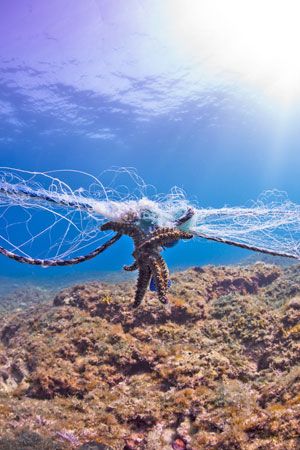
“Talking Ocean Trash: Ghost Gear Keeps on Fishing” is an article detailing the environmental crisis caused by “ghost fishing gear”—lost, abandoned, or discarded fishing implements like nets, traps, and lines.1
These items pose a severe threat to marine life through entanglement and ingestion, often continuing to “fish” autonomously for years because they are constructed from durable synthetic materials like nylon and polypropylene1. This phenomenon creates a cycle of destruction where trapped animals attract predators, which then become trapped themselves.1
The article highlights that while some gear is lost accidentally due to weather or seafloor obstructions, much is discarded by negligence. Efforts to combat this include:1
- Cleanup initiatives: Organizations like the Ocean Defenders Alliance and Healthy Seas remove debris, with some groups recycling nets into new products.2
- Energy programs: Hawaii’s “Nets-to-Energy” program incinerates recovered nets to generate electricity.2
- Incentives: South Korea’s buyback program pays fishermen to return derelict gear.2
Ultimately, the article emphasizes that preventing this ecological damage requires better tracking technology, improved accountability, and enhanced GPS mapping.2
How do modern synthetic materials like nylon contribute to the longevity of ocean trash?
Modern synthetic materials like nylon and polypropylene significantly increase the longevity of ocean trash because they are designed to be durable and resistant to natural decay processes. Unlike older, organic fishing materials that degraded relatively quickly, these synthetic polymers are not easily broken down by microorganisms because their chemical bonds cannot be processed by natural enzymes their chemical bonds cannot be processed by natural enzymes.13
As a result, discarded fishing gear made from these materials can persist in the ocean for up to 600 years. They only begin to break down when exposed to sunlight while floating on the surface, a process that causes them to fragment into microplastics rather than fully decomposing. This extreme durability allows “ghost gear” to continue trapping marine life for decades, creating a cycle of environmental harm that persists long after the gear has been lost or abandoned.13
What are some ways that marine animals can become entangled in ghost gear?
Marine animals become entangled in ghost gear through various mechanisms depending on the type of equipment left in the ocean:
- Floating Walls: Gill nets act as massive, indiscriminate barriers that trap any marine life in their vicinity, including fish, rays, crabs, and jellyfish, regardless of whether they were the intended target.14
- Passive Traps: Crab pots, shrimp pots, and lobster traps continue to capture animals like rockfish and sea lion pups that enter them. Additionally, animals can become ensnared in the vertical float lines that connect these traps to surface buoys.4
- Baited Hooks: Long lines use baited hooks that attract seabirds, turtles, and whales. These animals can be snagged by the hooks or suffer fatal injuries from becoming wrapped in the long, trailing lines.4
Once entangled, animals often face a cycle of further entrapment, as the presence of trapped prey attracts predators, which then become ensnared themselves.1
How can recycled fishing nets be transformed into useful products like clothing?
Recovered fishing nets can be transformed into useful products through specialized recycling processes that convert discarded synthetic materials into new, functional fibers. Organizations like Healthy Seas lead these efforts by collecting abandoned nets from the ocean and shipping them to facilities where the material is processed and regenerated into high-quality fibers suitable for manufacturing items such as carpets and clothing.5
This transformation is a vital part of the circular economy, as it diverts durable synthetic waste from landfills and prevents it from continuing to harm marine ecosystems as “ghost gear.” By repurposing these materials, the industry reduces the need for virgin plastic production while simultaneously cleaning the marine environment.5
Sources
- Talking Ocean Trash: Ghost Gear Keeps on Fishing — Encyclopædia Britannica
- Talking Ocean Trash: Ghost Gear Keeps on Fishing - Some Solutions — Encyclopædia Britannica
- How long does it take for plastic to decompose? — Encyclopædia Britannica
- Talking Ocean Trash: Ghost Gear Keeps on Fishing - Gill Nets, Crab Pots, Long Lines, Oh My — Encyclopædia Britannica
- netting — Encyclopædia Britannica
- Plastic Disaster: How Your Bags, Bottles, and Body Wash Pollute the Oceans — Encyclopædia Britannica
Published on · 3 min read