Tendril
A tendril is a specialized plant organ—often a modified leaf or stem—that enables climbing plants to anchor and support themselves. These slender, threadlike…
How do tendrils help plants in climbing and support?
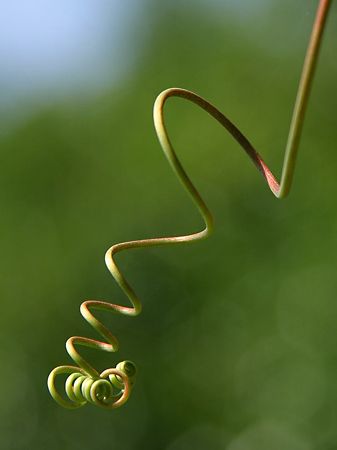
A tendril is a specialized plant organ—often a modified leaf or stem—that enables climbing plants to anchor and support themselves. These slender, threadlike structures are highly sensitive to touch, a response known as thigmotropism.
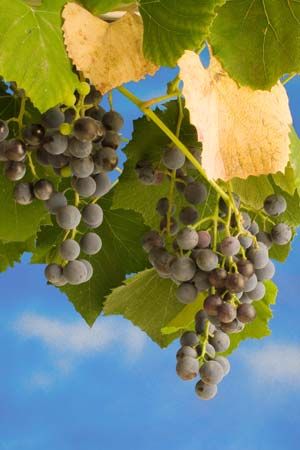
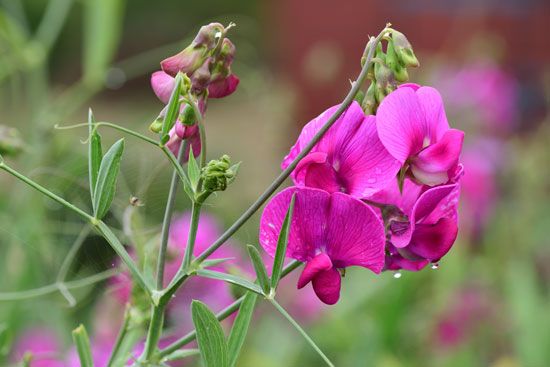
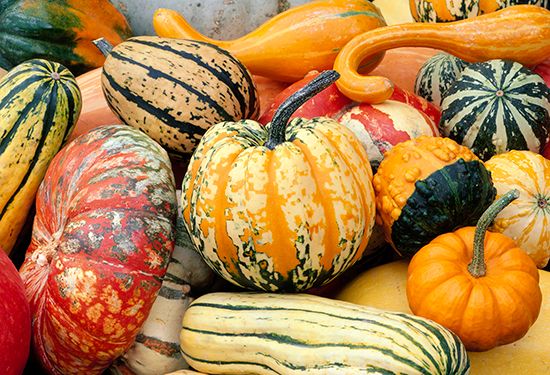
When a tendril brushes against an object, it reacts by curving toward the point of contact. If the shape of the object allows, the tendril wraps around it, clinging firmly to the surface. This process is further reinforced as the plant develops sclerenchyma, a type of mechanical tissue that strengthens the tendril to support the plant’s weight. Some species also utilize terminal enlargements that secrete an adhesive to cement themselves to a substrate. By utilizing these mechanisms, plants such as grapes, sweet peas, and various squash varieties can effectively climb toward light and structural support.
How do tendrils develop and grow in different plant species?
Tendrils are specialized plant organs that develop from various anatomical structures depending on the species. They may originate as modified leaves, leaflets, leaf tips, or stipules, or they may be derived from modified stem branches, such as those found in grapes.1
The development of these structures varies across different plants:
- Leaf-derived: In the garden pea, the terminal leaflet of a compound leaf develops into a tendril. In the flame lily, the leaf tip elongates to form one. In catbrier (Smilax), the stipules function as tendrils.4
- Petiole-derived: In plants like nasturtium and Clematis, the petioles (leafstalks) coil around supports.4
- Stem-derived: Tendrils in the grape family are modified stem branches.1
Regardless of their origin, tendrils are prehensile and exhibit thigmotropism, a growth response to touch. When a tendril contacts an object, it curves toward the stimulus and wraps around it. To provide lasting support, the plant subsequently develops sclerenchyma, a mechanical tissue that strengthens the tendril to bear the plant’s weight.15
What are the different types of tendrils found in plants?
Tendrils are specialized, slender, and often threadlike plant organs that enable climbing plants to anchor themselves to supports. While they all serve the same functional purpose, they are categorized based on their anatomical origin.14
Types of Tendrils by Origin
Tendrils can be derived from various parts of the plant’s structure:
- Stem-derived: Some tendrils are modified stem branches, such as those found in grapes.1
- Leaf-derived: These are modified portions of the leaf structure, including:
- Petiole-derived: In plants such as nasturtium and Clematis, the petioles (leafstalks) coil around supports.8
Regardless of their origin, these organs are highly sensitive to touch. When they encounter an object, they exhibit a growth response called thigmotropism, causing them to wrap around the support. Over time, they develop sclerenchyma—a strong mechanical tissue—to support the plant’s weight. Some species also feature terminal enlargements that secrete an adhesive to cement the plant to a substrate.1
What is the cellular structure of tendrils and how does it differ from other plant parts?
The cellular structure of a tendril is defined by its specialized function as a prehensile organ for climbing and support. Because tendrils are often modified leaves, leaflets, or stem branches, their internal anatomy reflects these origins, consisting of vascular bundles (xylem and phloem) and ground tissue.19
A key difference between tendrils and other plant parts is the developmental shift in their mechanical tissues. Initially, tendrils are slender and flexible to allow for movement and twining in response to touch, a process known as thigmotropism. During this growth phase, their cells rely on turgor pressure within vacuoles to maintain structural integrity, similar to the primary tissues found in young leaves or stems.11011
Once a tendril successfully anchors to a support, it undergoes a significant cellular change: it develops sclerenchyma, a rigid mechanical tissue characterized by thick secondary cell walls. This development provides the permanent stiffness and load-bearing capacity required to support the plant’s weight, distinguishing the mature, hardened tendril from the more flexible, primary-growth-dominated tissues of other plant organs.11011
Sources
- Tendril — Encyclopædia Britannica
- Did you know? — Merriam-Webster
- leaf climber — Merriam-Webster
- Angiosperm - Leaf modifications — Encyclopædia Britannica
- Hormone - Auxins — Encyclopædia Britannica
- Hormone - Growth inhibitors — Encyclopædia Britannica
- leaf tendril — Merriam-Webster
- tendril — Merriam-Webster
- Cell wall - Mechanical properties — Encyclopædia Britannica
- cell - Mechanical properties of wall layers — Encyclopædia Britannica
- Stem — Encyclopædia Britannica
- Morphology - Histology — Encyclopædia Britannica
Published on · 3 min read