Tennessee-Tombigbee Waterway
The Tennessee-Tombigbee Waterway is a 234-mile (376-kilometre) system of locks and canals that connects the Tennessee River in northeastern Mississippi to…
What is Tennessee-Tombigbee Waterway?
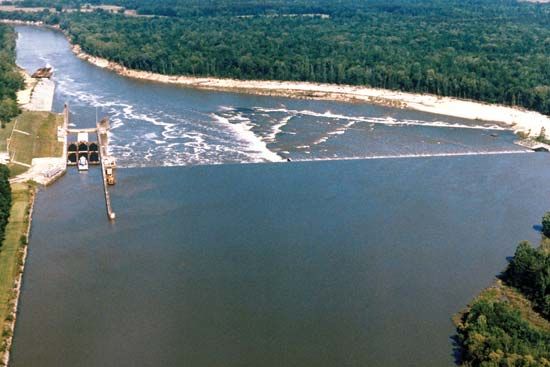
The Tennessee-Tombigbee Waterway is a 234-mile (376-kilometre) system of locks and canals that connects the Tennessee River in northeastern Mississippi to the Tombigbee River in western Alabama.12
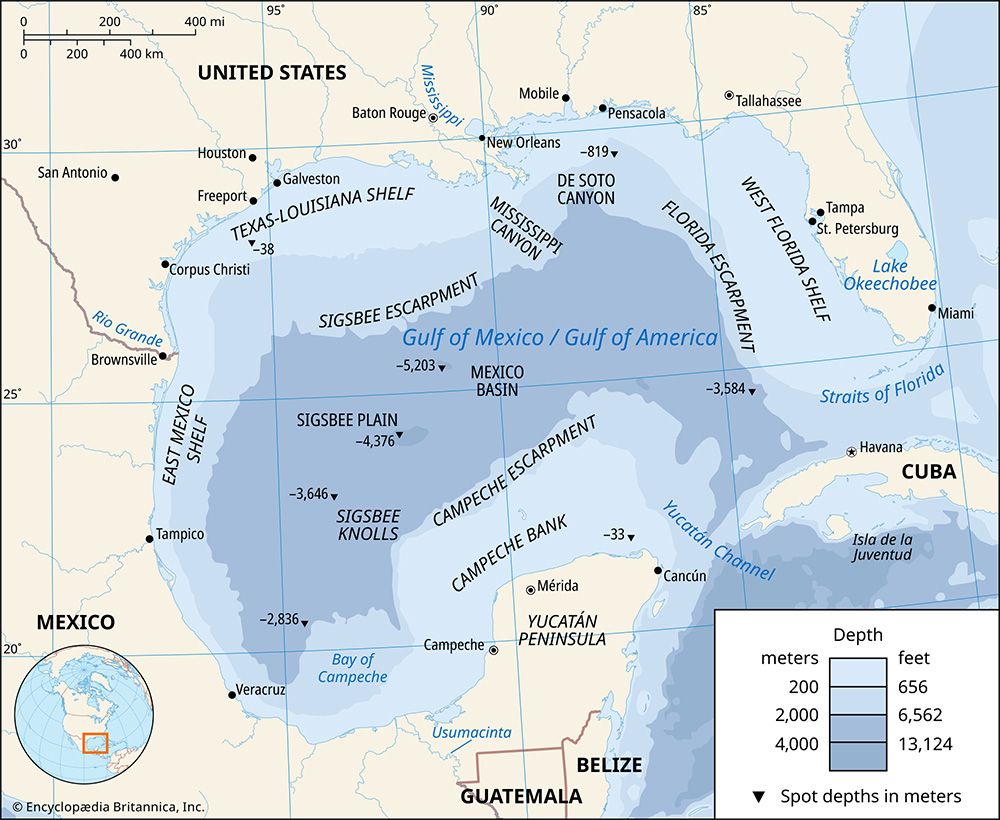
Constructed between 1971 and 1984, the waterway was designed to provide an alternative, shorter route to the Gulf of Mexico for Appalachian coal and agricultural products, bypassing the Mississippi River. By linking these river systems, the project aimed to stimulate regional economic development and attract new businesses. Barge traffic officially began operating on the system in January 1985, creating a vital transportation corridor that extends south to Mobile, Alabama.134
How do locks and dams help ships navigate rivers?
Locks and dams work together to allow vessels to navigate rivers that have significant changes in elevation or natural hazards.
The Role of Locks
A lock acts as a water-filled elevator for ships. It consists of a rectangular chamber with movable gates at each end. To move a vessel between different water levels:
- Entering: The lock chamber is filled or emptied until its water level matches the level of the vessel. The gate opens, and the ship enters.
- Raising or Lowering: Once the ship is inside, the gates are closed. Sluices (valves) are opened to either fill the chamber from the higher water level or drain it to the lower level.
- Exiting: Once the water inside the chamber is level with the destination side, the opposite gate opens, allowing the vessel to continue its journey.56
The Role of Dams and Canalization
On canalized rivers, dams (or impounding barriers) are used to create a series of “steps” or level stretches of water known as pounds. By creating these stable, deep pools, dams help eliminate hazards like rapids or shallow shoals that would otherwise block navigation. Locks are integrated into these systems to allow ships to safely transition between the different elevations created by the dams.67
What are the main environmental impacts of building large waterways?
The construction and operation of large waterways and their associated infrastructure, such as dams and locks, significantly alter riverine environments. These impacts include:
- Disruption of Ecosystems: The canalization of rivers and the creation of navigation dams often severely disrupt local ecosystems. Large-scale projects, such as the Three Gorges project, can flood vast areas, destroying scenic landscapes and forcing the relocation of human populations.101
- Impact on Migratory Fish: Dams act as physical barriers to fish migration. While technologies like fish passes (ladders and locks) are used to help fish reach spawning grounds, they are not always successful. Declining fish populations have been linked to dam construction, sometimes leading to initiatives for dam removal to revitalize native species.11
- Sedimentation and Erosion: Construction activities and soil erosion increase silt loads in water, which can smother bottom-dwelling organisms and block sunlight, disrupting the ecological balance. Furthermore, downstream waters released from dams are often stripped of their natural silt burden, which can cause increased erosion of riverbanks rather than their natural buildup.121
- Hydrological Changes: Deepening channels for navigation can lower the local water table, which negatively affects agriculture. Additionally, industrial facilities often return cooling water to rivers at elevated temperatures, which can kill or drive out native species.10
- Pollution: Rivers are frequently subjected to pollution from untreated municipal sewage and industrial chemical wastes, which can alter biological activity and introduce toxic substances like PCBs into the food chain. Agricultural runoff containing phosphates and nitrates can lead to eutrophication, causing algal blooms that deplete oxygen levels and harm aquatic life.10
How does barge transportation compare to trains or trucks?
Barge transportation, rail, and trucking each serve distinct roles in the movement of goods, with their efficiency often determined by the nature of the cargo and the urgency of delivery.
Comparison of Transport Modes
- Barge Transportation: This mode is highly cost-efficient for moving bulk commodities—such as coal, minerals, timber, and agricultural products—where the time factor is not of primary importance. Modern towboats can haul up to 50 barges at once, allowing for the movement of massive quantities of goods. While waterways are often circuitous, leading to slower delivery times, the operating costs are generally lower than those of other transport modes.1718
- Rail Transport: The rail industry is well-suited for transporting large quantities of goods over long distances at lowered costs. Unit trains, which consist of a chain of cars carrying a single bulk commodity, are highly efficient and can be loaded using specialized equipment like hoppers and conveyors.19
- Trucking: Trucking offers greater flexibility and is often used for shorter distances or when specialized handling is required. Innovations in the industry have produced equipment for refrigerated goods, bulk liquids, and gases, with loading methods designed to minimize labor.19
While air travel provides the greatest speed, it is the most expensive and least capable of handling heavy or bulky shipments. In contrast, water transport remains a competitive and essential component of global logistics, particularly when integrated with other systems through barge-carrying ships that provide through-transport from inland ports to international destinations.1917
Sources
- Tennessee-Tombigbee Waterway — Encyclopædia Britannica
- Tennessee-Tombigbee Waterway — Merriam-Webster
- Tombigbee River — Encyclopædia Britannica
- Tennessee - Transportation — Encyclopædia Britannica
- lock — Encyclopædia Britannica
- canals and inland waterways - Lock gates — Encyclopædia Britannica
- canals and inland waterways - Locks — Encyclopædia Britannica
- canals and inland waterways - Characteristics of basic types — Encyclopædia Britannica
- dam - Construction techniques — Encyclopædia Britannica
- dam - Fish passes — Encyclopædia Britannica
- river - Effects of climatic change — Encyclopædia Britannica
- Tennessee River — Encyclopædia Britannica
- canals and inland waterways - Ancient works — Encyclopædia Britannica
- Yangtze River - Human impact on the environment — Encyclopædia Britannica
- water pollution - Sediment — Encyclopædia Britannica
- river - Environmental problems attendant on river use — Encyclopædia Britannica
- materials handling — Encyclopædia Britannica
- canals and inland waterways - Economic significance — Encyclopædia Britannica
- coal mining - Barges — Encyclopædia Britannica
- ship - Barge-carrying ships — Encyclopædia Britannica
- ship - Ship-shore transfer — Encyclopædia Britannica
Published on · 4 min read