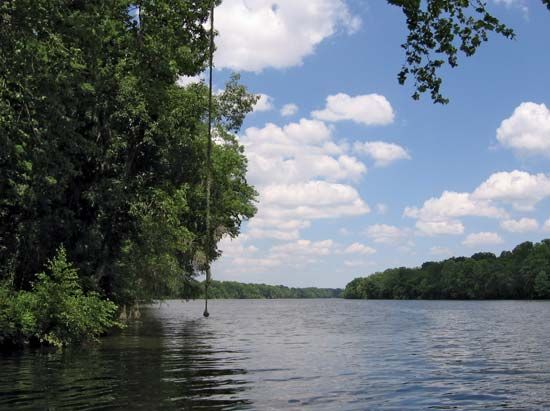
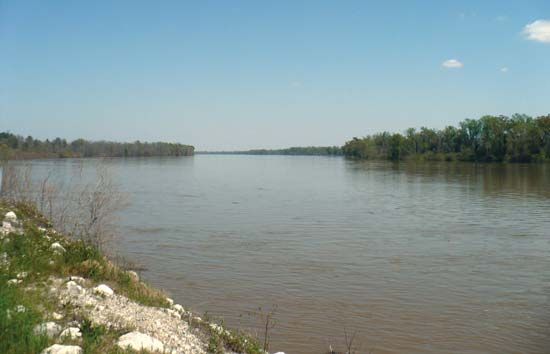
Tombigbee River
Sorry, the Britannica knowledge base does not contain information regarding the specific contributions of the Tombigbee River to its local ecosystem and…
How does the Tombigbee River contribute to the local ecosystem and biodiversity?
Sorry, the Britannica knowledge base does not contain information regarding the specific contributions of the Tombigbee River to its local ecosystem and biodiversity. The available records focus primarily on the river’s geography, its role in navigation, the development of the Tennessee-Tombigbee Waterway, and its historical and economic significance.
Where is the Tombigbee River located, and what are its main tributaries?
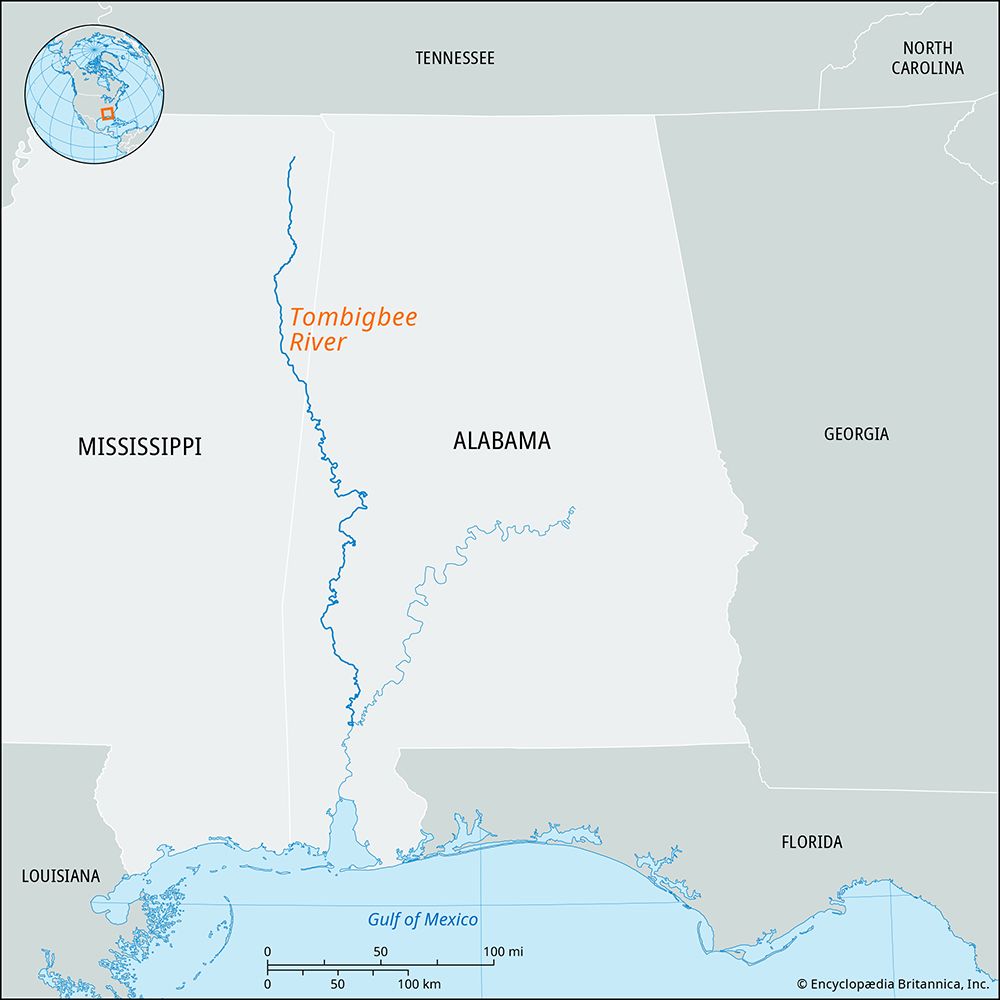
The Tombigbee River is located in the southeastern United States, originating in northeastern Mississippi. It is formed by the confluence of the West and East forks near Amory, Mississippi, and flows south and southeast for approximately 525 miles (845 km). It eventually merges with the Alabama River to form the Mobile River north of Mobile, Alabama.1
The river’s primary tributary is the Black Warrior River, which joins the Tombigbee at Demopolis, Alabama.1
How did the Tombigbee River get its name, and what does it mean?
The name “Tombigbee” is derived from a Choctaw word that translates to “coffin makers.” The river was named in reference to a specific group of people who were responsible for cleaning the bones of the deceased and placing them into boxes for burial.1
What are some of the major cities or towns located along the Tombigbee River?
Several cities and towns are situated along the banks of the Tombigbee River, serving as important hubs for trade and history in the region. The chief cities located along the river include:
- Aberdeen, Mississippi: Historically significant as a navigation point for the river in the 1800s.1
- Columbus, Mississippi: A major trade center and the seat of Lowndes county, which has played a notable role in the region’s history, including serving as a temporary state capital during the American Civil War.15
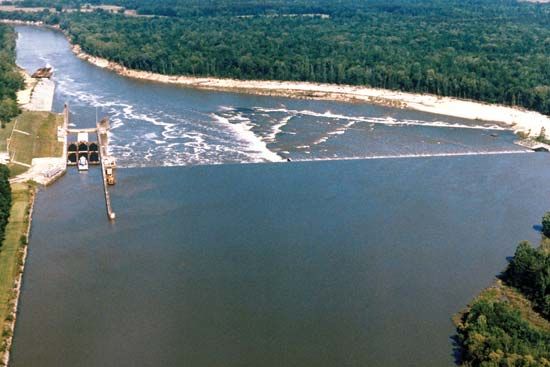
- Demopolis, Alabama: A key location where the Black Warrior River joins the Tombigbee and a central point for the river’s lock and dam system.1
Additionally, the river system facilitates heavy traffic between the cities of Mobile and Birmingham, Alabama, through its connection to the Tennessee-Tombigbee Waterway.12
Sources
- Tombigbee River — Encyclopædia Britannica
- Tennessee-Tombigbee Waterway — Encyclopædia Britannica
- Tombigbee — Merriam-Webster
- Tallahatchie River — Encyclopædia Britannica
- Columbus — Encyclopædia Britannica
Published on · 2 min read