Tigerfish
The term "tigerfish" refers to several distinct groups of fish rather than a single species, and they are found in different environments depending on their…
Where are tigerfish found in the wild, and what types of habitats do they prefer?
The term “tigerfish” refers to several distinct groups of fish rather than a single species, and they are found in different environments depending on their classification.12
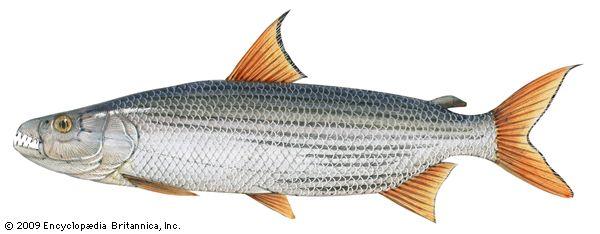
- African Tigerfishes (Hydrocynus): These are predatory, salmon-shaped freshwater fish found in rivers across Africa. They are highly regarded as game fish and are known for their voracious nature and daggerlike teeth.132
- Indo-Pacific Tigerfishes (Family Theraponidae): These species inhabit both marine and freshwater environments in the Indo-Pacific region. They are generally smaller than their African counterparts and are often characterized by bold, vertical stripes.12
While the provided information confirms these broad geographic distributions—specifically African river systems and Indo-Pacific marine or freshwater habitats—it does not detail specific micro-habitats or environmental preferences beyond these general regions.123
How did tigerfish get their name, and what makes them stand out among other freshwater fish?
The name “tigerfish” is applied to several distinct species based on three primary characteristics: their aggressive pugnacity when caught, their fiercely predaceous habits, or their physical appearance, which often features bold, dark stripes reminiscent of a tiger.123
These fish stand out among other freshwater species due to their unique physical and behavioral traits:
- Predatory Nature: African tigerfishes of the genus Hydrocynus are swift, voracious carnivores. They are equipped with daggerlike teeth that remain visible even when their mouths are closed.12
- Size and Strength: Some species, such as the H. goliath, can grow to over 1.8 meters (6 feet) in length and weigh more than 57 kg (125 pounds), making them formidable game fish.12
- Defensive Adaptations: Indo-Pacific tigerfishes, such as the three-striped tigerfish (Therapon jarbua), possess sharp spines on their gill covers that can inflict wounds on those who handle them carelessly.12
Are there different species of tigerfish, and how do they differ from one another?
Yes, there are several distinct species of tigerfish, which are categorized into two primary groups based on their family, geography, and physical traits.12
African Tigerfishes (Hydrocynus)
Found in African freshwaters, these fish belong to the characin family, Characidae. They are defined by the following characteristics:
- Appearance: They are salmon-shaped carnivores marked with one or several dark, lengthwise stripes.12
- Dentition: They possess daggerlike teeth that remain visible even when the mouth is closed.12
- Diversity: There are approximately five species in this genus.12
- Size: They range significantly in size, from the smaller H. vittatus, a highly regarded game fish, to the massive H. goliath, which can exceed 1.8 meters (6 feet) in length and 57 kg (125 pounds).12
Indo-Pacific Tigerfishes (Family Theraponidae)
These fish inhabit both marine and freshwater environments in the Indo-Pacific region and differ significantly from the African varieties:
- Size: They are generally much smaller than the African species.12
- Markings: They are typically marked with bold, vertical stripes.12
- Defense: A notable example is the three-striped tigerfish (Therapon jarbua), which grows to about 30 cm (12 inches) and features sharp spines on its gill covers capable of wounding handlers.12
What is the diet of tigerfish, and how do they hunt their prey?
Tigerfish are characterized as fiercely predaceous and voracious carnivores, meaning their diet consists primarily of other fish.123
Regarding their hunting behavior, the African tigerfishes of the genus Hydrocynus are described as swift, active hunters. They are physically adapted for this predatory lifestyle with a salmon-shaped body that allows for speed and agility in the water. Their most notable hunting tool is their set of daggerlike teeth, which are designed to seize and hold prey securely. These teeth are so prominent that they remain visible even when the fish’s mouth is closed, ensuring they are always ready to strike.12
While the provided information confirms that these fish are highly aggressive and predaceous, the specific tactical maneuvers they use to stalk or ambush their prey are not detailed in the available records.
Sources
- tigerfish — Encyclopædia Britannica
- 10 of the World’s Most Dangerous Fish - Tigerfish — Encyclopædia Britannica
- tiger fish — Merriam-Webster
Published on · 3 min read