Tongatapu Group
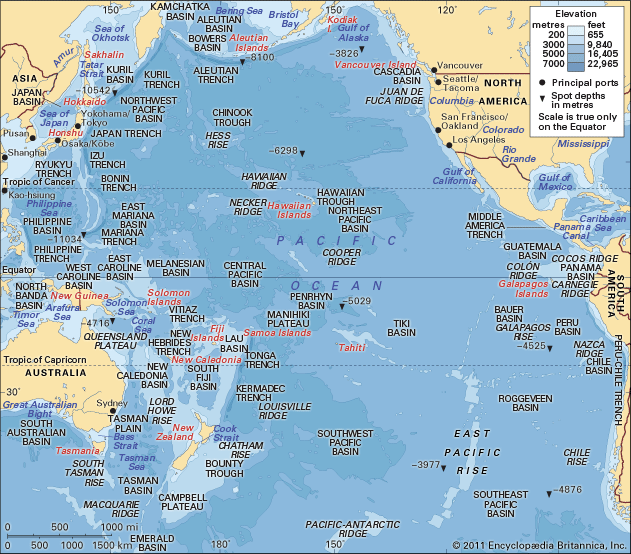
The Tongatapu Group is the southernmost island cluster of Tonga, situated in the South Pacific Ocean approximately 1,400 miles (2,300 km) north-northeast of…
Where is the Tongatapu Group located, and how many islands does it comprise?
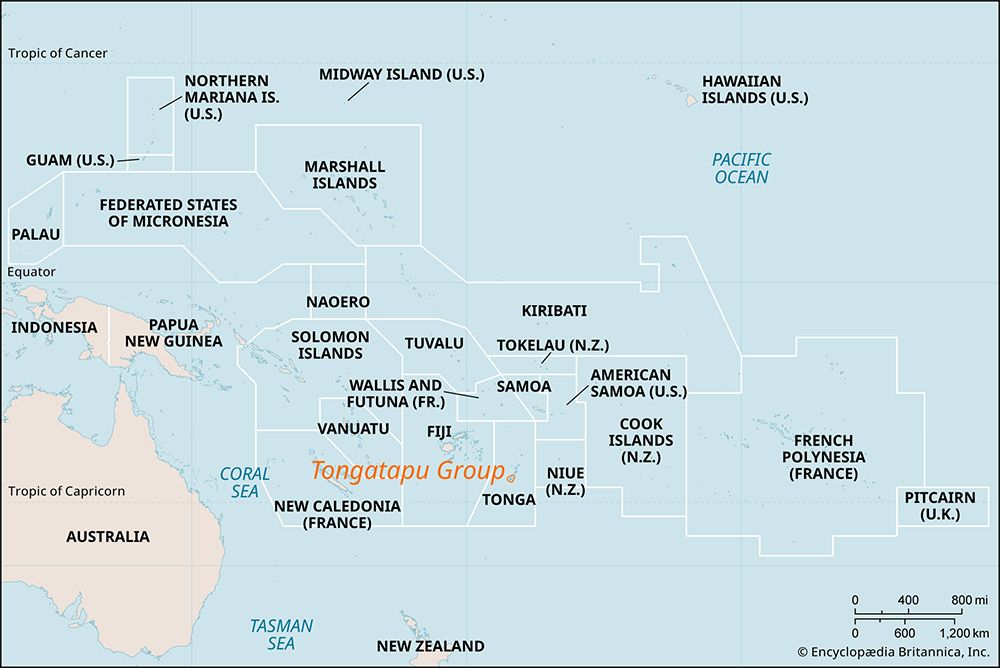
The Tongatapu Group is the southernmost island cluster of Tonga, situated in the South Pacific Ocean approximately 1,400 miles (2,300 km) north-northeast of Auckland, New Zealand.1
While the provided information does not specify an exact total count of islands, it identifies the group as being dominated by Tongatapu Island, the largest in the cluster, alongside the volcanic islands of ’Eua and ’Ata. Additionally, the group includes several minor islands, specifically ’Atata, ’Eueiki, Kalau, and Kanatea.1
What is the capital city of Tonga, and how does it relate to the Tongatapu Group?
The capital city of Tonga is Nukuʻalofa.23
Nukuʻalofa serves as the administrative headquarters for the Tongatapu Group, the southernmost island cluster of the nation. The city is located on the northern coast of Tongatapu Island, which is the largest and most populous island in the group.14
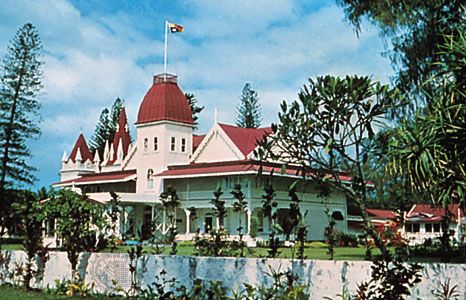
As the national capital and chief port, Nukuʻalofa is central to the economic activity of the Tongatapu Group, facilitating the export of local products such as copra, bananas, squash, and vanilla. The city also houses key national infrastructure, including the Royal Palace, government offices, and the primary international airport, Fuaʻamotu International Airport, which is situated about 15 miles southeast of the capital.31
How do the outer islands of the Tongatapu Group differ from the main island of Tongatapu?
The main island of Tongatapu and the outer islands of the Tongatapu Group differ significantly in their geological formation, topography, and economic development.
Geological and Topographical Differences
- Tongatapu Island: This is a level, triangular coral island that functions as a raised atoll. It is relatively flat, with its highest point reaching only 270 feet (80 metres) above sea level. Due to its coral composition, it lacks surface streams, requiring residents to rely on rain catchments and wells for fresh water.17
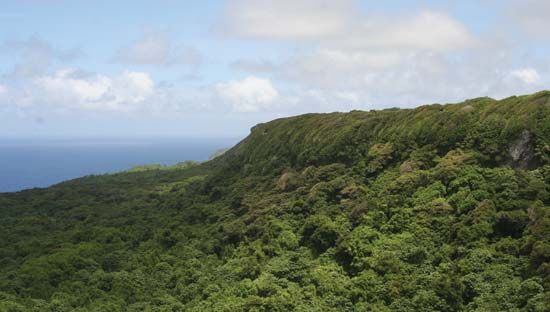
- Outer Islands: In contrast, islands such as ’Eua and ’Ata are of volcanic origin. [’Eua], the second largest in the group, is hilly and features an old volcanic ridge rising to 1,078 feet (329 metres). Unlike the main island, [’Eua] possesses creeks. [’Ata] is even more rugged, rising to an extinct volcanic peak of 1,253 feet (382 metres).178
Economic and Infrastructure Differences
- Tongatapu Island: As the administrative and economic hub, it hosts the national capital, Nukuʻalofa, and the primary international airport at Fuaʻamotu. It contains the majority of the group’s infrastructure, including schools, hospitals, and the most extensive paved road network in the country.194
- Outer Islands: Economic activity on islands like [’Eua] is more specialized, focusing on agriculture (such as vanilla and kava), tourism, and forestry. While some outer islands have domestic airports, they lack the centralized administrative and commercial facilities found on the main island. [’Ata], for instance, is largely uninhabited, serving only as a temporary site for fishermen1.8
What role does the Tongatapu Group play in Tonga’s government and administration?
The Tongatapu Group plays a central role in the government and administration of Tonga. As the location of the national capital, Nukuʻalofa, the group serves as the primary seat of the country’s political and administrative power.311
Key aspects of its role include:
- Administrative Headquarters: Nukuʻalofa, situated on Tongatapu Island, functions as the administrative center for the entire nation. It houses essential government offices, the Royal Palace, and the Legislative Assembly (Fale Alea).3111
- Local Governance: The administration of the country is organized into island councils. One of these councils is specifically responsible for the governance of Tongatapu, along with the islands of ’Eua and the Niuas.1
- Centralized Infrastructure: The group hosts critical national infrastructure that supports governance, including the primary international airport at Fuaʻamotu and the nation’s main port, which facilitates both domestic and international commerce.311
Sources
- Tongatapu Group — Encyclopædia Britannica
- Tonga: Country Facts — Encyclopædia Britannica
- Nukuʿalofa — Encyclopædia Britannica
- Tonga - People — Encyclopædia Britannica
- Nuku'alofa — Merriam-Webster
- Haʿapai Group — Encyclopædia Britannica
- Tonga - Relief — Encyclopædia Britannica
- ʿEua — Encyclopædia Britannica
- Tonga - Economy of Tonga — Encyclopædia Britannica
- Niuatoputapu — Encyclopædia Britannica
- Tonga - Government and society — Encyclopædia Britannica
- history of Tonga — Encyclopædia Britannica
- Tonga — Encyclopædia Britannica
Published on · 3 min read