Tossa Jute
Tossa jute (Corchorus olitorius) offers significant environmental advantages primarily through its nature as a bast fiber. Because it is a natural…
What environmental benefits are associated with tossa jute cultivation and use?
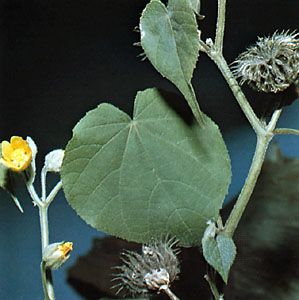
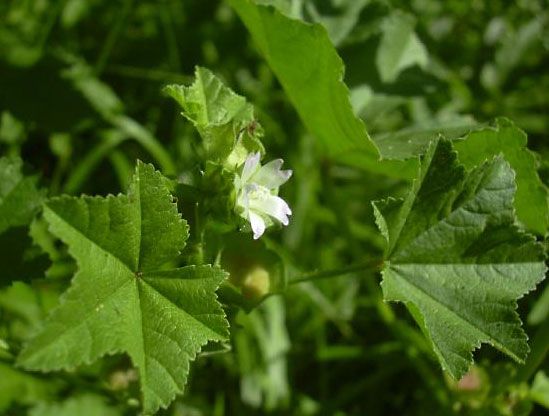
Tossa jute (Corchorus olitorius) offers significant environmental advantages primarily through its nature as a bast fiber. Because it is a natural, plant-based material, it is biodegradable, making it a more ecologically sustainable alternative to synthetic textiles derived from fossil fuels, such as nylon, polyester, and acrylic.1
By utilizing renewable plant fibers for industrial applications—such as the production of burlap, twine, and packaging materials—the industry can reduce its reliance on non-renewable, petroleum-based synthetic products. Furthermore, the cultivation of tossa jute serves a dual purpose; beyond its fiber production, the plant’s leaves and young stems are edible, providing a sustainable food source in many regions.123
The processing of these fibers typically involves retting, a natural process where bacterial action breaks down the plant’s gummy tissues in water, further emphasizing the plant’s reliance on biological rather than chemical extraction methods.12
What are the main uses and economic importance of tossa jute?
Tossa jute (Corchorus olitorius) is a versatile herbaceous plant with significant utility and economic value, particularly in tropical regions of Asia and Africa.1
Main Uses
The plant serves two primary purposes:
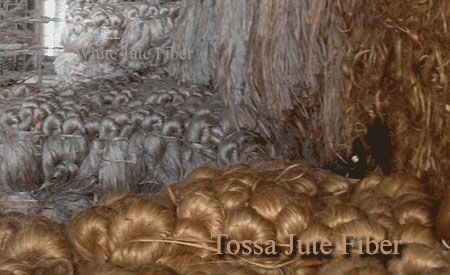
- Fiber Production: Tossa jute is a source of bast fiber, which is extracted through a process called retting. Because it is strong, resistant to stretching, and low-cost, it is widely used to manufacture:
- Culinary Use: The plant’s mucilaginous leaves and young stems are edible and consumed as a vegetable. They are a popular ingredient in various dishes, most notably in the Arab soup-based dish known as molokhia.1
Economic Importance
Tossa jute plays a vital role in the agricultural economies of countries like Bangladesh and India, which are among the world’s leading producers. Historically, the cultivation and processing of jute have been essential for:35
- Foreign Exchange: Jute and its manufactured products serve as a source of export earnings for producing nations.6
- Industrial Employment: The crop supports significant jute milling and processing industries, which provide employment in both large-scale manufacturing and cottage industries.67
- Rural Livelihoods: As a backbone of the rural economy in regions like the Indian subcontinent, jute cultivation provides employment for a large portion of the population, contributing to regional food security and economic stability.5
What are the major countries that produce tossa jute?
Tossa jute (Corchorus olitorius) is cultivated extensively across tropical regions of Asia and Africa. The primary centers of production are located on the Indian subcontinent, specifically in India and Bangladesh, where the plant has been grown since ancient times.1895
Within India, the cultivation of jute is concentrated in the states of West Bengal, Assam, and Bihar. In addition to these major producing nations, jute is also grown in China and Brazil.35
How does the fiber extraction process work for tossa jute?
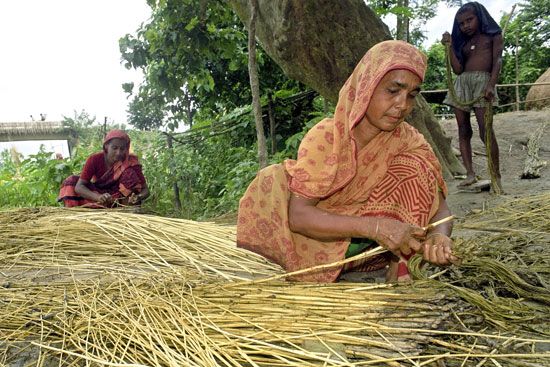
The fiber extraction process for tossa jute relies on retting, a method that uses moisture and bacterial action to dissolve the gummy substances holding the fibers to the plant’s stem.123
After harvesting the stalks—ideally after flowers have shed but before seedpods mature—the process follows these steps:
- Retting: Bundles of stems are submerged in water (pools, streams, or concrete tanks) and weighted down for 10–30 days. Bacterial action breaks down the tissues surrounding the bast fiber bundles.123
- Separation: Once retting is complete, the fibers are loosened by beating the root ends with a paddle. The stems are broken near the root, and the fiber strands are manually jerked off the stalk.3
- Cleaning and Finishing: The extracted fibers are washed and dried. In industrial settings, they undergo further processing, including softening with oil and water, followed by carding, drawing, and spinning to create yarn.123
While water retting is the most common method, some regions utilize dew retting, where stalks are spread in fields to ferment via dew and air, though this often results in lower-quality fiber.12
Sources
- tossa jute — Encyclopædia Britannica
- Bast fiber — Encyclopædia Britannica
- jute — Encyclopædia Britannica
- Bangladesh: Top Questions — Encyclopædia Britannica
- Bangladesh - Manufacturing — Encyclopædia Britannica
- economy of India - Agriculture, forestry, and fishing — Encyclopædia Britannica
- Jharkhand - Manufacturing — Encyclopædia Britannica
- Corchorus — Encyclopædia Britannica
- tossa jute — Merriam-Webster
- Bangladesh - Agriculture and fishing — Encyclopædia Britannica
- India - Crops — Encyclopædia Britannica
- retting — Encyclopædia Britannica
Published on · 3 min read