Mesite
A mesite is any of three species of small, brownish, ground-dwelling birds that make up the family Mesitornithidae within the order Gruiformes. These birds…
What is Mesite?
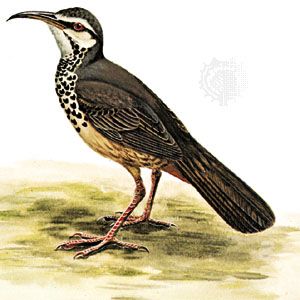
A mesite is any of three species of small, brownish, ground-dwelling birds that make up the family Mesitornithidae within the order Gruiformes. These birds are found exclusively in Madagascar and typically measure between 25 and 30 cm in length.12
Mesites are distinguished from other gruiforms by their possession of powder downs—specialized feathers that disintegrate into a fine powder used for preening—and their reduced collarbones. They are terrestrial birds that inhabit forests and brushland, where they move in pairs or small flocks to forage for seeds and insects. They are known for a walking gait similar to that of pigeons, characterized by bobbing their heads and tails. The three species include Mesitornis unicolor, Mesitornis variegata, and Bensch’s rail (Monias benschi), all of which construct platform nests low in bushes.12
What makes Madagascar’s wildlife so unique compared to other parts of the world?
Madagascar’s wildlife is exceptionally unique due to the island’s long-standing geographic isolation, which has allowed its flora and fauna to evolve into distinct, anomalous forms separate from the African mainland.45
Unique Flora
The island features high levels of endemism, particularly in its eastern regions, where more than three-fourths of plant species are found nowhere else. The vegetation varies significantly by climate:4
- Rainforests: Home to endemic dwarf palms (Dypsis) and bamboos (Ochlandra).4
- Arid South: Characterized by specialized xerophytes, including giant cacti, dwarf baobabs, and pachypodium succulents.6
Distinctive Fauna
Madagascar’s animal life is marked by the presence of unique evolutionary lineages and the notable absence of many familiar African groups, such as big cats, elephants, and monkeys.75
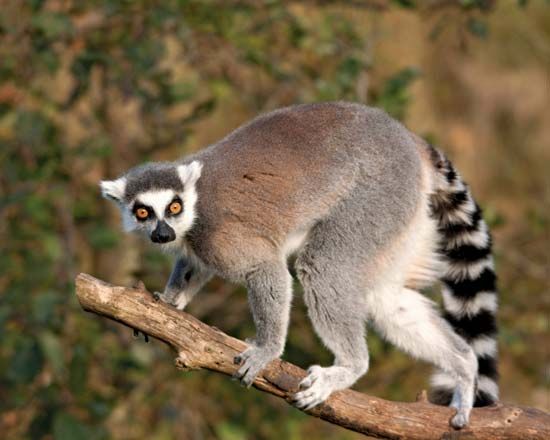
- Primates: The island is famous for its approximately 40 indigenous species of lemurs, which have evolved into diverse forms in the absence of competition from other primates.67
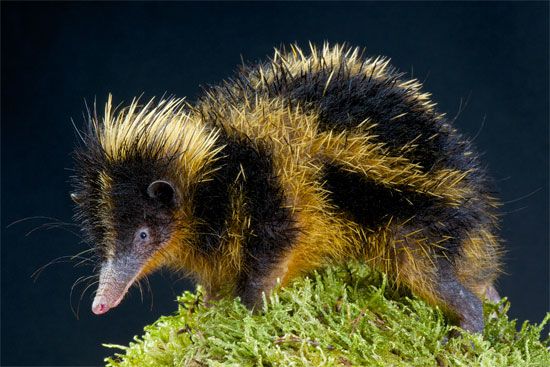
- Insectivores and Reptiles: Unique hedgehoglike tenrecs and a wide variety of chameleons are prevalent.6
- Living Fossils: The coelacanth, a fish once thought to be extinct for millions of years, inhabits the island’s offshore waters.6
What are powder downs and how do they help birds with preening?
Powder downs are specialized, continuously growing plumules found in various bird species, such as herons, parrots, and cockatoos. Unlike typical feathers, the tips of these down feathers disintegrate into a fine, scaly powder.9101112
This powder is distributed over the bird’s plumage during the preening process. It serves several functional purposes:
- Cleaning and Maintenance: The powder helps remove dirt and debris from the feathers.11
- Waterproofing: It provides a protective coating that helps repel water, keeping the bird dry.1011
- Plumage Condition: In some species, particularly those with reduced or absent preen glands, this powder is believed to be essential for dressing the feathers and maintaining their structural integrity.12
While many birds rely on the oil secreted by the preen gland for grooming, powder down acts as a vital alternative or supplementary tool for maintaining healthy, functional plumage.111213
What are some other examples of birds in the Gruiformes order?
The order Gruiformes comprises a diverse and ancient assemblage of 12 bird families. While some members are widely distributed, many are specialized or restricted to specific geographic regions.14
Notable examples of birds within this order include:
- Rallidae: The only family with a worldwide distribution, including rails, gallinules, and coots.14
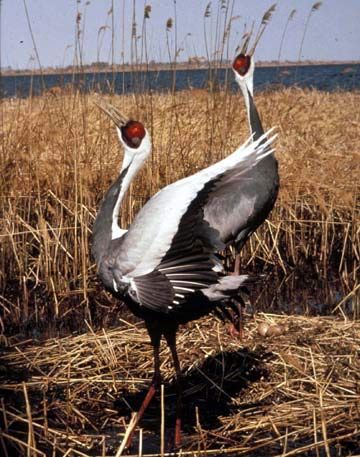
- Gruidae: Cranes, such as the sandhill crane and the whooping crane.1415
- Otididae: Bustards, including the Kori bustard, which is recognized as the world’s heaviest flying animal.14
- Regional Specialists: The mesites of Madagascar and the kagu of New Caledonia the kagu of New Caledonia.14
- Other Families: The order also includes limpkins, trumpeters, finfoots, sun bitterns, seriemas, and button quails.14
It is important to note that the plains wanderer, once classified as a gruiform, is now assigned to the order Charadriiformes.14
Sources
- Mesite — Encyclopædia Britannica
- mesitite — Merriam-Webster
- Gruiform - Annotated classification — Encyclopædia Britannica
- Africa - Madagascar — Encyclopædia Britannica
- Madagascar - Plant and animal life — Encyclopædia Britannica
- biogeographic region - Madagascan region — Encyclopædia Britannica
- Madagascar — Encyclopædia Britannica
- Madagascar - Madagascar from 1500 to c. 1650 — Encyclopædia Britannica
- powder down — Merriam-Webster
- Integument - Birds — Encyclopædia Britannica
- Psittaciform - Skin and plumage — Encyclopædia Britannica
- Bird - Other external features — Encyclopædia Britannica
- Preen gland — Encyclopædia Britannica
- Gruiform — Encyclopædia Britannica
- Gruiform - Evolution and paleontology — Encyclopædia Britannica
Published on · 3 min read