Sun Bittern
The sun bittern (Eurypyga helias) is a slender bird native to tropical America and serves as the sole member of the family Eurypygidae within the order…
What is Sun bittern?
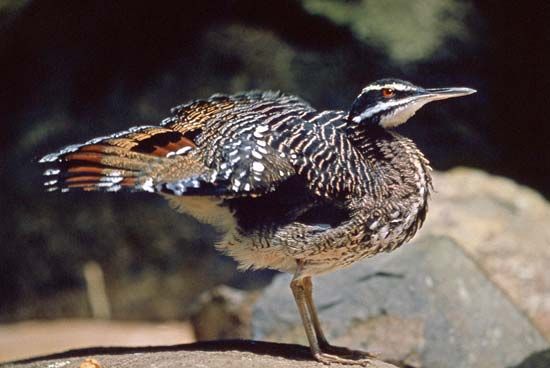
The sun bittern (Eurypyga helias) is a slender bird native to tropical America and serves as the sole member of the family Eurypygidae within the order Gruiformes.1
Measuring approximately 43 cm (17 inches) in length, the bird is characterized by its long tail and wings, which feature intricate patterns of brown, yellow, black, and white. These wings are particularly notable during courtship and threat displays, when the male spreads them to reveal their striking coloration.1
The sun bittern is primarily a ground-dwelling bird that inhabits areas along forest streams, where it uses its bill to hunt for insects and crustaceans. Unlike many ground-dwelling species, it constructs a bulky nest in trees, where both parents share the responsibility of incubating its two or three brownish, rusty-spotted eggs.1
You can learn more about this unique species by visiting the Britannica entry for the sun bittern.
What other birds belong to the order Gruiformes?
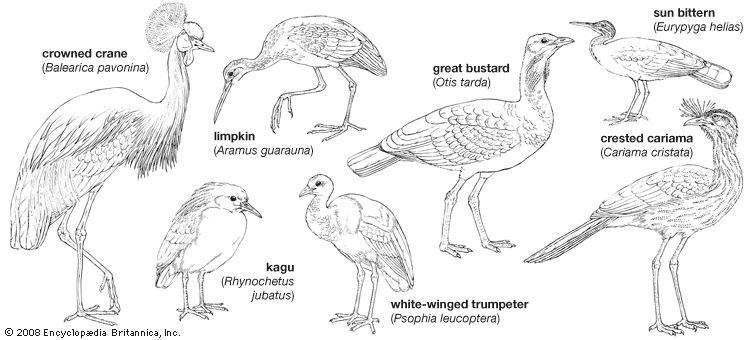
The order Gruiformes is a diverse and ancient assemblage of 12 bird families that exhibit significant variation in appearance and behavior. While they share certain anatomical characteristics, they are often defined by their evolutionary history rather than a single, easily identifiable physical trait.23
Beyond the sun bittern (Eurypygidae), the order includes the following families:
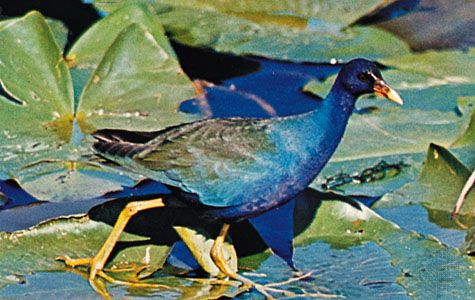
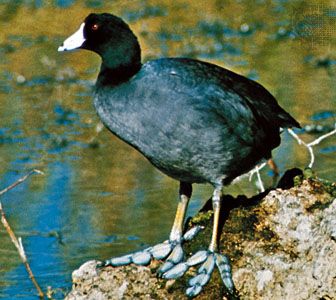
- Rallidae: The only family with a worldwide distribution, including rails, gallinules, and coots.2
- Gruidae: Cranes, found on every continent except South America.2
- Otididae: Bustards, a group of Old World birds that includes the Kori bustard.2
- Mesitornithidae: Mesites, found only in Madagascar.2
- Rhynochetidae: The kagu, native to New Caledonia.2
- Turnicidae: Hemipodes or button quails.2
- Aramidae: Limpkins.2
- Psophiidae: Trumpeters.2
- Heliornithidae: Finfoots.2
- Cariamidae: Seriemas or cariamas.2
Many of these families are now restricted in range and contain very few species, with several currently listed as threatened or endangered.24
How do the Sunbittern’s wing patterns help it survive?
The sun bittern (Eurypyga helias) utilizes its strikingly patterned wings primarily as a specialized display mechanism. These wings, which feature intricate markings in brown, yellow, black, and white, are spread by the male to serve two distinct functions:1
- Courtship: The elaborate patterns act as a visual signal to entice potential mates, playing a key role in reproductive communication.15
- Threat Displays: The wings are also used to intimidate rivals or potential predators, serving as a defensive posture to protect the bird or its territory.1
By spreading its wings, the sun bittern transforms its appearance, using these ritualized visual signals to navigate social interactions and ensure survival through both mate attraction and threat deterrence.15
What are some other unique birds found in tropical America?
Tropical America, often referred to as the Neotropical realm, is home to an extraordinary diversity of birdlife, with approximately 3,000 species and 89 families represented in South America alone. Many of these birds are unique to the region, having evolved in isolation or adapted to specific tropical niches.910
Some notable and unique birds found in this region include:
- Hoatzin: A primitive, swamp-dwelling species that possesses a unique ruminant-like digestive system for fermenting vegetation. Uniquely, the young have claws on their wings, which they use to climb trees.1112
- Toucans: Famous for their large, lightweight, and brightly colored bills, which are used for species recognition and foraging.13
- Cock-of-the-rock: Brilliantly colored birds known for the males’ flattened, circular crests and their elaborate, communal display behaviors in forest glades.14
- Curassows: Large, arboreal birds distantly related to domestic fowl, often distinguished by their jaunty, crest-like head feathers.129
- Tanagers: A diverse family of songbirds confined to the Americas, noted for their exceptionally brilliant and varied plumage.15
- Rheas: Large, flightless birds that occupy open habitats and resemble ostriches.109
Sources
- Sun bittern — Encyclopædia Britannica
- Gruiform - Distinguishing taxonomic features — Encyclopædia Britannica
- Gruiform — Encyclopædia Britannica
- Gruiform - Evolution and paleontology — Encyclopædia Britannica
- Animal social behavior - Social interactions involving sex — Encyclopædia Britannica
- Charadriiform - Adaptations for flight — Encyclopædia Britannica
- Reproductive behaviour - Courtship — Encyclopædia Britannica
- Wing — Encyclopædia Britannica
- Hoatzin — Encyclopædia Britannica
- Toucan — Encyclopædia Britannica
- Funky Feathers: 10 Bizarre Birds — Encyclopædia Britannica
- biogeographic region - Neogaean realm — Encyclopædia Britannica
- cock of the rock — Merriam-Webster
- Cock-of-the-rock — Encyclopædia Britannica
- Amazon River - Animal life — Encyclopædia Britannica
- South America - Fish and bird life — Encyclopædia Britannica
- Amazon Rainforest: Top Questions — Encyclopædia Britannica
- Tanager — Encyclopædia Britannica
Published on · 3 min read