Tuckasegee River
The Tuckasegee River is a river located in Jackson County, North Carolina, U.S. It originates in the Blue Ridge within the Pisgah National Forest and flows…
What is Tuckasegee River?
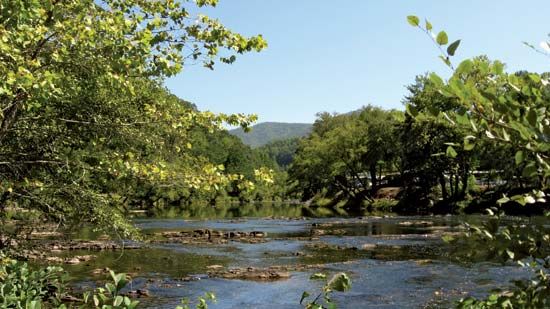
The Tuckasegee River is a river located in Jackson County, North Carolina, U.S. It originates in the Blue Ridge within the Pisgah National Forest and flows approximately 50 miles (80 km) northwest through communities such as Cullowhee, Whittier, and Bryson City before emptying into Fontana Lake, which is part of the Little Tennessee River system.1
The river features the Thorpe Dam, constructed in 1941, which impounds Lake Glenville. The name “Tuckasegee” is believed to be derived from a Cherokee village named Tsiksitsi, which translates to “crawling terrapin,” a reference to the river’s sluggish water movement.1
What is the history of the Cherokee people in this region?
The Cherokee people, of Iroquoian lineage, historically inhabited a vast region of the Appalachian Mountains spanning present-day Georgia, Tennessee, and the Carolinas. Before European contact, they maintained a sophisticated society characterized by hierarchical political organization, advanced agriculture, and mound building.23
During the early colonial period, the Cherokee lived in a confederacy of “red” (war) and “white” (peace) towns, practicing a culture deeply connected to the land through hunting and farming. Despite early alliances with the British, the tribe suffered significant disruption due to colonial expansion and conflict, including the French and Indian War and forced land cessions.4
In the 1830s, the U.S. government enacted the forced removal of the Cherokee, known as the Trail of Tears, which resulted in the deaths of approximately 4,000 people. While many were forced to relocate to Indian Territory (modern-day Oklahoma), a few hundred individuals escaped into the mountains. These survivors formed the nucleus of the Cherokee population that remains in western North Carolina today.516
How do dams like Thorpe Dam affect local ecosystems?
Dams like the Thorpe Dam, which impounds Lake Glenville on the Tuckasegee River, significantly alter local ecosystems by transforming flowing river environments into reservoirs. These structures impact the environment in several key ways:
- Habitat Alteration: The creation of a reservoir can lead to the destruction of existing fish habitats and terrestrial ecosystems through inundation. While beaver-built dams create beneficial wetlands that support diverse aquatic life, large-scale human-made dams often result in the loss of flora, fauna, and landscapes.9101
- Disruption of Migration: Dams frequently block or impede the movement of spawning fish. While some projects incorporate fish passes (such as ladders or locks) to mitigate these effects, population declines have been observed on many rivers where migration is obstructed.111
- Sedimentation and Erosion: By decreasing flow velocity, reservoirs trap sediment, which can reduce the dam’s storage capacity over time. Conversely, the water released downstream often lacks its natural sediment load, leading to increased erosion of the stream channel below the dam.912
What are the main characteristics of the Blue Ridge Mountains?
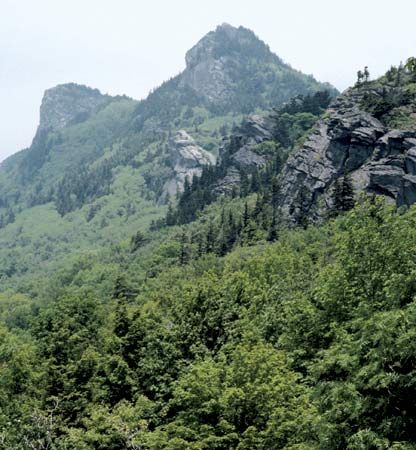
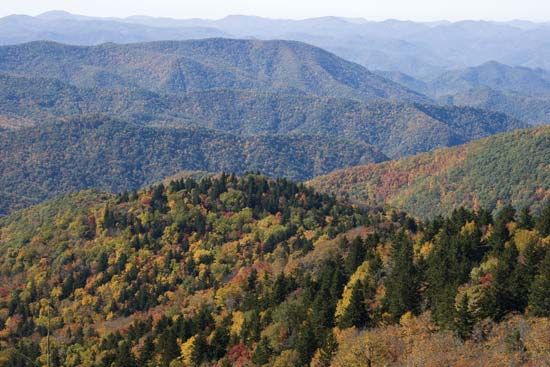
The Blue Ridge Mountains are a prominent segment of the Appalachian Mountains in the United States, extending 615 miles from Pennsylvania to Georgia. This narrow range, typically 5 to 65 miles wide, features average elevations between 2,000 and 4,000 feet and contains the highest peaks in the Appalachian system, including Mount Mitchell in North Carolina.1516
Key characteristics of the region include:
- Geology and Topography: The range is composed of complex metamorphic and igneous rocks. On its eastern side, it descends in an abrupt escarpment to the Piedmont. The landscape is intricately dissected by streams, with major rivers like the Potomac, James, and Roanoke cutting gaps through the ridge.1516
- Biodiversity: The mountains host extensive hardwood forests and over 700 cataloged varieties of trees and plants, protected within several national forests.15
- Culture and Economy: Historically known for its isolation, the region is characterized by small farms and is renowned for its traditional, folk, and bluegrass music. Economic activities include timber production, mining, and agriculture.15
Sources
- Tuckasegee River — Encyclopædia Britannica
- Cherokee - 21st century — Encyclopædia Britannica
- Cherokee — Encyclopædia Britannica
- North Carolina - Before European contact — Encyclopædia Britannica
- Cherokee: Top Questions — Encyclopædia Britannica
- Cherokee - Early colonial period — Encyclopædia Britannica
- Trail of Tears: Routes, Statistics, and Notable Events - Routes — Encyclopædia Britannica
- Cherokee language — Encyclopædia Britannica
- reservoir — Encyclopædia Britannica
- dam - Fish passes — Encyclopædia Britannica
- dam - Construction techniques — Encyclopædia Britannica
- dam - Rise of environmental and economic concerns — Encyclopædia Britannica
- dam - Reservoirs — Encyclopædia Britannica
- Why do beavers build dams? — Encyclopædia Britannica
- Blue Ridge — Encyclopædia Britannica
- United States - The Appalachian Mountain system — Encyclopædia Britannica
Published on · 3 min read